Two OOPEAA Projects Selected Finalists for the WOOD Award 2024
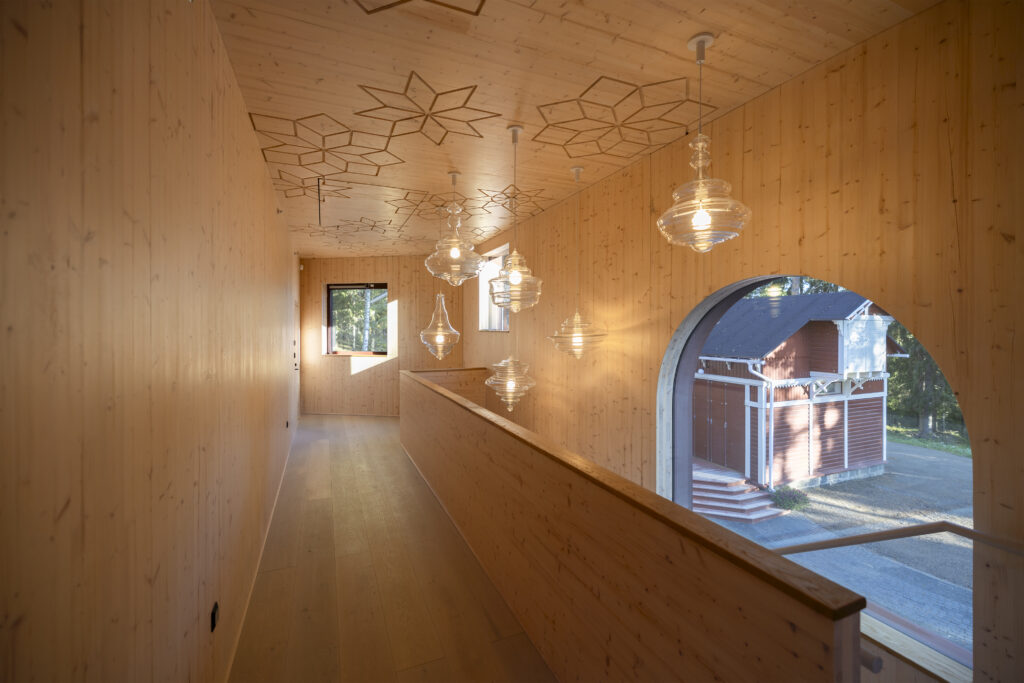
Two OOPEAA projects have been selected as finalists for the WOOD Award 2024, the Rauhalinna Castle and the Lastu education building.
In the project to renovate the Rauhalinna Castle, the old wooden main building from 1900 has been restored and complemented by a new quest house, two new sauna buildings, and a boat landing with a pavilion, all made of wood.
Lastu, the new education building on the STEP Professional Training Center campus in Järvenpää, forms a central hub and a meeting place for the community.
- A presentation of the Rauhalinna Castle project on the list of finalist projects for the WOOD Award 2024 can be found HERE.
- A description of the Lastu education building as a finalist candidate for the WOOD Award 2024 can be found HERE.
The Wood Award
The Wood Award is awarded annually to recognize high quality in the use of wood in architecture. Awarded since 1994, and this year is 27th edition of the prize. The award is granted by Puuinfo and each year a jury of architecture professionals is appointed to select the winner. In selecting the winner of the Wood Award, the jury pays special attention to the architectural quality of the site, the innovative use of wood and the overall attention attracted by the site.
- For more information on the annual WOOD Award and the full list of the finalist projects for the 2024 edition of the award, see HERE.
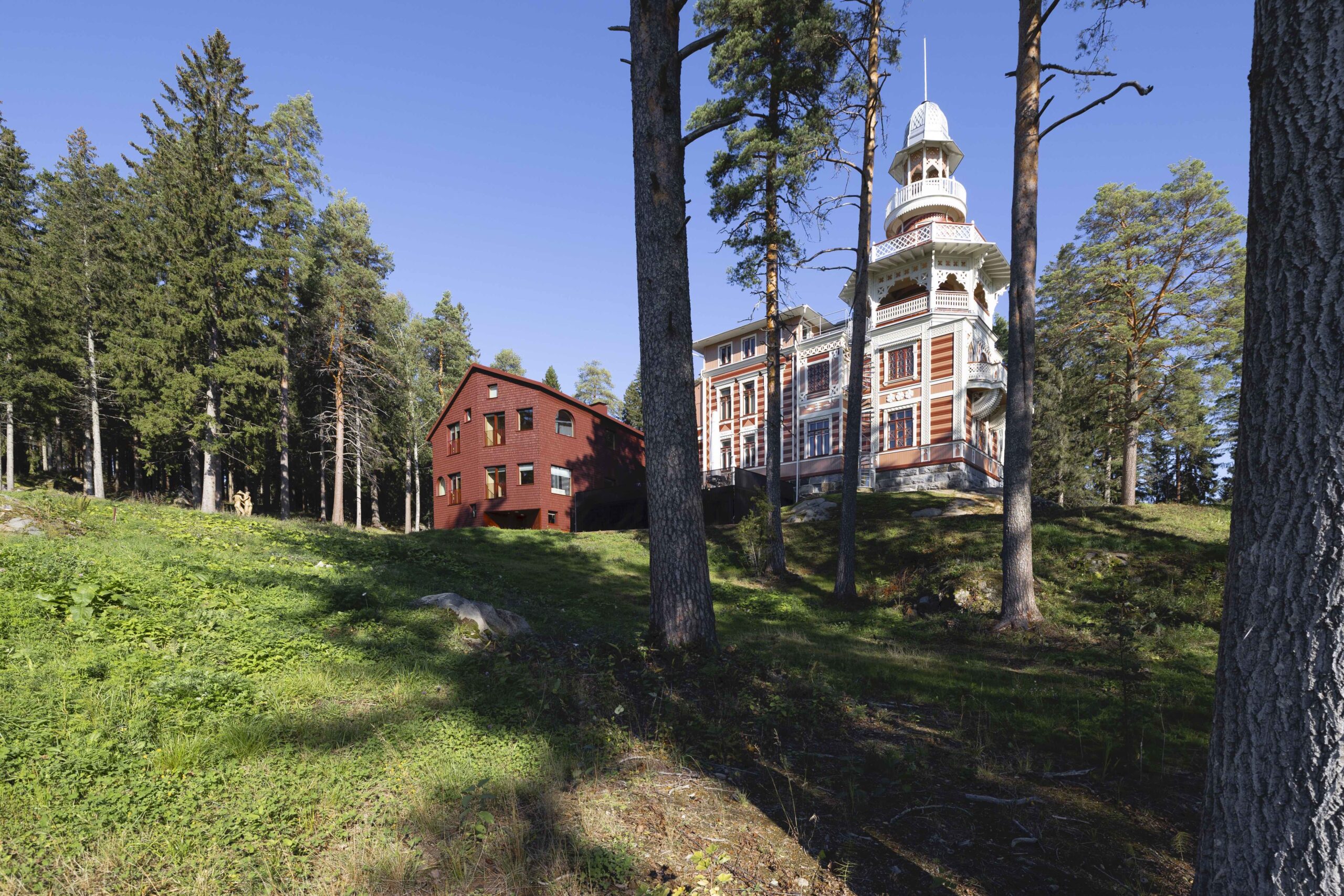
Rauhalinna – Bringing New Life to a Historical Castle
The restoration and renovation of the Rauhalinna Castle provides an example of how a layer of contemporary architecture can complement a historical landmark to improve its functionality. The old castle house was badly in need of care, and its new owners decided to undertake a major restoration and renovation project to repair the main building as well as to bring the rest of the castle with its auxiliary buildings to contemporary standards. The purpose of the restoration was to help cherish the castle for a long time to come in the future.
Restoring the Old Castle
In the restoration, the goal was to preserve the old as much as possible. Efforts were made to restore the old villa to its original appearance inside and out. The layers of various additions from different periods during the history of the building were removed and the original parts were restored in as much as possible. The exterior walls of the building were almost completely renewed, as well as the balcony and tower structures. The corner tower was returned to its original height. Also, the round shape of the south bedroom window was restored.
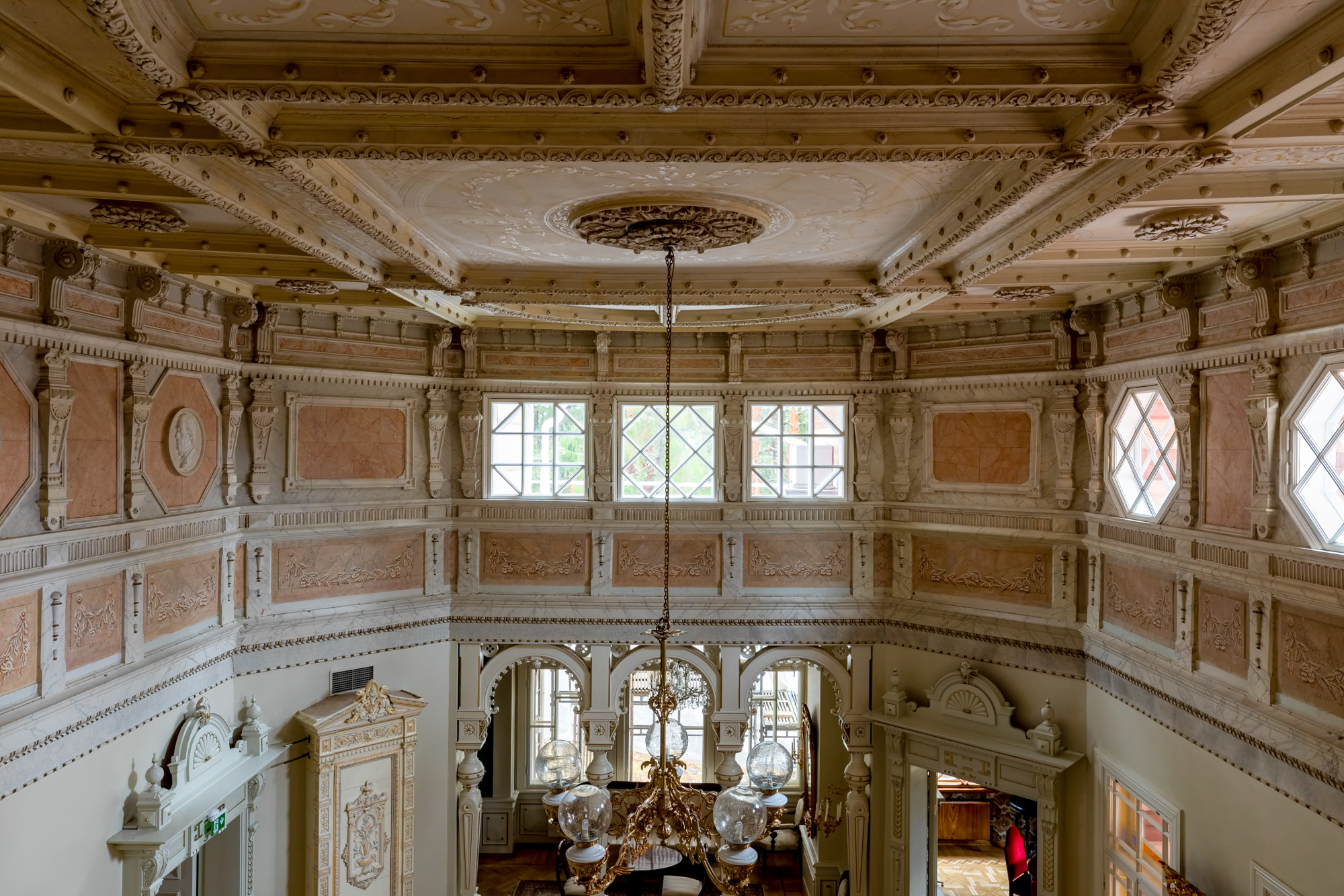
The rich ornamentation of the interior spaces of the old castle was carefully brought back as close to the original as possible. Most of the original ceilings in the old wooden villa could be preserved. The interior walls were all painted anew or covered with new wallpaper, and the original parquet floors were sanded and varnished. The original shades of paint colors were used as accurately as possible in both the interior and exterior surfaces.
Each room in the restored old castle has a character of its own. In interconnected spaces, the paint colors were brought back to a uniform historical time period. The wallpapers also follow historical wallpapers, but do not always completely match the originals. They have been selected with care to match the original ones as close as possible.
The building technology has been updated, and geothermal heating, sewers and a pumping station have been installed. With the increase in building technology, more space for maintenance facilities became necessary. The space needed for them was achieved when a terrace was built between the old main building and the new guest house, under which the rooms for building technology were placed.
A New Guesthouse Made of CLT – Complementing the Old with New
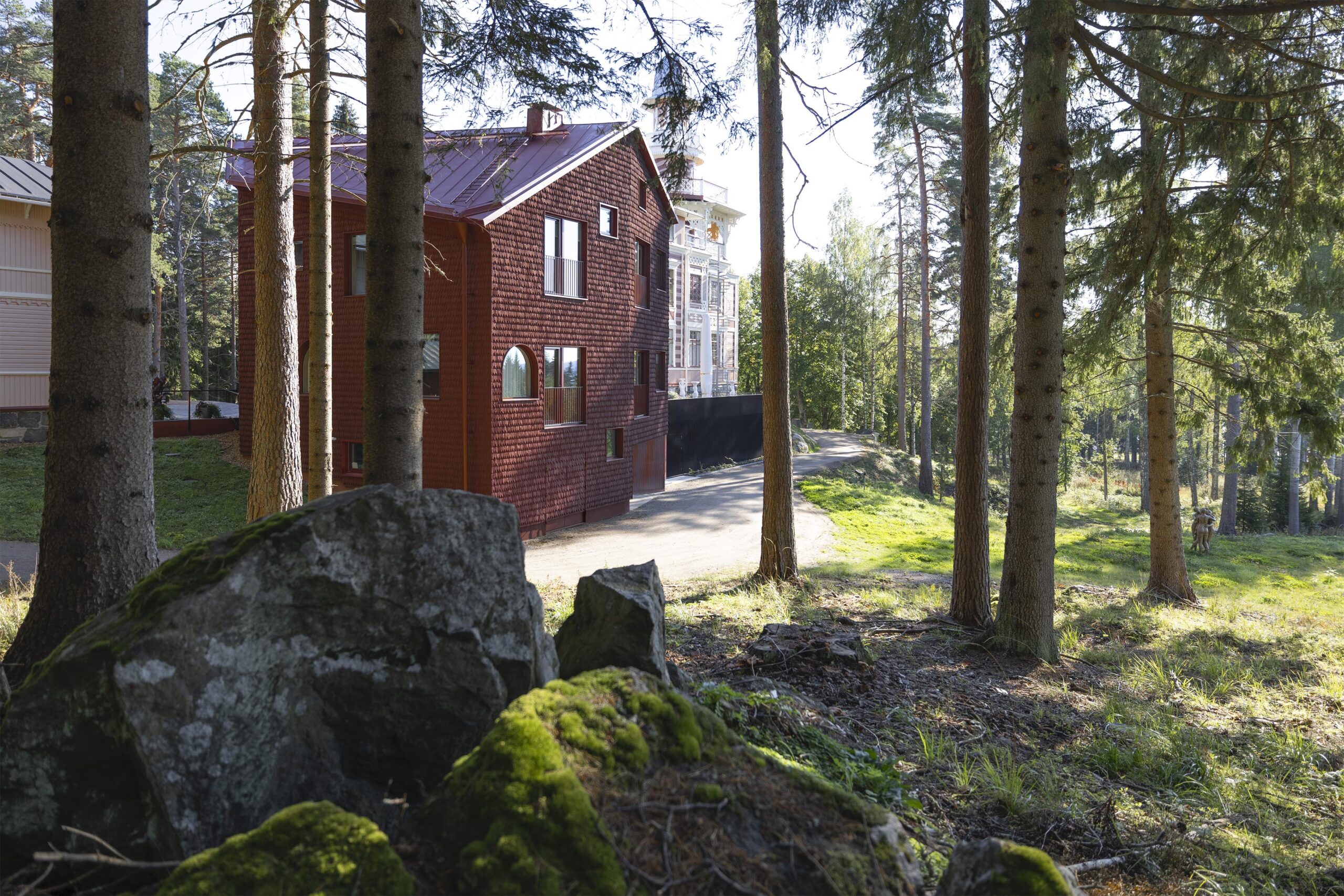
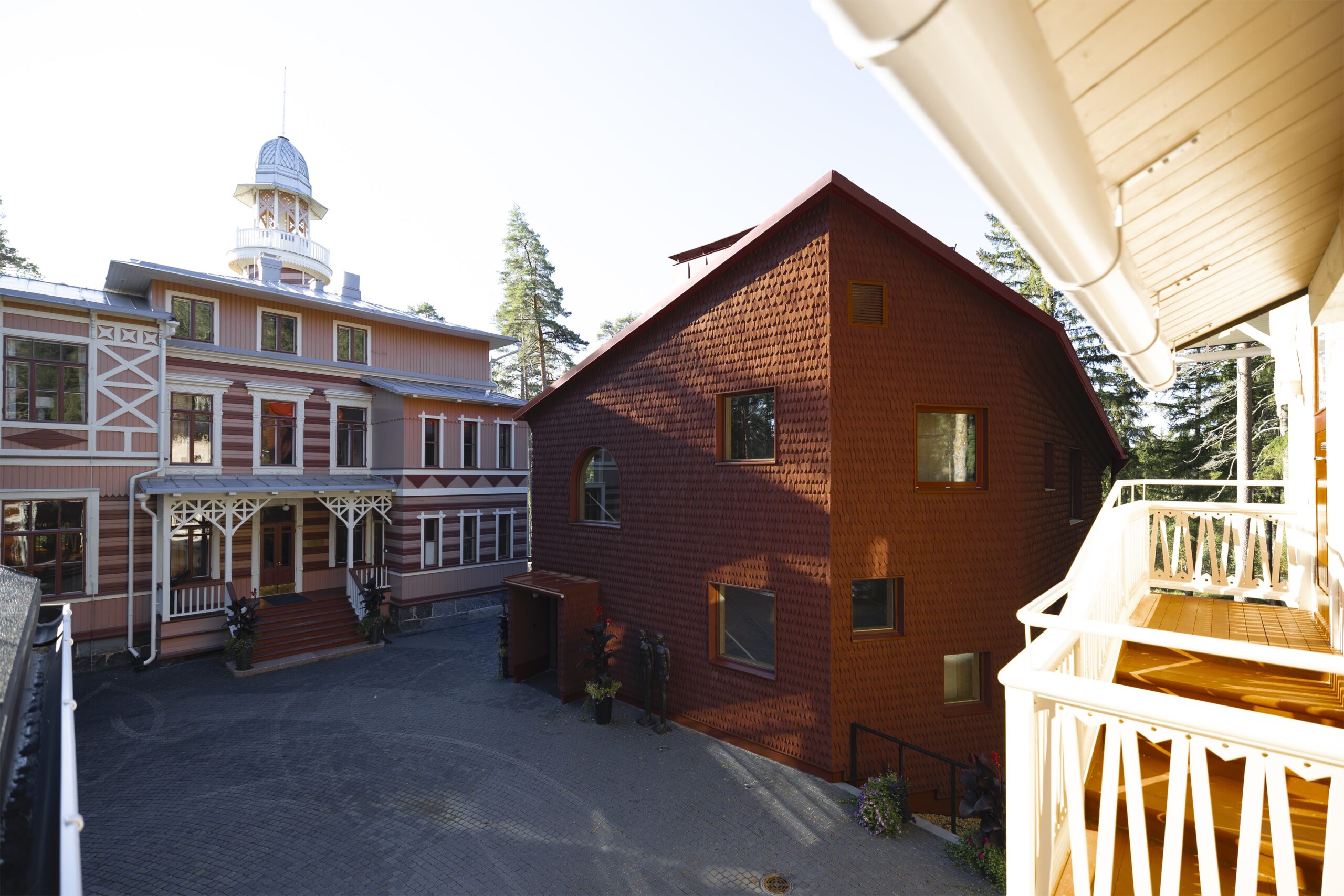
The new guest house, Käenpoika, introduces a contemporary layer of wood architecture to the historical landscape. Replacing a run down auxiliary building on the yard, it provides additional space for accommodating guests. Without causing unnecessary burden to the historical castle building itself, it complements the existing historical buildings’ program. The addition of the new guest house enhances the functionality of the existing buildings and provides a quiet complement to the ornate decoration of the castle.
The Käenpoika building is placed in the forest landscape with pine trees. Its shape is carefully sculpted to respect the surrounding buildings and to reveal and frame views from the yard past it. With its strong sculptural form and red shingle cladding, it engages in a dialogue with the other buildings in the yard. Together with the renovated buildings it forms a sheltered courtyard, generating an additional central space for comfortably spending time outdoors.
Bringing Together Traditional Methods and New Ways of Using Wood
As a wooden building with a pitched roof, the new guest house brings together traditional methods of building and new ways of using wood. The load bearing structure in the new building is made of CLT. This made it possible to realize the construction in a time efficient and ecologically sustainable manner with minimal disturbance to the landscape during construction.
The use of shingles in the façade cladding is a traditional solution that binds the new building together with the historical character of the castle. While the red color continues the traditional color palette of the other wooden buildings in the yard, the decision to paint the shingles red strongly deviates from the traditional way of treating shingles. Wood is strongly present also in the interiors of the guest house.
The new guest house is made of cross laminated timber, CLT. The massive wood frame serves both as the load bearing and as the stiffening structure. The strength of CLT also allows for a flexible and spacious room program. In the interiors wood creates ideal conditions for keeping the temperature and humidity levels comfortably even. The use of wood as a singular material also simplifies the maintenance of the building. The building is heated with energy from ground source heat pumps.
New Wooden Structures by the Lake
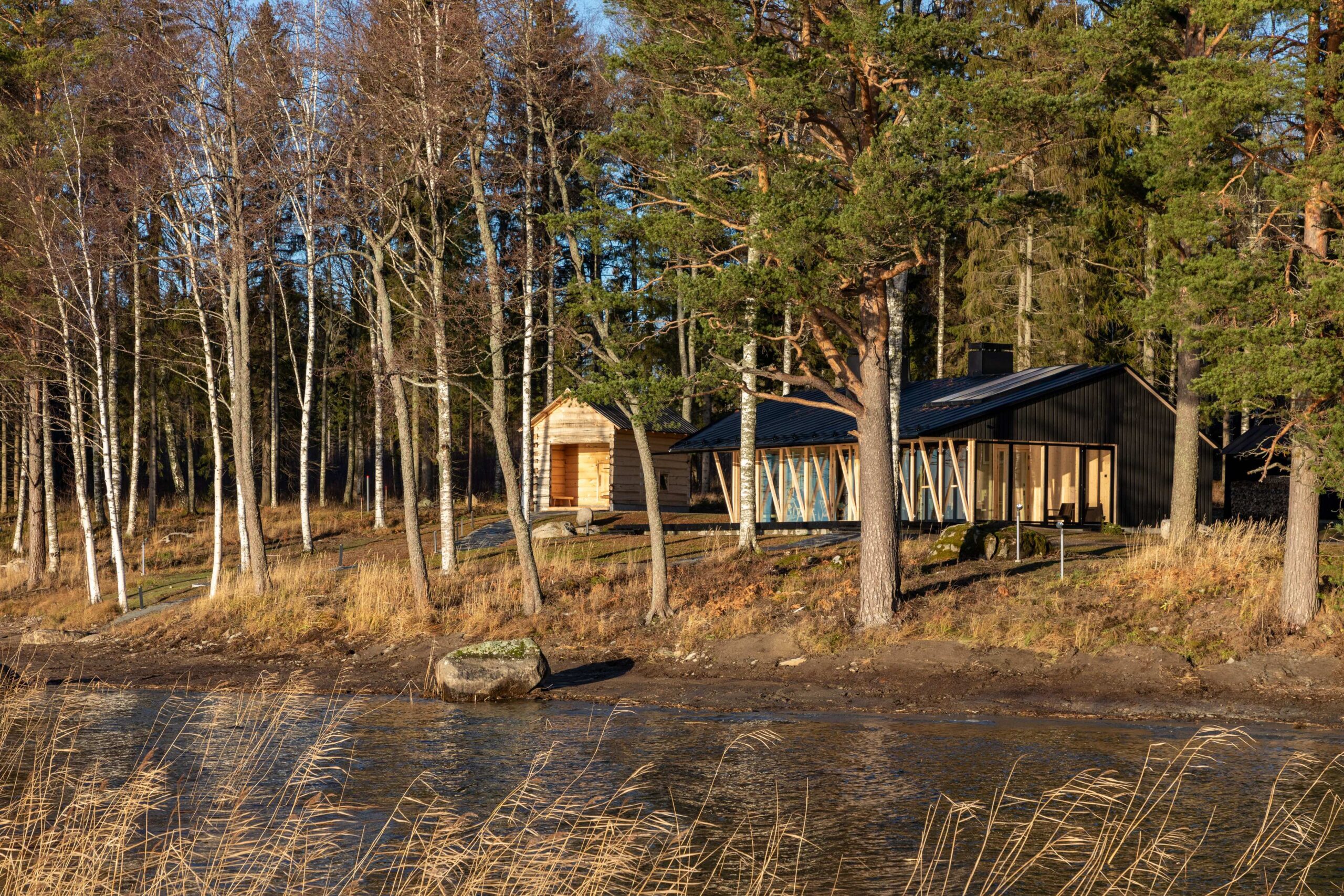
As part of the project to restore the Rauhalinna Castle, two new sauna buildings were built by the lake in place of the old one that was no longer possible to repair. They blend in with the forest by the shore. The smaller one of the new sauna buildings is a traditional smoke sauna made of hand carved logs. The bigger one of the new sauna buildings is made with a CLT structure and features a large terrace and a fireplace room.
A new wooden pier and boat pavilion by the lake creates a docking place for the boats and brings back the old connection between the waterways and the castle grounds. It also functions as a small pavilion by the shore to enjoy the view over the lake.
- For a project description and more images on the Rauhalinna Castle, see HERE.
- More information on the new guesthouse, Käenpoika, can be found HERE.
- For a presentation of the new wooden buildings by the shore on the Rauhalinna grounds, see HERE.
Lastu – An Education Building for Contemporary Teaching Methods
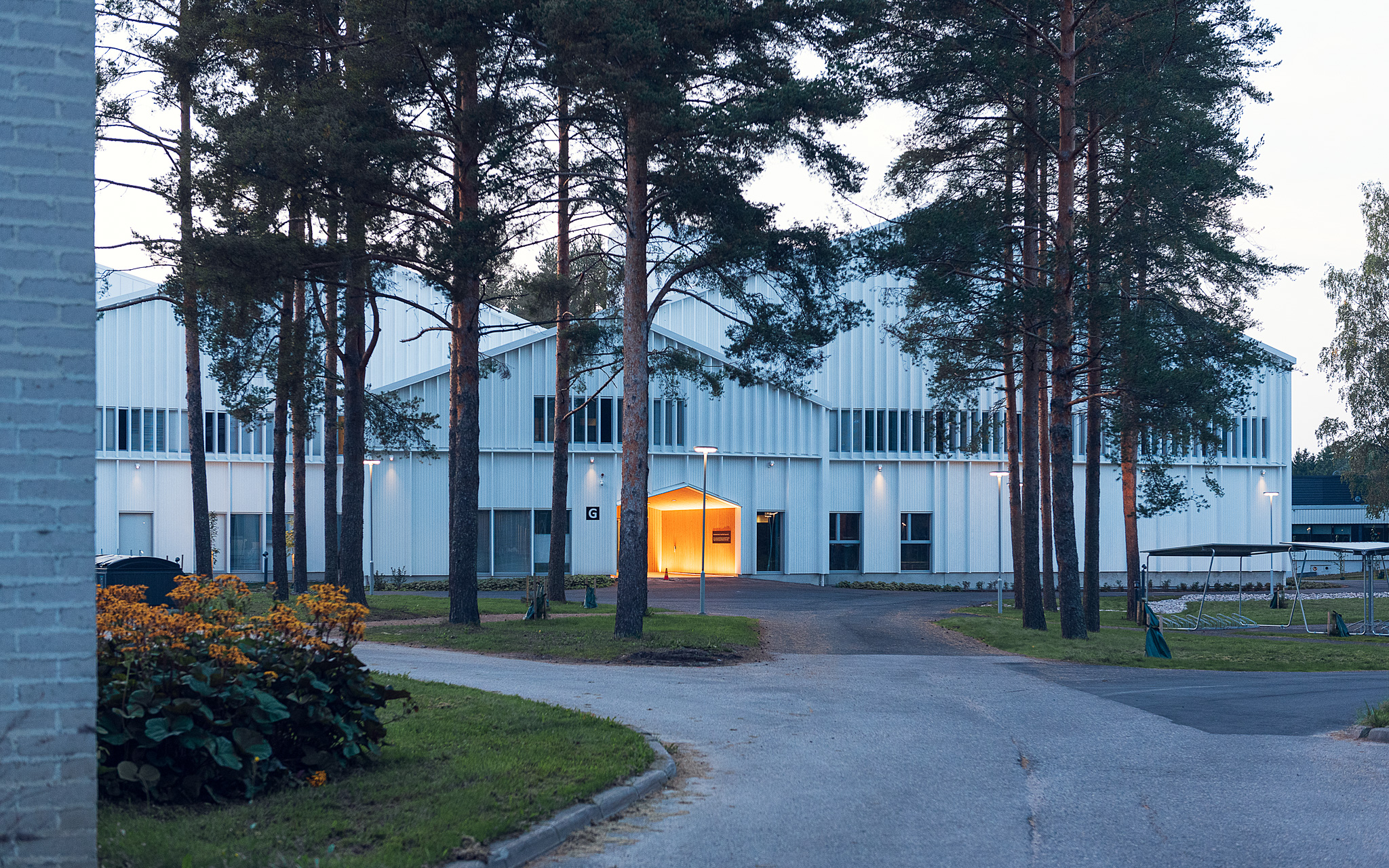
The new educational building, Lastu brings a contemporary addition to the STEP Professional Training Center Campus in Järvenpää. It forms a focal point for the campus area and serves as a central hub that joins all the other buildings on the campus together. Complementing the existing buildings on the campus, the new multifunctional building houses spaces for education and provides services for the community.
In addition to teaching spaces for the healthcare professions and for the beauty and hair professions, the building also contains a large multipurpose hall, seminar spaces, and a gym. While designed to cater to the needs of the Training Center, these spaces can also be rented out for various kinds of gatherings, performances, and meetings. In the Lastu building, there is also a small cafeteria and a beauty salon run by the students and open to the public. There are also spaces dedicated to special education for adults.
Making Use of Natural Materials
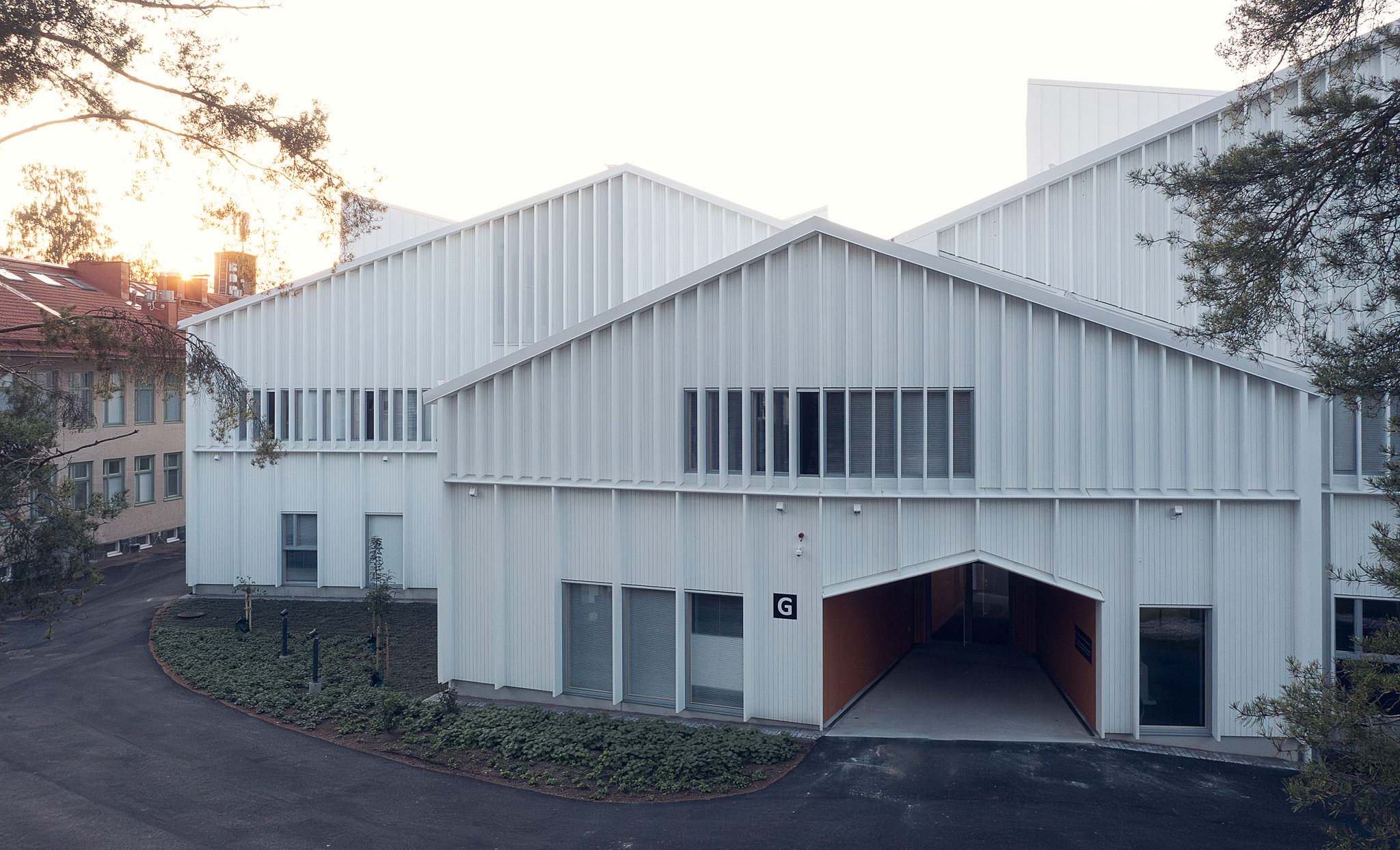
Made of CLT, the new campus house, Lastu is an ecological building with a massive timber structure in both the exterior walls as well as in the internal dividing walls. Made of one singular material, there is no need for extra layers of insulating materials in the walls. The monomateriality of the structure also enables the reuse or recycling of the materials used in the building at the end of its lifecycle. Geothermal energy is used to provide for the energy needs of the building.
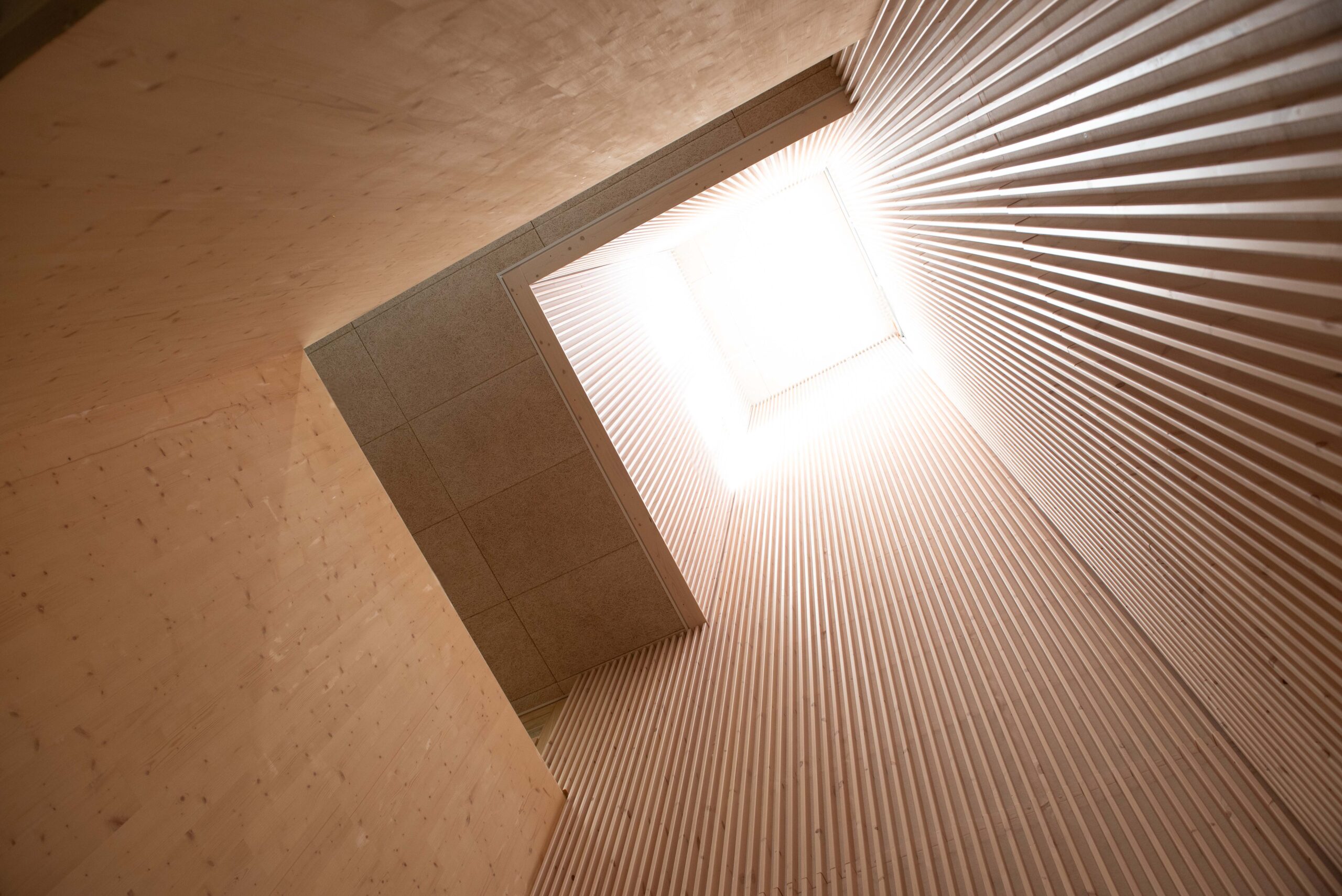
The wood paneling integrated into the façade is a variation of traditional slatted boards. It serves multiple functions at once: It forms an outer layer to protect the load-bearing solid wood structure. It also creates a play of light and shadow on the façade. At the same time, it acts as a shading element that reflects and distributes incoming sunlight in the interior spaces. Linseed oil paint is used on the facades, which brings out the wood surface beautifully.
Creating a Pleasant Interior Environment
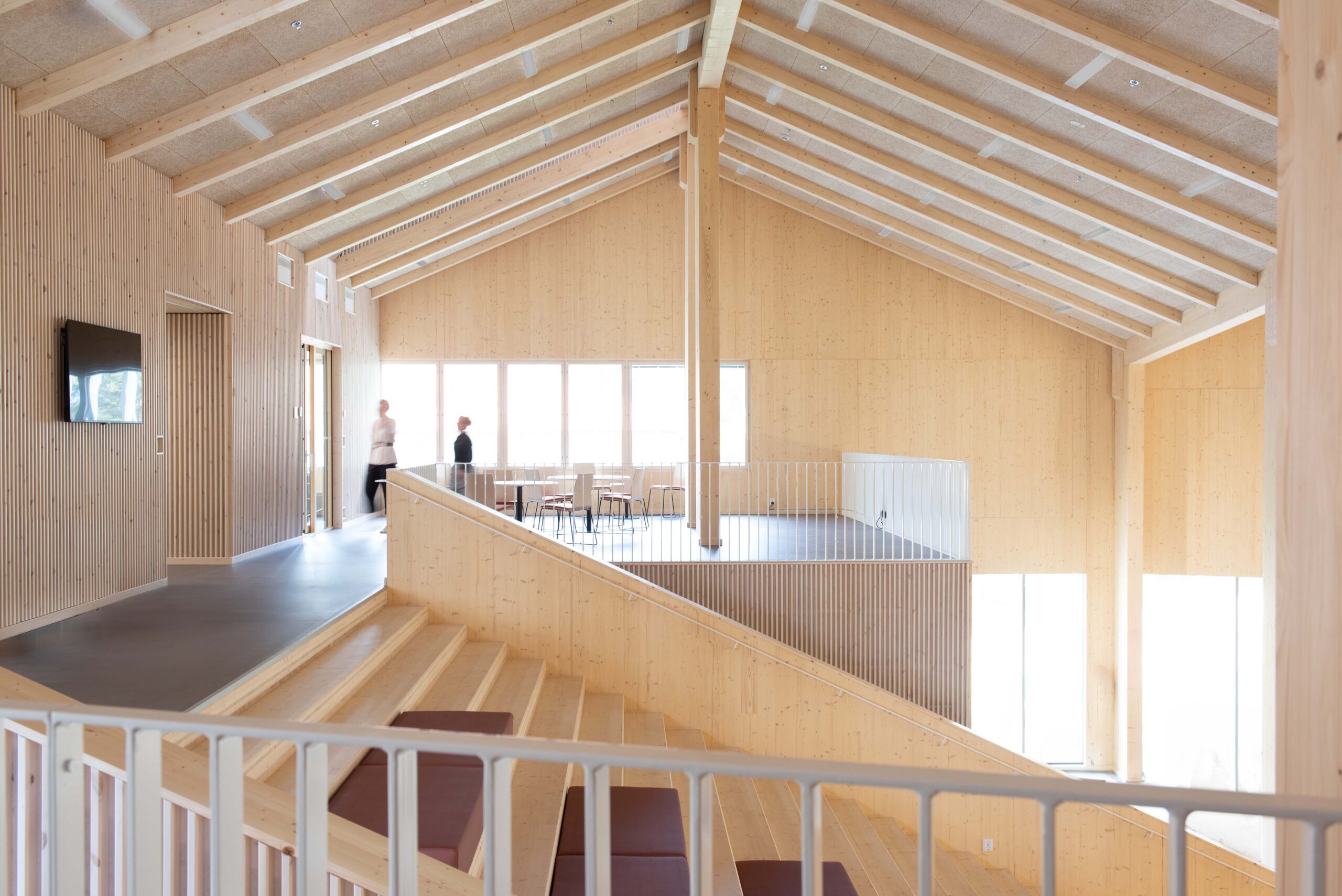
Wood is strongly present also in the interiors. In the lobby space and in the hallways, wooden scantlings with wool as a background surface are used to provide for a pleasant acoustical environment. The overall interior color palette takes its cue from the warm shades of the wooden surfaces and works in harmony with it. The surfaces have only been treated with oil and no plastic varnish has been used. The floor materials are either linoleum, wooden floor or carpet made from recycled materials. The roof is also made of wood. It is insulated with wood pulp and covered with metal sheets.
Together with the wood as the main material, natural light functions as an important part in creating a pleasant atmosphere in the building. High, full-wall windows open out to the lake from the central lobby. Open views seamlessly connect the interior to the surrounding landscape. To optimize natural light, the building has skylights that open to the south. They bring indirect natural light into the interior spaces. They give a spacious feel to the interiors, forming small, inviting meeting places that support the professional training center’s flexible teaching style.
A Multifunctional Building with Flexibly Adaptable Spaces
A multipurpose hall with a high ceiling forms the heart of the campus house. The multifunctional hall is designed so that it can easily be converted into a fully equipped theater and performance space with state-of-the-art lighting and audio systems. The stage technology is hidden inside the walls and the zig zag form of the ceiling gives rhythm to the large space. With a simple system of heavy curtains that efficiently separates the spaces from each other both acoustically and visually, the hall can also be divided into three smaller spaces.
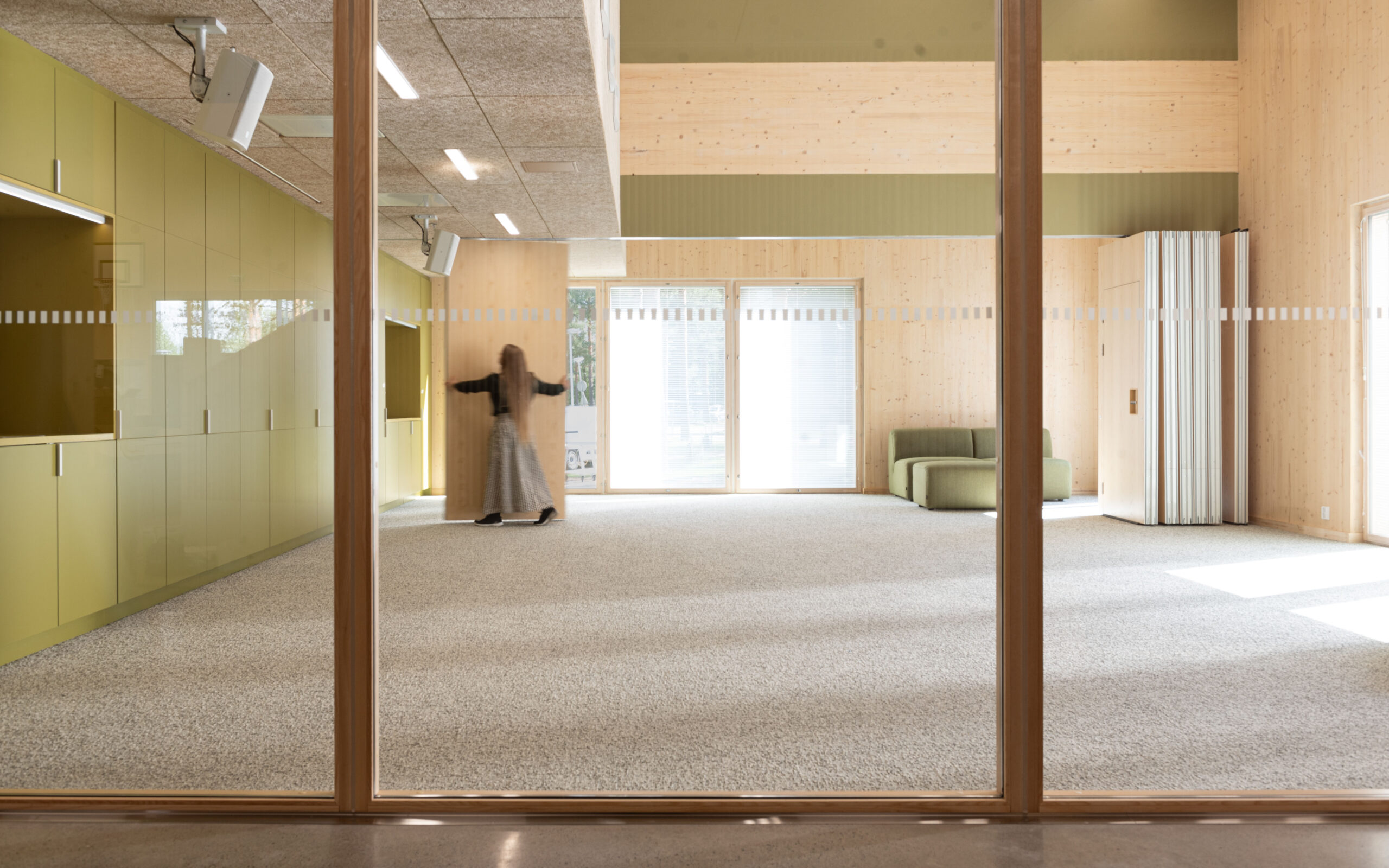
The teaching spaces orient themselves around a wide wooden central staircase that functions also as an informal meeting point for the students in the building. The classrooms are carefully designed to facilitate both on location and remote learning. There are also dedicated spaces for the simulation of healthcare practices for both hospital care as well as at home care.
- A project presentation of Lastu, the new addition to the campus of the STEP Professional Training Center campus in Järvenpää can be found HERE.