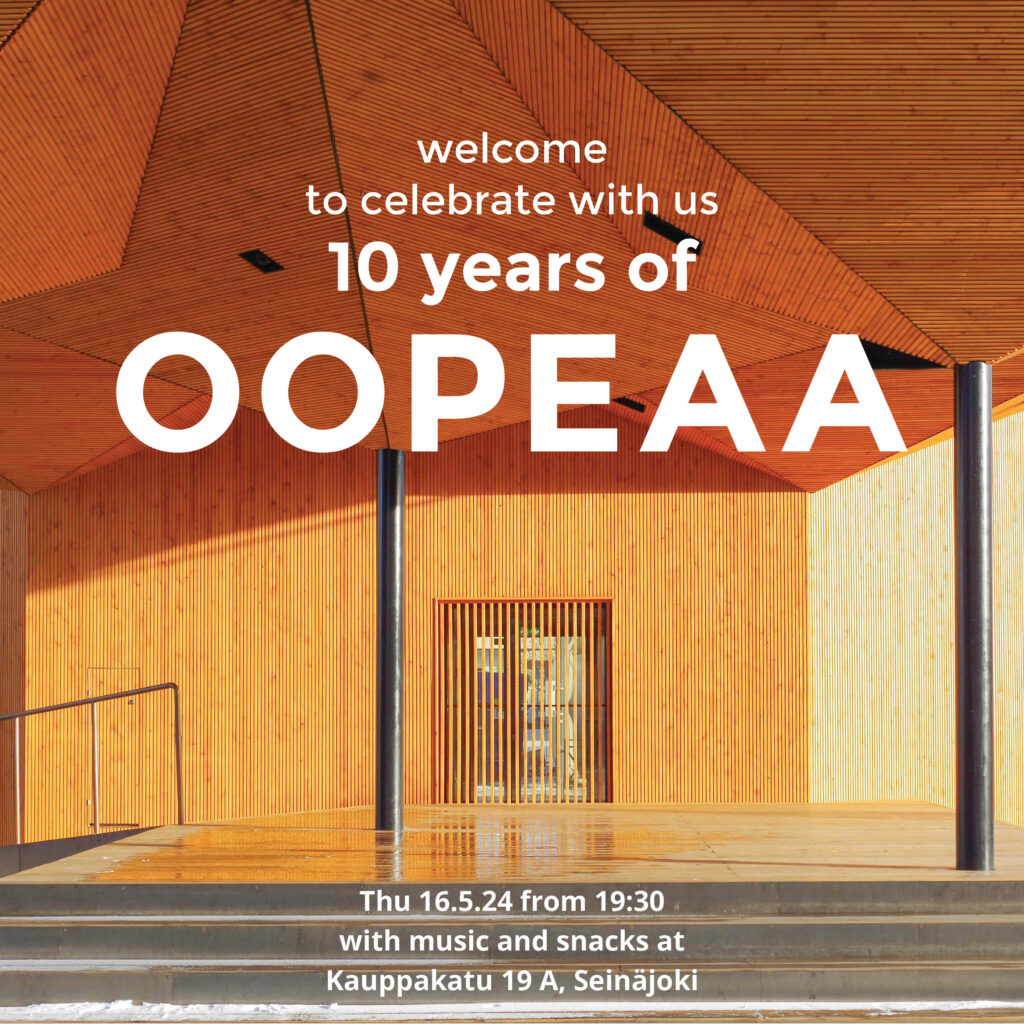
Celebrating 10 Years of OOPEAA
We are celebrating 10 years of OOPEAA. Time flies! It feels like it was only just a short moment ago when we first introduced OOPEAA Office for Peripheral Architecture as the new name of the office in May 2014. A lot has happened during the past ten years.
We have grown into two strong teams that support and complement each other, one based in Seinäjoki and the other in Helsinki. Several significant building projects have been completed during the ten years and many more are currently under way and in the planning stages. We have gained a lot of experience and solidified our expertise through a wide range of projects from urban housing and town planning to public buildings and spaces for education and the community. We have also had the opportunity to deepen our knowledge in the potential of wood as a building material and in sustainable solutions through several research projects.
Collaboration
On the occasion of celebrating 10 years of operating under the name of OOPEAA, we want to take the opportunity to express our gratitude to our collaborators and clients for their commitment to quality and fresh ideas. Together with them we have been able to always seek to find the best possible solution in the specific context of the project. Through collaboration, we have striven to create buildings and spaces that people can feel good in, places for better life.
A big thank you goes also to everyone who has been part of the OOPEAA team over this time of ten years. It has been a pleasure and an honor to share the ten years with you all!
Reflecting on the 10 Years of OOPEAA
This is good a moment to reflect on the intention behind the name. By introducing the name OOPEAA Office for Peripheral Architecture, we wanted to highlight the mutual interdependence between what is perceived as the periphery and that which is seen as the center. It is always a matter of vantage point, and one could not exist without the other.
In this time of a growing awareness of the global interconnectedness of our actions and their impact on the world around us, the perspective of the peripheral emerges as a particularly pertinent one. Being based in Finland, we represent a northern perspective. Our experience naturally gives rise to a peripheral approach. By taking on the name Office for Peripheral Architecture, we wanted to embrace the peripheral as a key guiding principle in our approach to architecture.
In our news post on May 19, 2014 we defined the notion of periphery as “a space of possibility on the borderline between two different worlds”. With the new name, we wanted to give expression to our aspiration to create “architecture that finds its inspiration in the state of being in-between – between urban and rural, but always in relationship to both; between a deep respect for tradition and an appreciation of the contemporary; rooted in the local and yet part of a larger international context.”
Reflecting on the ten years since we took on the name OOPEAA, it is good to notice that we have indeed remained true to the commitment to the peripheral approach. We have sought to identify possibilities in the place where an understanding of tradition meets an open attitude towards the new. With an innovative approach we have created buildings with a contemporary vision of architecture.
Bringing the Old and the New Together to Create Something New
The renvation and restoration of the Villa Koivikko, a modernist master piece by Aarne Ervi, and the Rauhalinna Castle, a richly ornamented wooden villa from 1900, have given us a chance to practice the fine art of bringing together the old and the new. Complementing each other, the historical and the contemporary enter in an interesting dialogue, each with their own voice. The introduction of a new layer allows to extend the life of the existing buildings. The combination makes it possible to bring the historical buildings up to contemporary standards without compromising their original character.
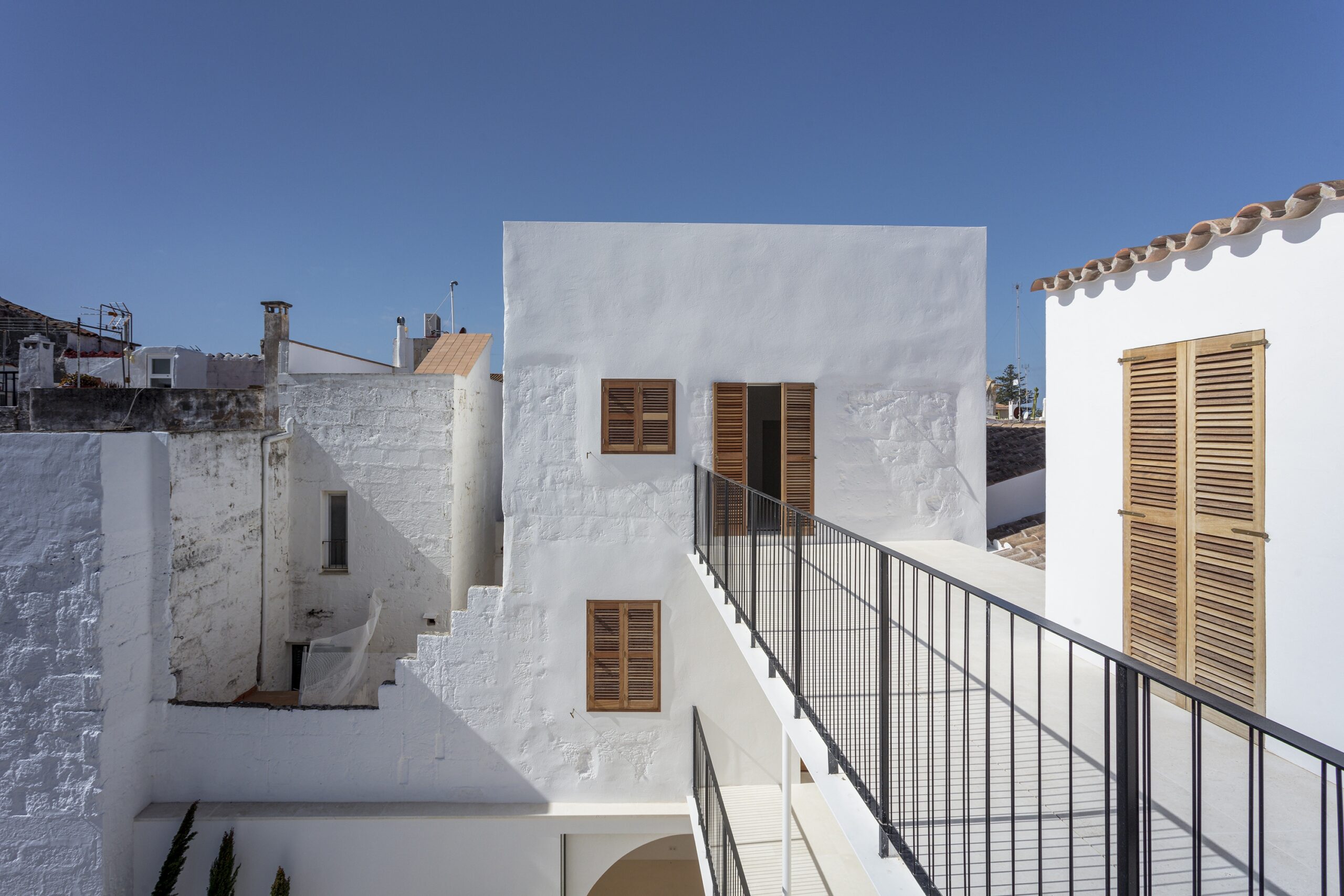
Casa B on Menorca demonstrates how it is possible to turn an old abandoned structure into a comfortable dwelling of contemporary standards. In its material choices it also brings together the Nordic and the Mediterranean. Repairing parts of the existing structure, a new layer of architecture was added to it. Transforming the remnants of the old building into a modern house, the project gives it a new life.
Building Places for Communities and Spaces for Learning
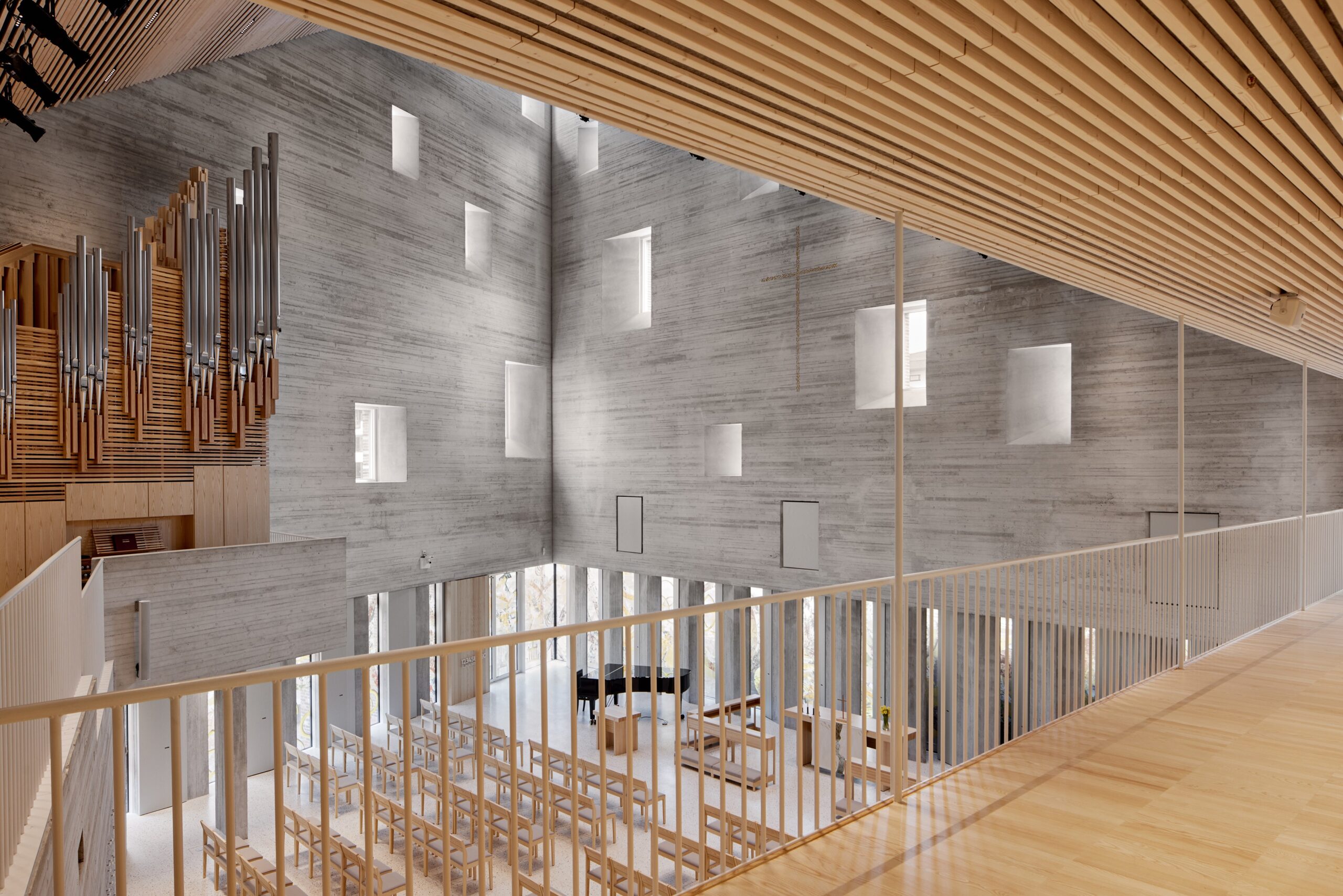
During the past ten years, we have had the rare opportunity to create two new sacral buildings, the Suvela Chapel and the Tikkurila Church. They are both first and foremost spaces for the community. The Suvela Chapel creates a place for the community in one of the most ethnically diverse neighborhoods in the country to come together. In Tikkurila, the church is integrated in a city block where it is part of a multifunctional complex containing an apartment building that offers social housing and student housing.
The Puuhi Community Space as an example of a place for meetings and shared activity for the people in a much smaller scale. Even if the building itself is small, it is of great significance to the community. It provides them with a space for a varied range of activities from gatherings to performances of music, theater and art.
Lastu, a new education building on the STEP Professional Training Center campus in Järvenpää, is at once a central hub for the campus and a space for the community. It is a multifunctional building that houses spaces for education and provides services for the community. In addition to teaching spaces, the building also contains a large multipurpose hall, seminar spaces, and a gym that can also be rented out for various kinds of gatherings, performances, and meetings.
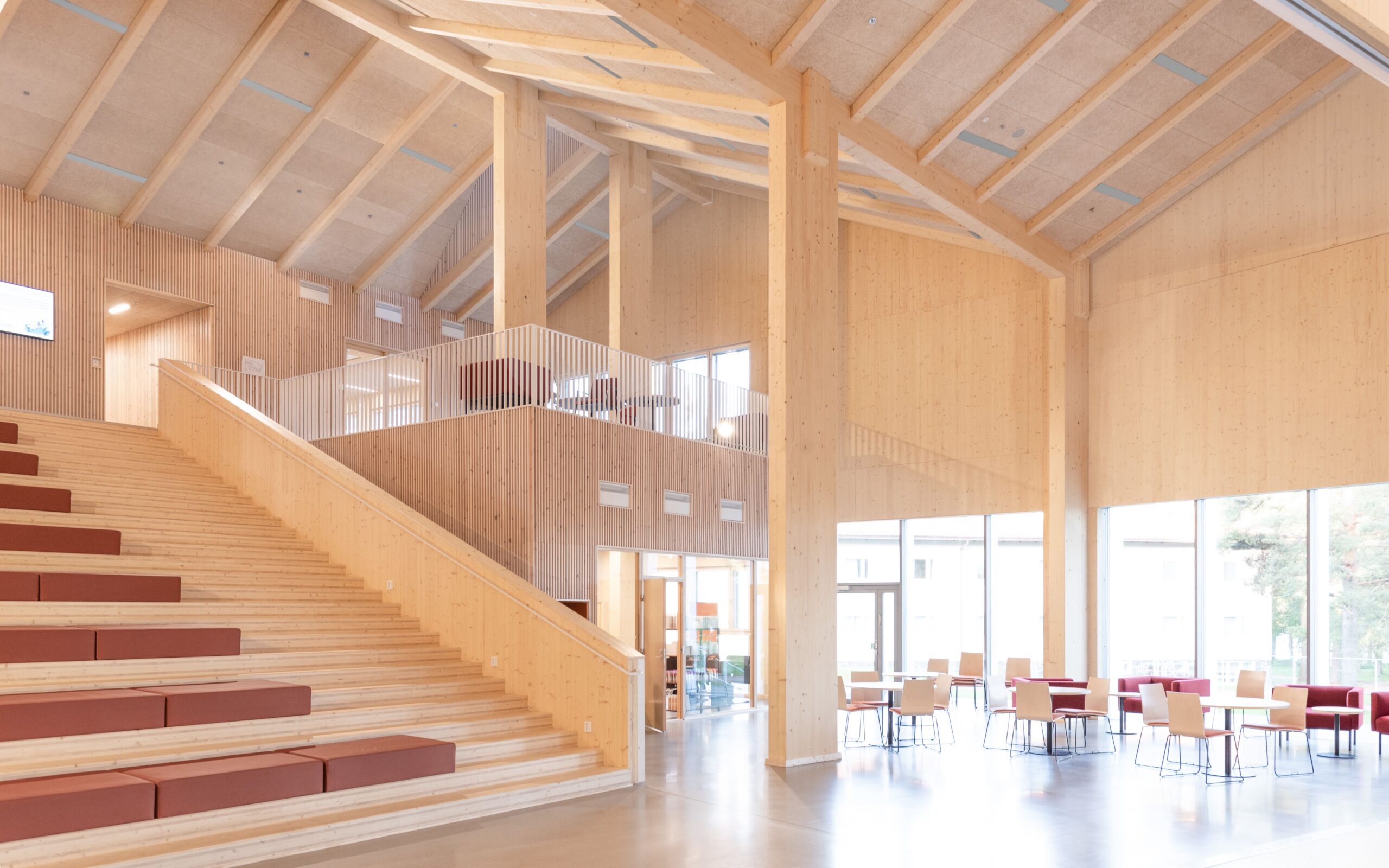
The Taika Kindergarted, in turn, is carefully designed with the needs and the scale of children in mind in order to provide them an experiential and friendly space. In addition to smaller spaces clustered according to the age groups, there is an open shared space that forms the heart of the building. It serves as a dining hall and transforms into a performance space or a meeting space for the community to use in the evening hours. A wide ‘reading stair’ in the center provides an auditorium-like space for seating.
Places for Living
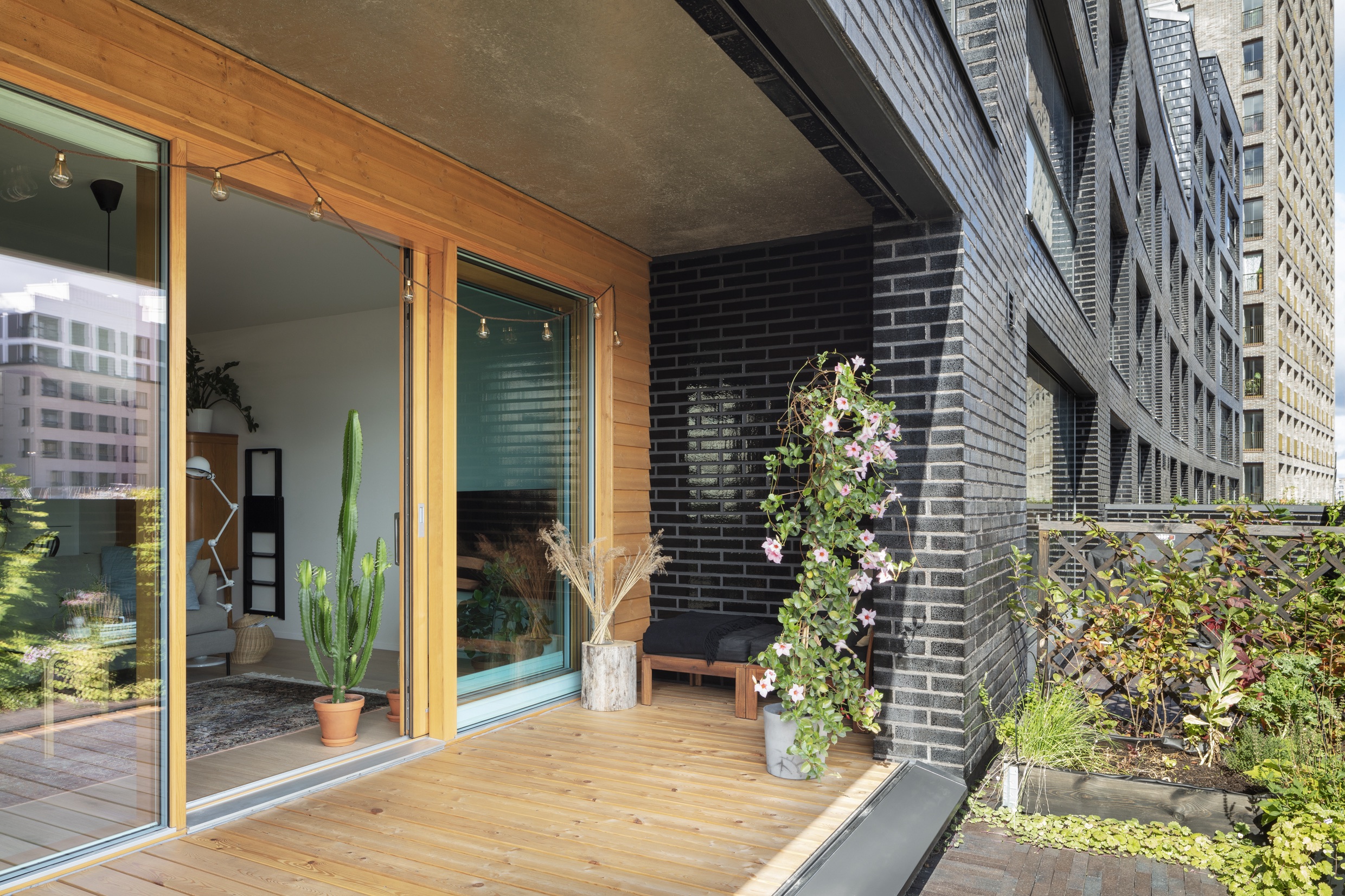
During the past ten years we have also had the opportunity to create a range of different types of housing from single family homes to apartment buildings and entire blocks of housing. The Puukuokka Housing Block in Jyväskylä gave us a chance to explore the potential of prefabricated volumetric CLT modules in creating wooden multi-storey apartment buildings. The modular system developed and piloted in Puukuokka, was later applied in the Pihapetäjä Housing in Joensuu.
Karlsson as an example of providing high quality housing within the strict budgetary limitaions set on ARA apartments. Risuviita Housing, in turn, offers a combination of social housing and carefully designed special homes for people with autism spectrum.
The Seinäjoki Station Area, a currently on going project, iss an example of a large scale urban area with a multifaceted program of buildings from the station building and the wellbeing center to housing and public spaces.
Appreciating the Small Scale
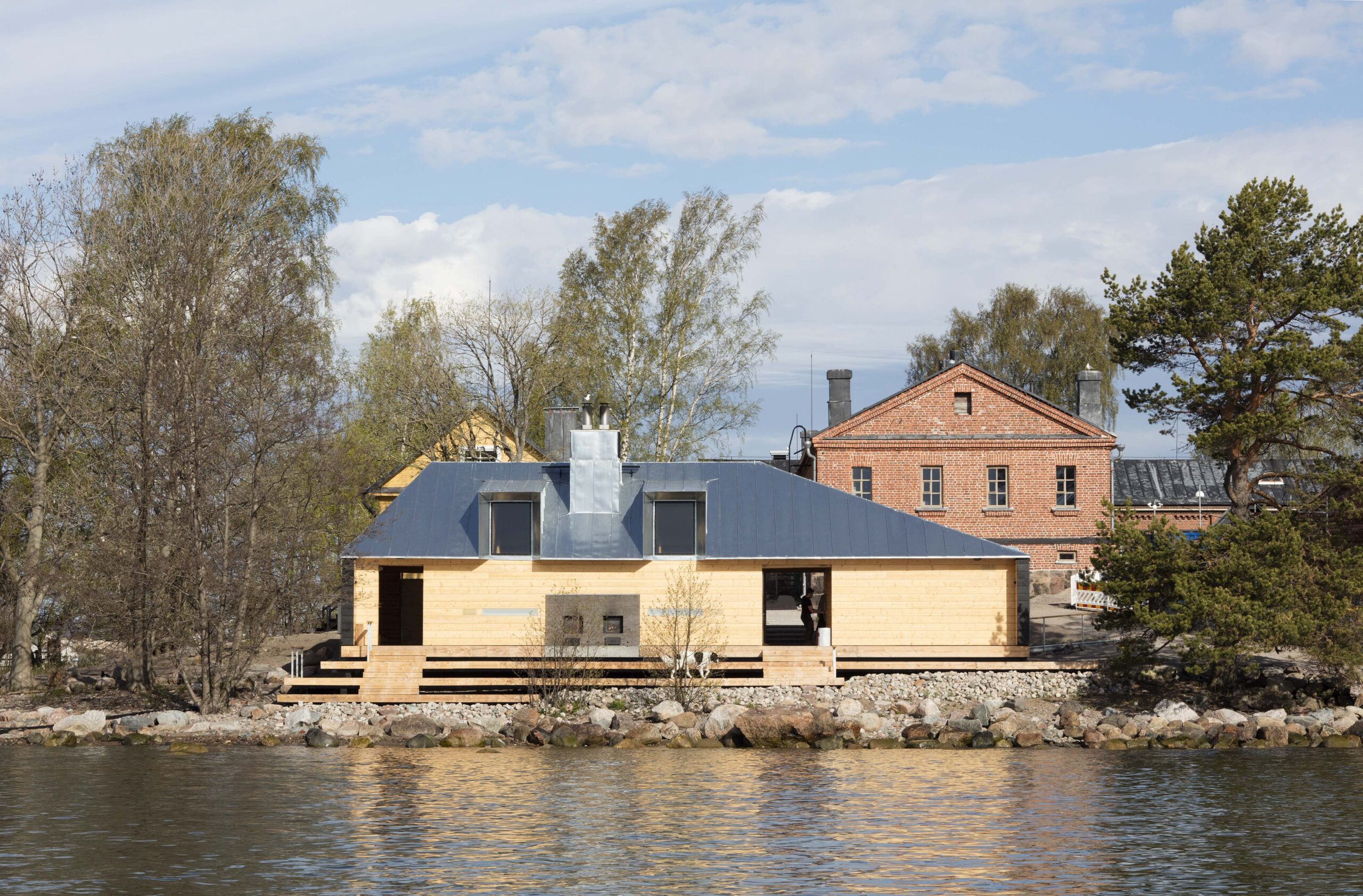
During the past ten years we have also had the delight of working on project with a small scale to explore the rich potential of creating buildings with wood. The Lonna Sauna is an example of the use of hand carved logs to create a traditional sauna with a contemporary expression. The Periscope Tower, in turn, gave us an opportunity to explore the potential of CLT in creating a modular structure with a unique identity. It invites people to observe the view over Lake Kyrösjärvi.
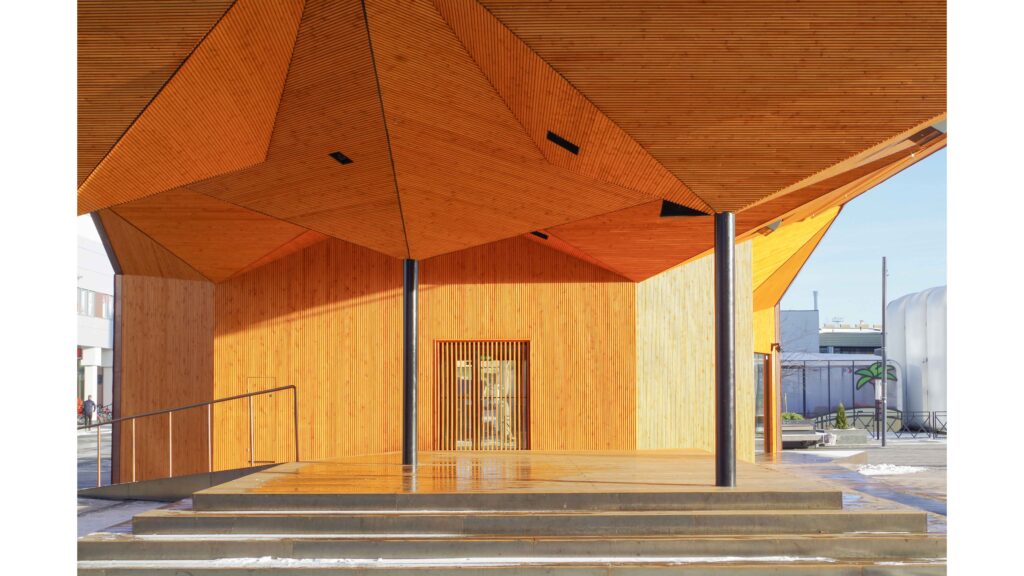
The Kontra Pavilion in the new central square in Seinäjoki provides an open stage for performances and a place for people to meet the center of the city. Creating a public space for events and gatherings in the heart of the city, it forms a key element in the overall image of the square.
Research and Development
Research projects have allowed us to deepen our knowledge in our key areas of focus. Our interest in developing new solutions that are architecturally and technically sustainable has led to our involvement in research projects with a focus on creating tools to support the design process. To help assess the impact of the choice of materials in a building project already in the early stages of the design process, we developed a web-based evaluation tool, the JOKOTAI Material Impact Screener. It is a free online tool that allows us to compare the environmental impact of alternative material and structural choices on the ecological sustainability of a building project.
The Urban Toolbox is a set of architectural tools designed for developing the city as a well-balanced urban place. It provides a wide-ranging palette of tools for architectural interventions of different scales to be applied in various combinations depending on the context and the desired effect. The goal is to create a city that provides an accessible and inclusive urban place for people to live and work in and offers a richly layered and well-balanced environment for future growth.
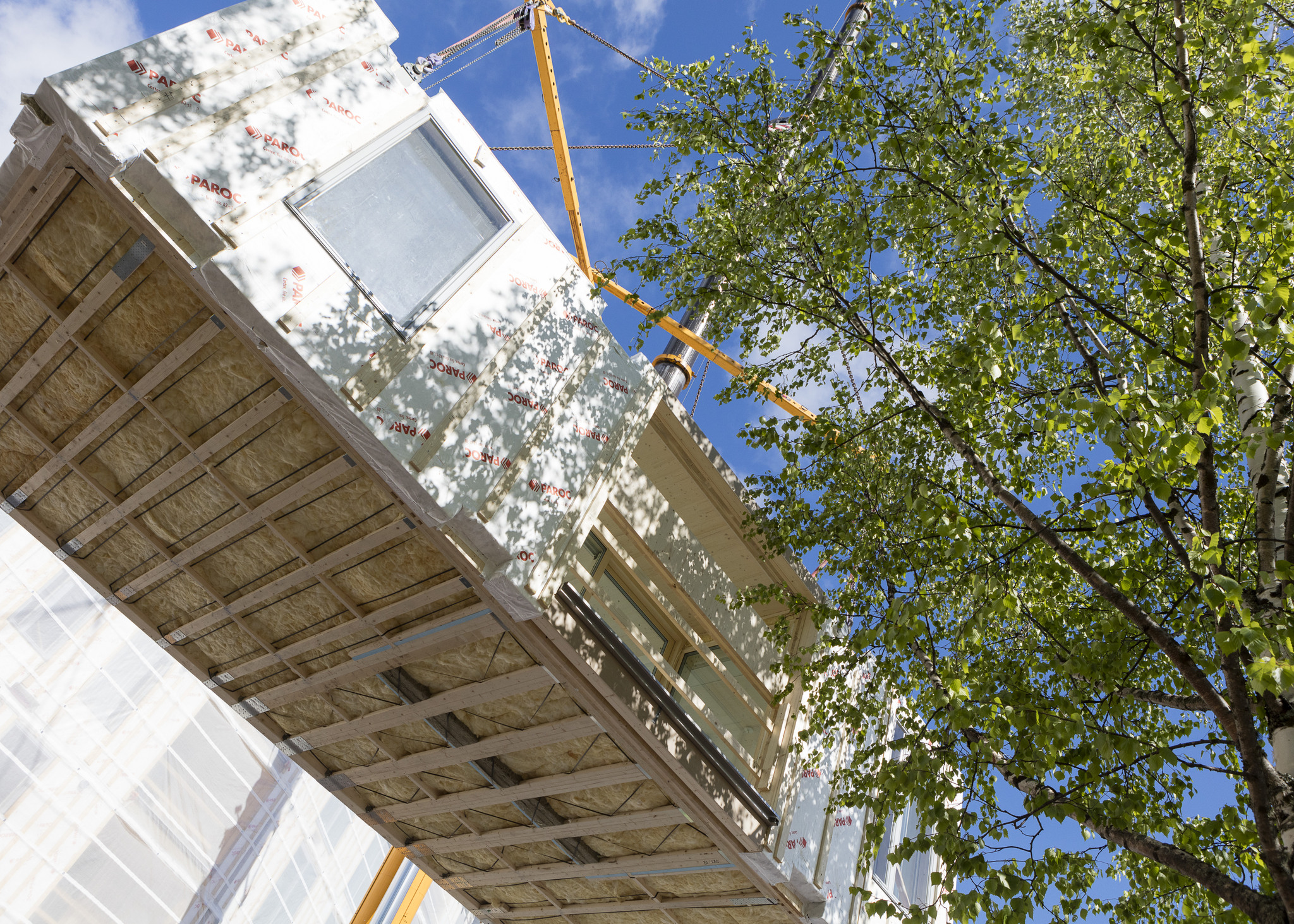
Our interest in building with wood and in making use of its innate properties has been an important element guiding our research activities. There is also an ongoing focus on exploring the potential of modularity and the application of mass timber as a sustainable solution to the needs of urban housing and public buildings.
Participating in the International Discourse
Along with interviews and exposure in numerous publications across the world, lectures at universities and participation in numerous conferences, symposia and exhibitions in different parts of the world have provided us a platform to participate in the debate on topical concerns in architecture on an international level. This has broadened our perspective and given us a deeper understanding of the rich variety of approaches to architecture in different parts of the world spanning from Europe to the US and Canada and to Japan and Australia and more.
During the past then years, the work of OOPEAA has been recognized with some of the highest merits achievable, including the World Architecture Festival Award 2022 for Villa B in the category of Houses and Villas, The PLAN Award for Public Spaces in 2022 for the Tikkurila Church and Housing, the the PLAN Award for Housing in 2022 for the Karlsson Apartments, the Finlandia Prize for Architecture and the Wood Architecture Award in 2015 for the Puukuokka Housing, the Rice Design Alliance Spotlight Award in 2017, the Canadian Wood Design and Building Award 2016, and the American Architecture Prize 2016. Buildings designed by OOPEAA have been selected for the shortlist for the Mies van der Rohe Award in 2017 and 2022, and nominated for the 2019 and 2024 editions of the prize.
Anssi Lassila has personally been recognized for his work with the Alfred Kordelin Prize and the State Prize for Architecture in 2017. In 2021 he was awarded the Pro Finlandia medal by President Sauli Niinistö.
We are grateful for the many opportunities for exchange of thoughts and experiences with our colleagues and collaborators both in Finland and internationally. They have broadened our perspective and enriched our thinking in valuable ways. We look forward to continued collaboration and to many new encounters in the coming years.