Lastu Education Building Nominated for EU Mies Awards 2026
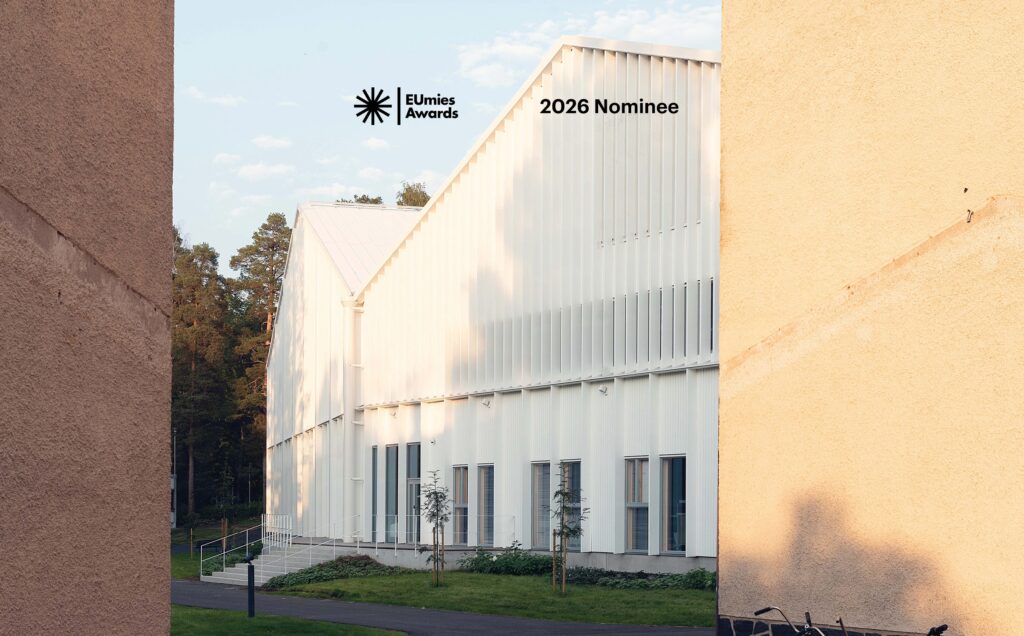
Lastu Education Building has been nominated for the EU Mies Awards 2026. Lastu is a multifunctional education building with a massive timber structure on a forested campus by a lake. Complementing the existing buildings, it forms a central hub for the college. Its flexibly adjustable spaces support contemporary teaching methods and provide services also for the community.
In creating Lastu, the goal was to make a place for the students and the local community where people can feel good. From the first steps of sketching, the design process was informed by an ongoing dialogue with the future users. Kirkkopalvelut as the client and Arkta Rakennuskultti as the builder were great partners for us in the process.
We want to express our heartfelt thanks to everyone involved in the process and working together with us to make a building that responds to the needs of contemporary methods of teaching and learning and provides a space for the entire local community to share. It makes us happy to see how well the building has been received by its community of users. It is truly in active use on each day of the week and at all times of the day throughout the year.
EU Mies Awards
The Prize highlights the achievements of European architects in the development of new concepts and technologies. Providing the wider public with the opportunity to gain an understanding of the importance of architecture, the prize underscores the relationship between the quality of life and the quality of the environment as a key priority in the construction of sustainable cities and communities.
Organized by the Fundació Mies van der Rohe with Creative Europe, the EUmies Awards are granted under three categories: Architecture, Emerging and Young Talent. The Architecture and Emerging categories are organised together and the jury reviews all the proposals together. The Young Talent category is reviewed by a separate independent jury.
The 2026 edition of the awards is the 19th cycle of the Prize. It brings together 410 works from 40 countries and 143 regions submitted by a broad network of national architectural associations, independent experts, and the Advisory Committee. Reflecting the diversity, creativity, and richness of Europe’s architectural landscape, the nominations showcase the most significant built works completed between May 2023 and April 2025.
- For the announcement of the nominated project for the EU Mies Award 2026, see HERE.
Complementing the Existing Campus
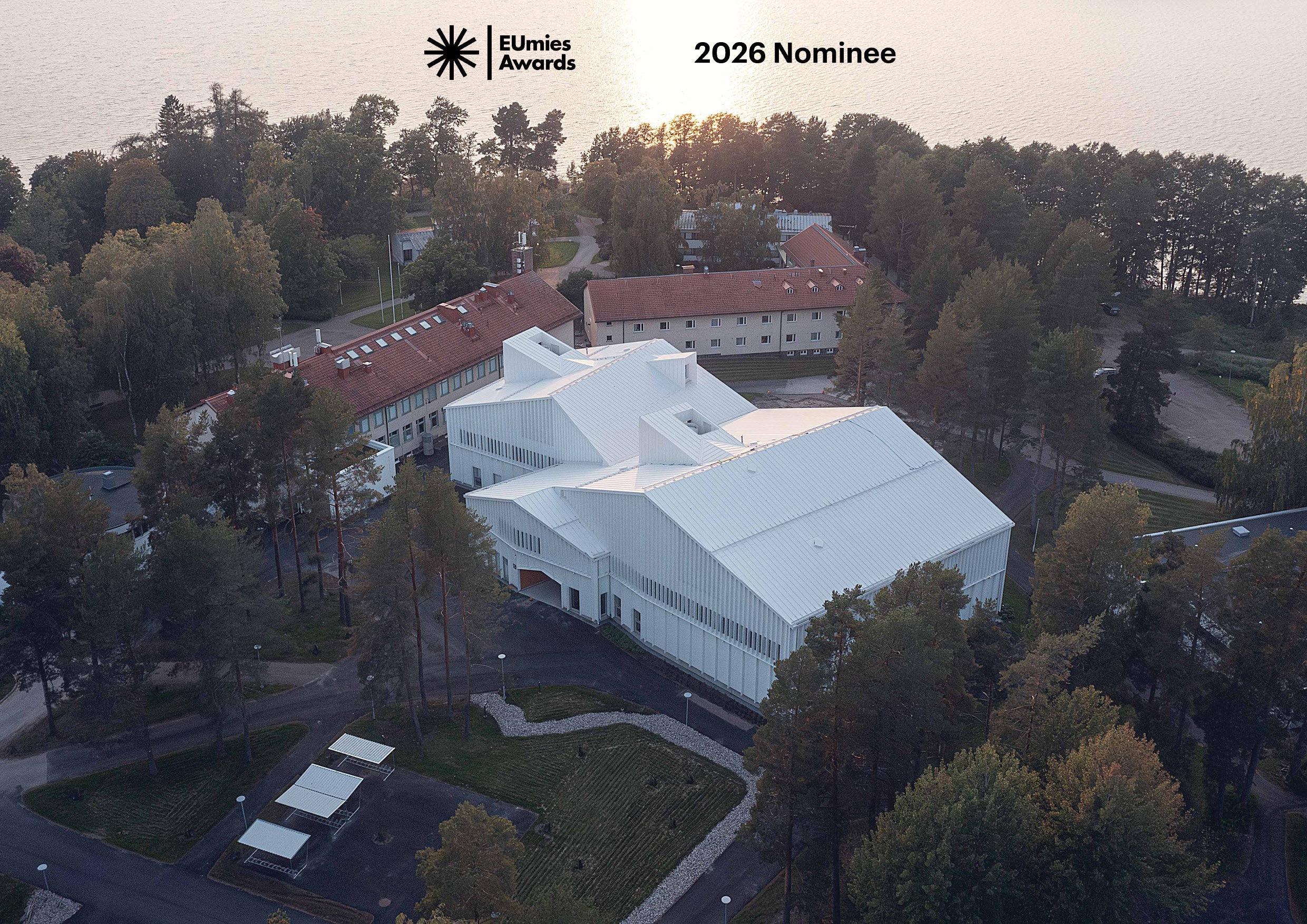
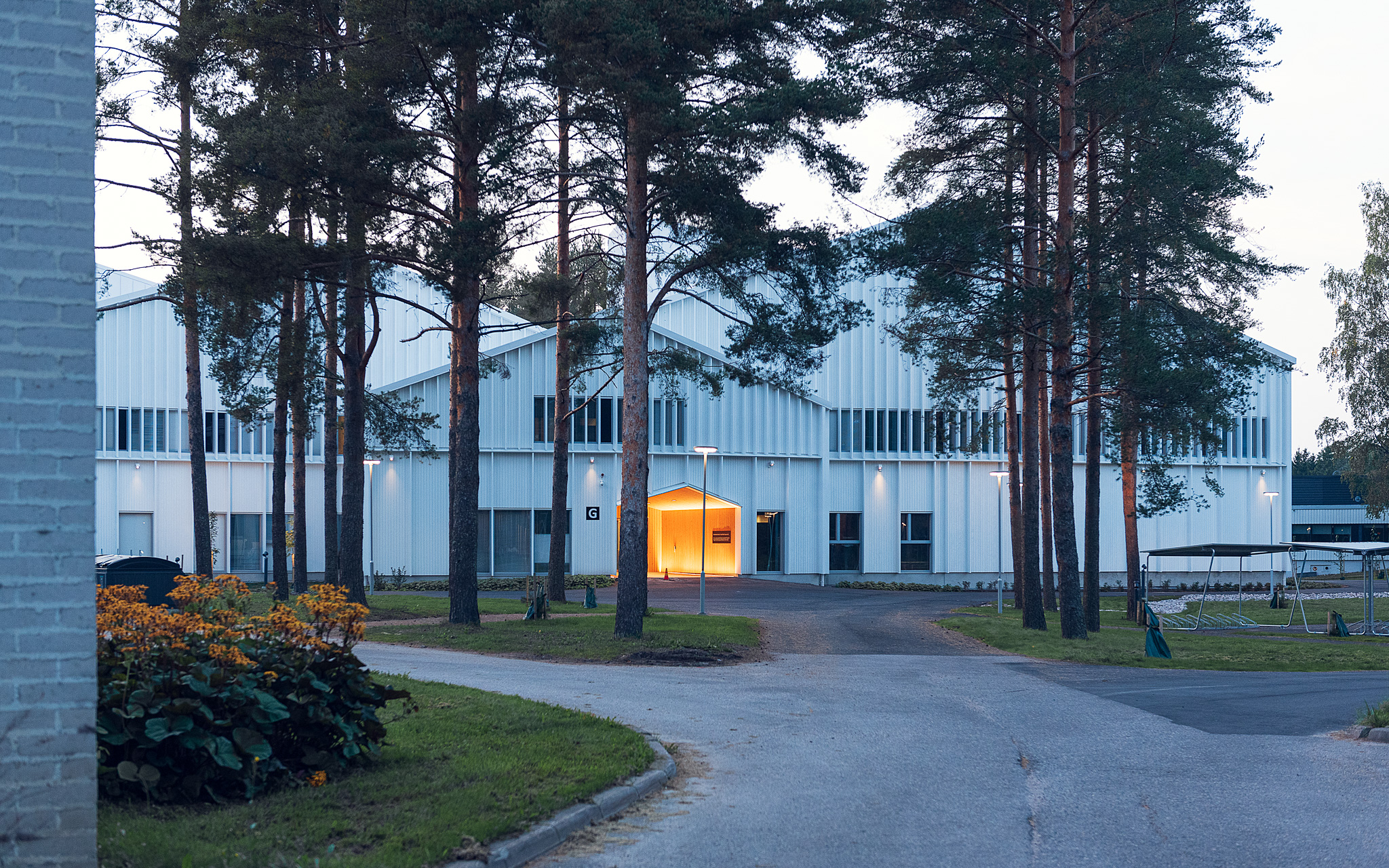
Inspired by the natural beauty of the site with a strong presence of pine trees, the wooden building of Lastu resonates with the nature around it. Giving a feeling of warmth, wood creates a cozy and relaxed ambience with a good environment for learning. Working harmoniously with the scale of the surrounding buildings, it brings a new layer of architecture to update the college campus originally formed in the 1940s. In addition to teaching spaces, Lastu contains a large multipurpose hall, seminar spaces, and a gym that serve the local community.
Reflecting the rich variety of activities, the relatively large volume is organized into several smaller blocks that together form one entity with a strong identity. Forming a building with a human scale, the building masses stagger in height. They have pitched roofs and the eaves drop low towards existing buildings. The subdued white facade adds a neutral element among the rich catalogue of styles of buildings from various decades on the campus. A series of roof lanterns brings light into the core of the space and gives the building a sculptural character.
The sculptural form of Lastu highlights its central role and location on campus. The main entrance of Lastu is pushed into the building volume and highlighted by warm coloured wood distinct from the otherwise calm white exterior of the facades. Deep wooden slats cover the entire facade. They form a three-dimensional cladding that highlights the sculptural shape of the building. They also shade windows and reduce glare inside, protecting the building from overheating.
The New Heart of the Campus
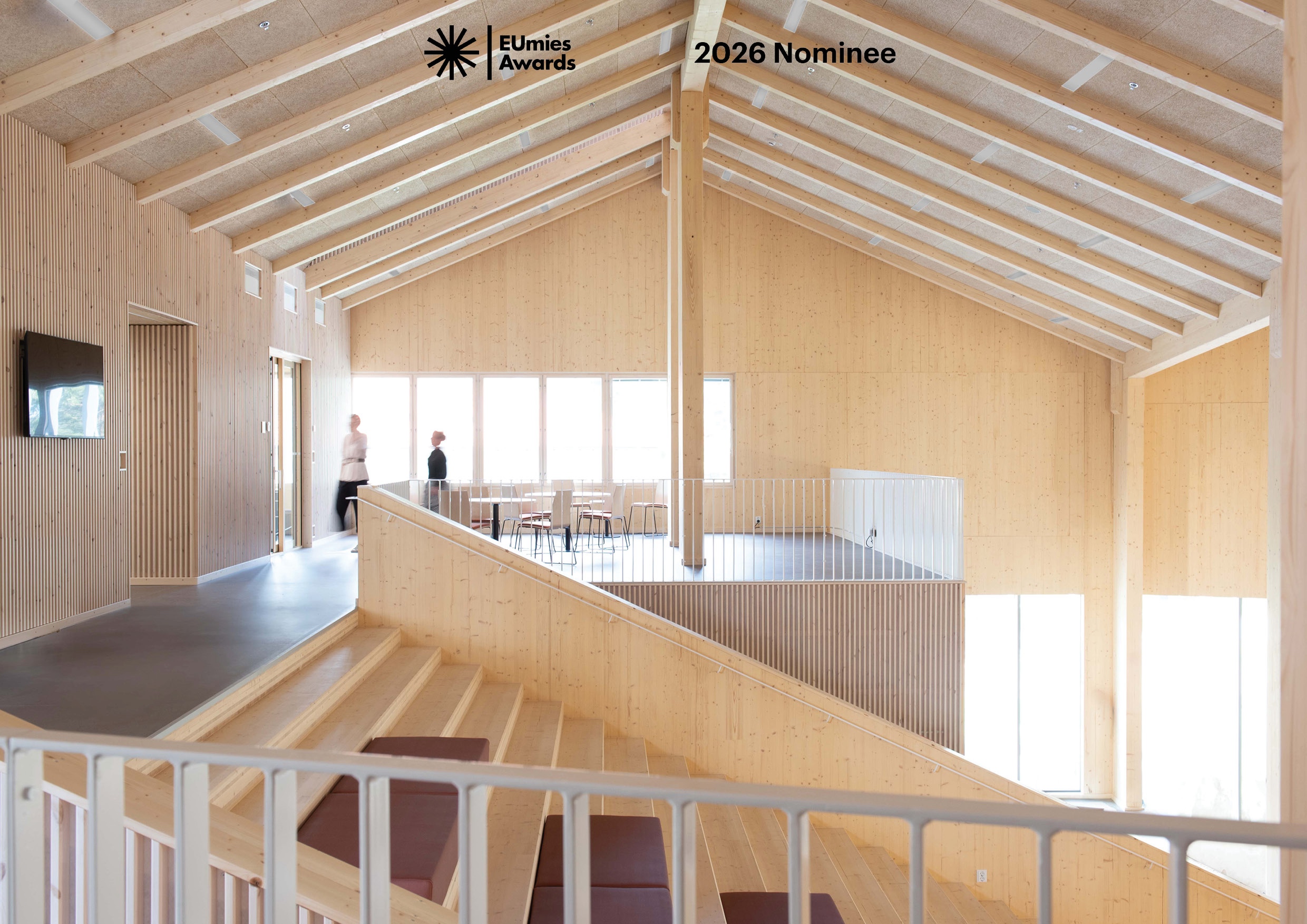
A multipurpose hall with a high ceiling forms the heart of the building. It can be easily converted into a fully equipped performance stage with state-of-the art technology or divided into three smaller spaces with a simple system of heavy curtains. While allowing for a wide variety of uses from theatre and speaking performances to different sports events, the all-wooden surfaces of the multipurpose hall tie the diverse functions together into a visually cohesive whole.
With sliding wall panels between the multipurpose hall and the lobby, it is possible to combine the two to accommodate larger events. The central open staircase functions as an auditorium. Forming the heart of the building, the main lobby flows to the second floor via the open central staircase and opens to the forested surroundings. Large glazed surfaces visually connect the multipurpose hall to the wooded campus and lake beyond.
Class Rooms for a Wide Range of Subjects
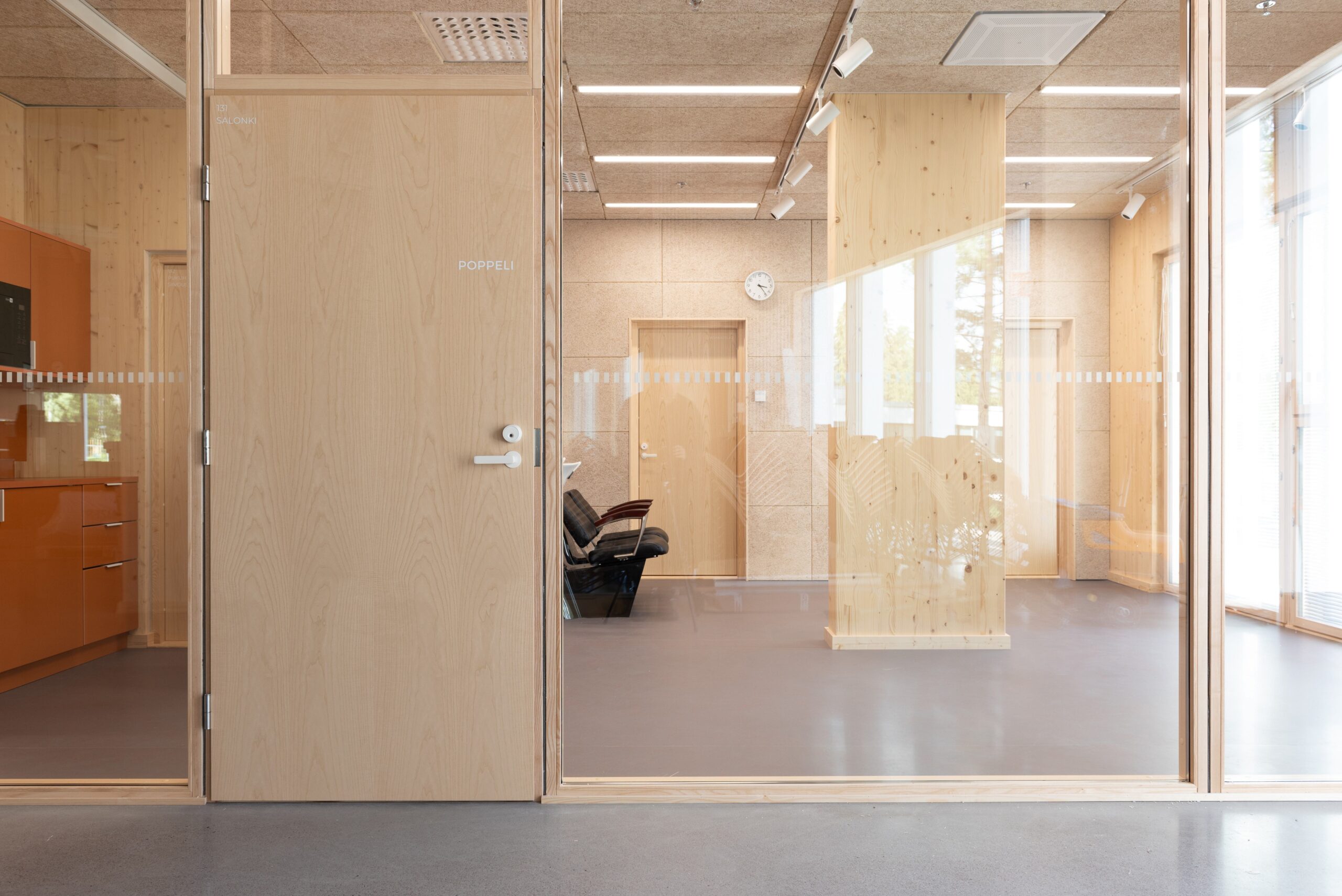
The classrooms facilitate both on location and remote learning. There is also a series of well-equipped classrooms for the arts and technical work. The wide range of subjects being taught in the spaces of Lastu are differentiated by colour, with wood forming the neutral base. Acoustic requirements are met with wood fibre paneling.
The class rooms are connected with sliding doors with adjoining spaces. This makes it possible to expand the space according to need either by combining rooms or opening them into the second floor lobby. The student operated salon, hairdresser and beautician spaces open to the main lobby. They invite the public to visit Lastu, making it a meeting point not only for the campus but in the wider area.
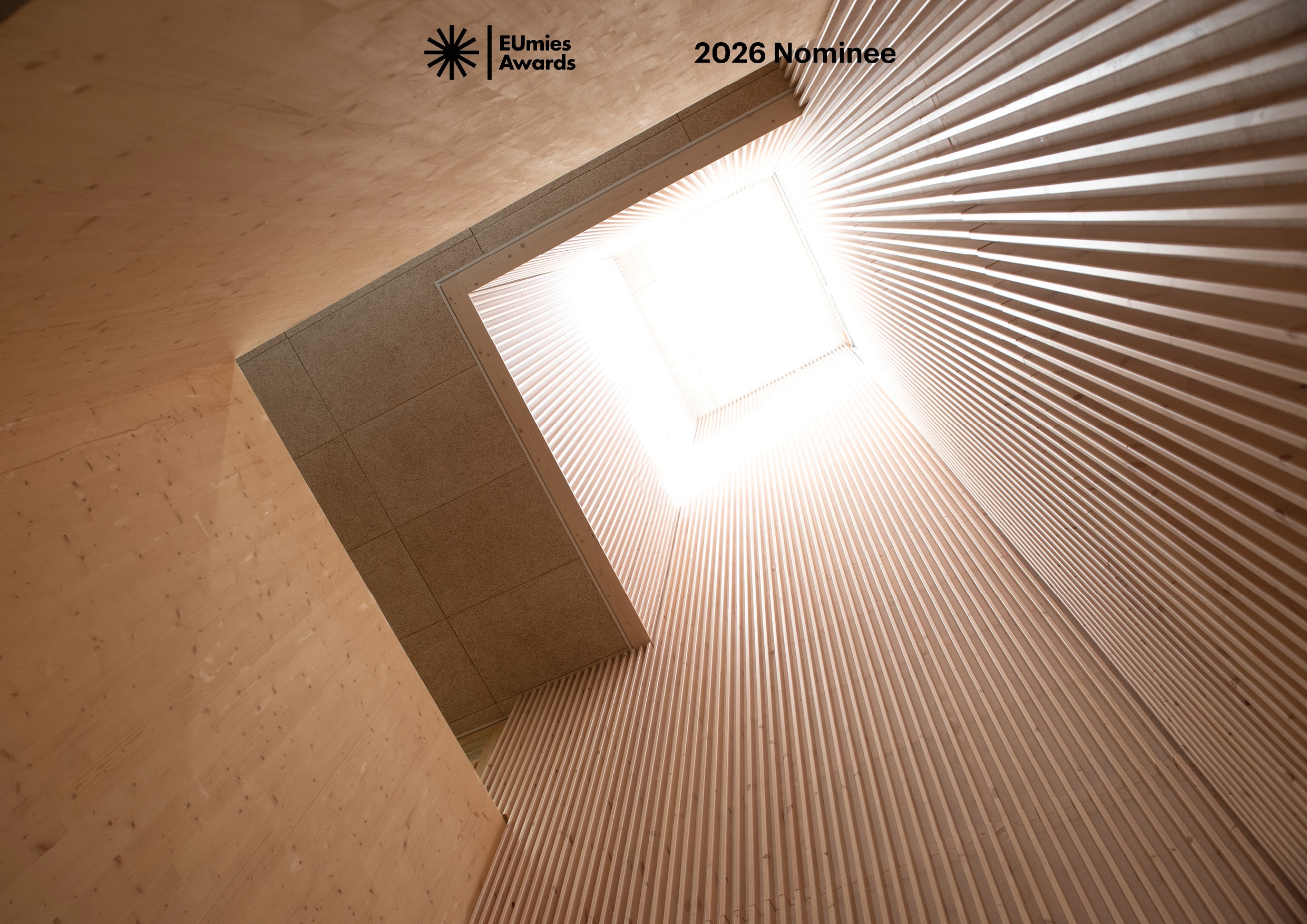
The teaching spaces are arranged around a wide wooden stair that functions as a gathering point and can also be used as seating for events. Corridors throughout the building expand to form spaces for casual gatherings. On the second floor, sculptural lightwells accentuate the lobby and gathering spaces. They bring natural light into the relatively deep building mass. The public spaces are highlighted with acoustic slatted wall covering.
Building with CLT elements
Using CLT elements as the load bearing structure allowed for flexibility in the spatial organization. It also made it possible to keep the construction period short, minimize disturbance to the terrain, and preserve as many trees as possible. Providing natural shading and wind protection, the trees create a balanced microclimate and reduce the heat load. The wood paneling in the façade protects the wooden structure and helps distribute incoming sunlight. The northern light conditions were carefully considered in the orientation of the different functions.
By using large CLT elements, it was possible to realize the infill construction of Lastu on a compact site, leaving the wooded surroundings and existing buildings untouched. The CLT elements were fully assembled under a tent set up within a tight construction site perimeter, allowing campus life to continue without disruption during construction.
- For more information on the Lastu Education Building, see HERE.