Punah’Ii’lkka Awarded Second Prize in the Competition for Ii
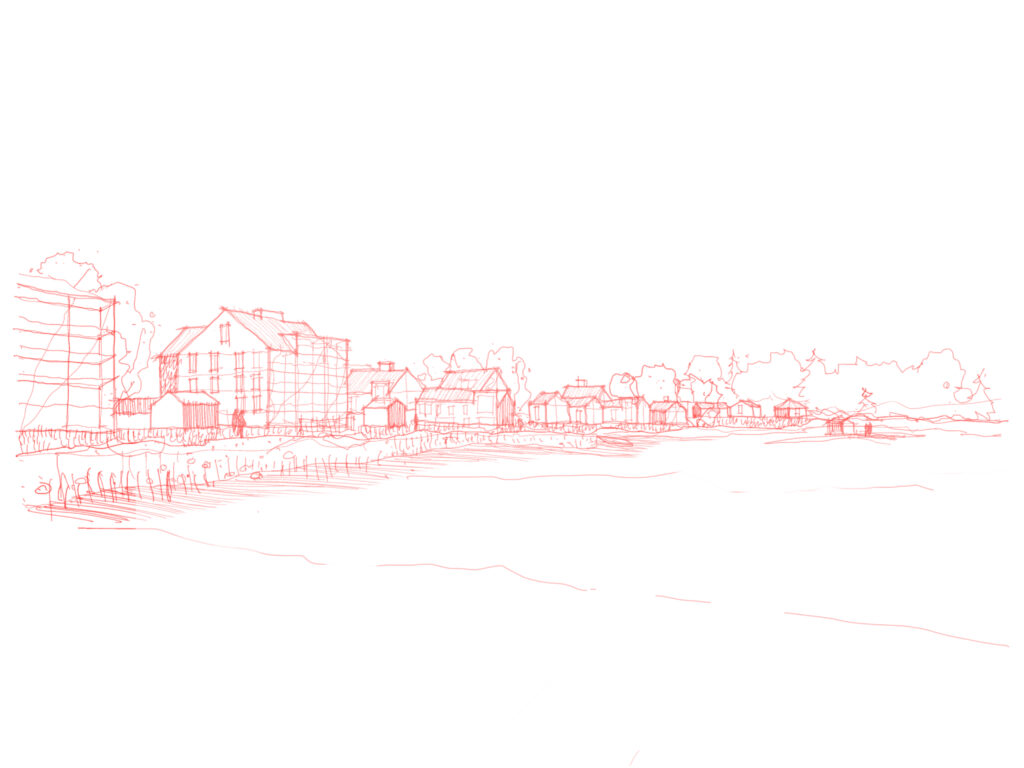
The proposal, Punah’Ii’lkka developed by OOPEAA is awarded second prize in the town planning ideas competition for Ii center.
A Competition Seeking for Ideas for Developing the Municipal Center of Ii
In honor of the 650 anniversary of the municipality, a design competition was organized seeking ideas for the furture development of the municipal center of Ii on the bank of Iijoki river. The competition area is located right next to the culturally and historically important residential settlement of Ii Wanha Hamina. The settlement dates back to at least the 14th century. The historical location and the beautiful river bank landscape of the Iijoki beach create an excellent framework for developing the administrative center. However, the task requires special skills and dedication to preserving the value of area.
The goal is to densify the area in the coming years by providing a balanced mix of housing and public buildings. The aim is to enhance the vitality of the municipal center and to elevate the historical parade ground to a common living room for the residents in the area. The intention is to complement the existing buildings with new architecture of high quality. The goal is to develop the area into a significant and impressive regional center.
The municipal center of Ii offers a mix of housing and services in a context of historical buildings and sites with scenic value. The main administrative buildings of the municipality as well as the Ii church are located right next to the competition area. The municipal hall and the Nättepori complex both suffer from moisture and indoor air problems. That is why the buildings are abandoned and need to be replaced with new construction.
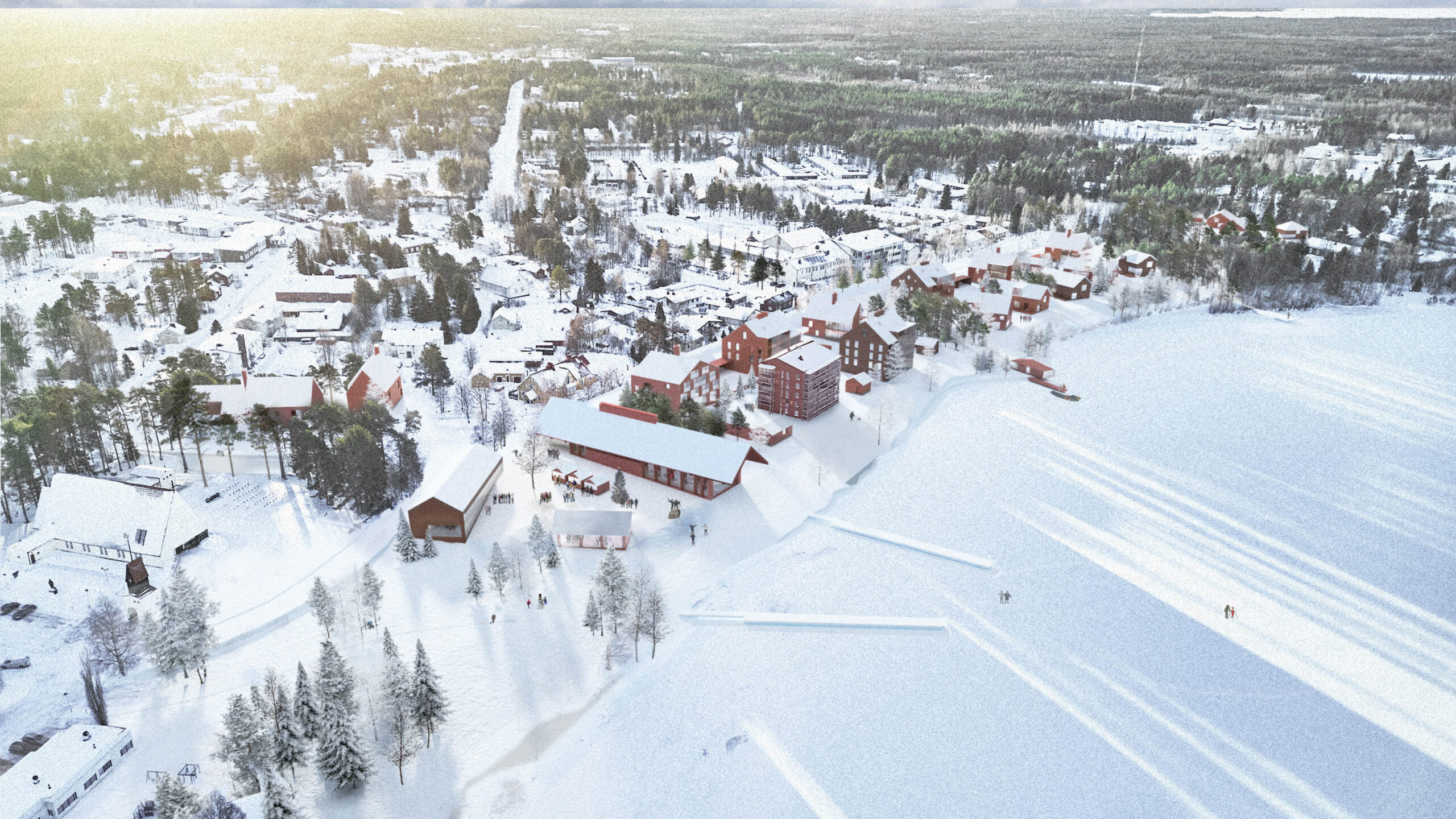
Punah’Ii’lkka
The proposal brings together the values of maritime Ii and the nationally valuable built cultural environment formed during the 650 year long history of the region. They create a vibrant and comfortable environment for the contemporary growth of the administrative municipal center. Complementing the existing structure of the area, the proposed plan creates a new Ii. It forms a continuum with Ii’s long tradition as an important nodal point on the shore of Bothnian Bay and Iijoki estuary. The proposal carefully considers the nationally valuable built cultural environment of the old harbor area of Wanha Hamina.
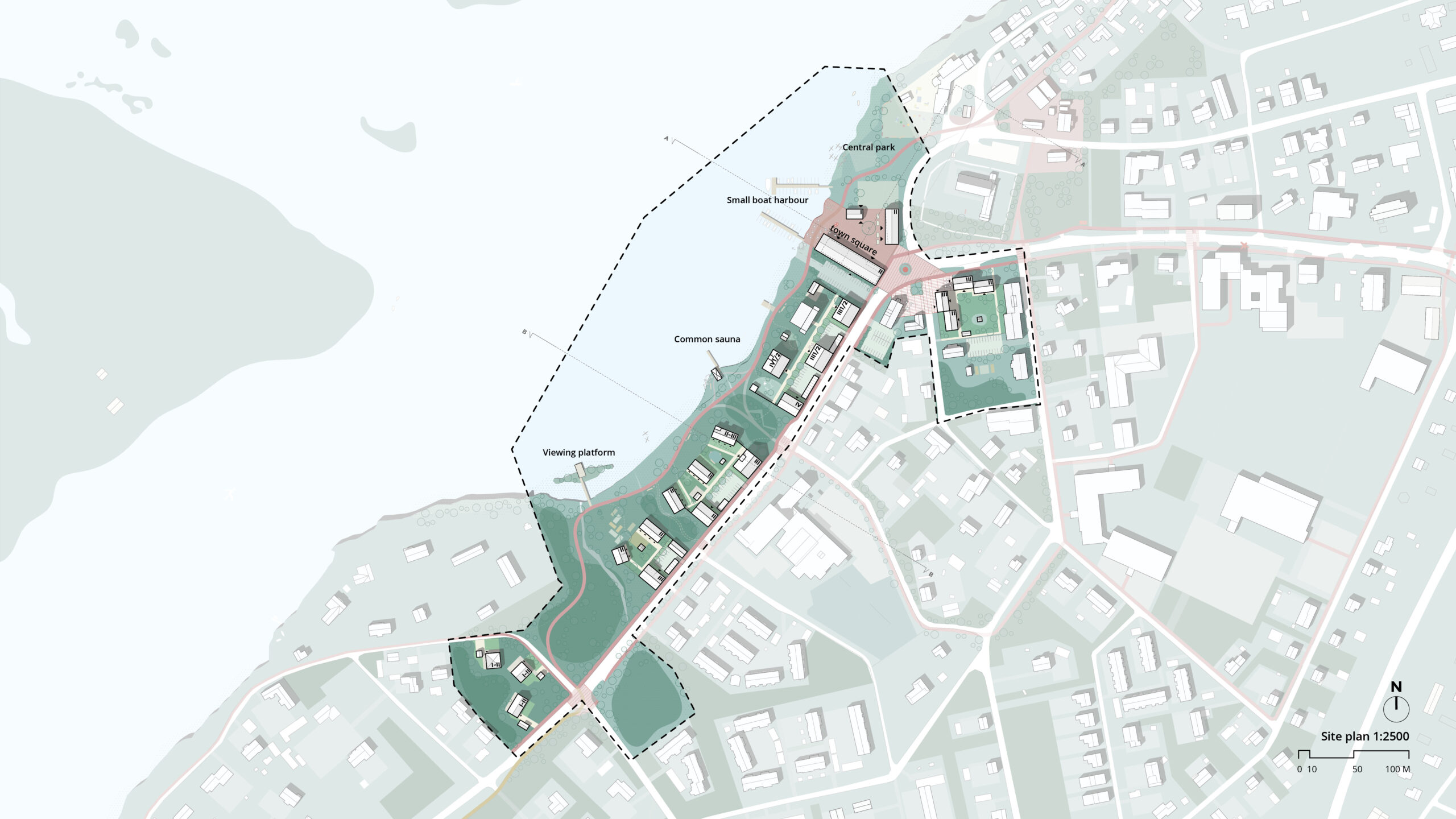
A series of green fingers connects the forest and the riverbank, making them accessible from all parts of the area. As many of the older trees as possible will be preserved. They will form a significant part of the green areas in the municipal center. The church and the new public quarters will be integrally connected with the river.
Bringing Together Tradition and New Architecture
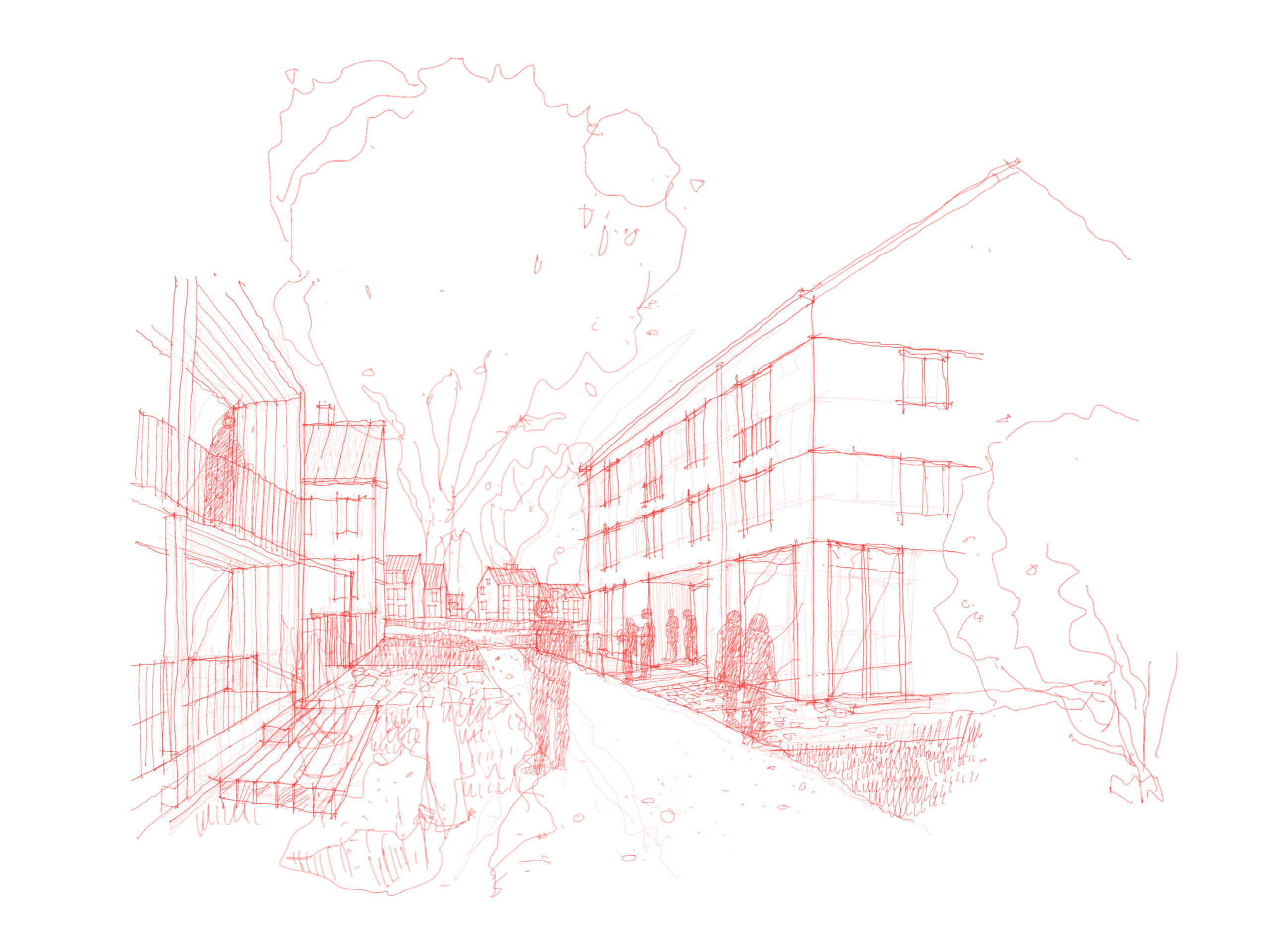
The varying rhythm of the gabled roofs creates a recognizable identity for the area, where tradition and new architecture meet. The red color of the wooden buildings connects them to the historical continuum. The carefully considered scale of the blocks and the diverse typology of the buildings enable varied living arrangements. The orgnization of the blocks also allows for ample common spaces as well as active courtyards with internal alleys.
The views that open through the blocks connect the beach and the water making them an active part of life in the area. In the functionally rich new area connection to nature and the river landscape play a significant role in everyday. Art is strongly present in the public spaces in Ii on the river bank beaches, and on the squares and parks. This further strengthends Ii’s position as a significant center for public art.
Life on the River Bank
The new blocks are discreetly placed in the riverside area, generously leaving open space around them. The views from and to the river have been carefully considered in the design of the buildings. The new Haminanpuisto is located on the shore. The compostion leaves a free axis of view from the river to the church, making it part of the waterfront landscape.
The new public buildings located around Ranta-aukio clearly take their place in the landscape of the beach and the river and form a sheltered and versatile ensemble of activities. In the other direction, the block acts as a clear end to Kirkkokatu. The view gradually opens up as you approach the beach.
The new library/culture center borders Puistotie. The built environment and green areas alternate in the street scape. Public services are grouped together in a block around the beach square, close to other services. The arrangement also supports the organization of events in the outdoor spaces. This creates places for people to meet socially, enlivening the entire area.
The varying height of the residential buildings makes it possible to open views from the apartments to the river. Correspondingly, when viewed from the river, the waterfront silhouette is uniform and harmonious. The blocks form a favorable microclimate and at the same time create natural opportunities for social encounters for the residents.
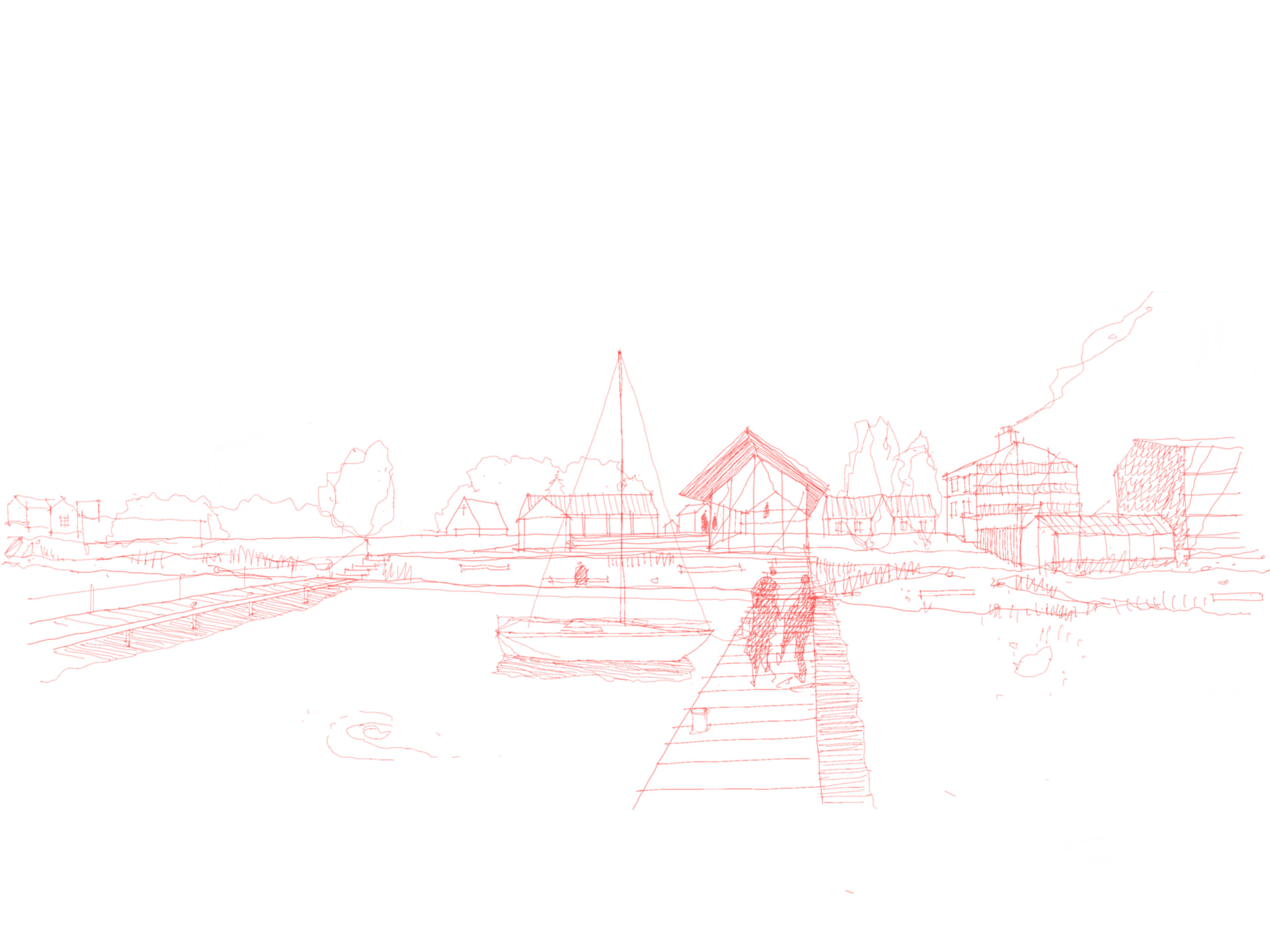
Activating the River Bank
Most of the public services in the area are located in connection with Ranta-aukio. In addition to the municipal hall and the library, the block has spaces for culture such as an art school and a gallery. It also facilitates various events that can spread out onto the square or in the direction of the park. The restaurant, located at the end of the municipal hall on the beach side, opens onto the river. The outdoor spaces are sheltered by the buildings. They invite you to enjoy yourself regardless of the season and weather conditions.
The equipment rental operating in connection with Haminanpuisto brings numerous opportunities for hobbies within everyone’s reach. This activates the beach area in many ways. It also increases the nature tourism potential of the area, as well as the services related to the marina. Along Kirkkotie, the new buildings demarcate the street area. Together with the Gasthaus, they form their own little square. There the street-level business premises can naturally spread out and thus enliven the area with their activities.
A Socially and Ecologically Sustainable Wooden Neighborhood
The typology of buildings presented in the proposal enables wooden construction, which works even in challenging foundation conditions thanks to its lightness. The blocks are designed in such a way that a pleasant microclimate is formed inside and around them. Together with the use of wood, passive sun protection and solar collectors create an ecological solution, while the dense block structure supports community.
In addition to the municipal hall and Nättepori, the plan proposes to demolish individual buildings: a small house on the beach, a single patio roof, and a one-story commercial building in block 5. The demolition will allow the structure to be compacted and better connected to the street space. At the same time, they have enabled views to and from the river.
A Well-proportioned Plan Suited for the Location by the River
In its review, the competition jury notes that the proposal, Punah’Ii’lkka, is skillfully and carefully prepared. The jury comments that the proposed plan conveys a balanced understanding and skill in both urban planning and building design. The green network is well dimensioned and the green axes give rhythm to the new blocks forming well-proportioned entities. The jury also applauds the carefully studied views to and from the river and the way in which the blocks open to the river.
The jury further remarks that the design for the public buildings is successful in terms of scale. They write that the public urban space is the best resolved in the competition. They note that the squares have been sized correctly making it possible to create a village-like space for the buildings.
The jury considers the dimensioning of parking to be too meeger for the presented solution. They further note that the differences in level of the terrain along the road to estuary of the river, Jokisuu would need to be solved either by filling and/or by staggering the buildings.
Regarding the handling of the existing apartment buildings, the jury notes that the proposal cleverly manages to integrate them into the new block structure. They also comment that the treatment of the beach area the river bank is subtle and suitable for the location. The jury concludes that the spirit of the river banks of Iijoki is strong and the nature of the proposal is well suited to its context.