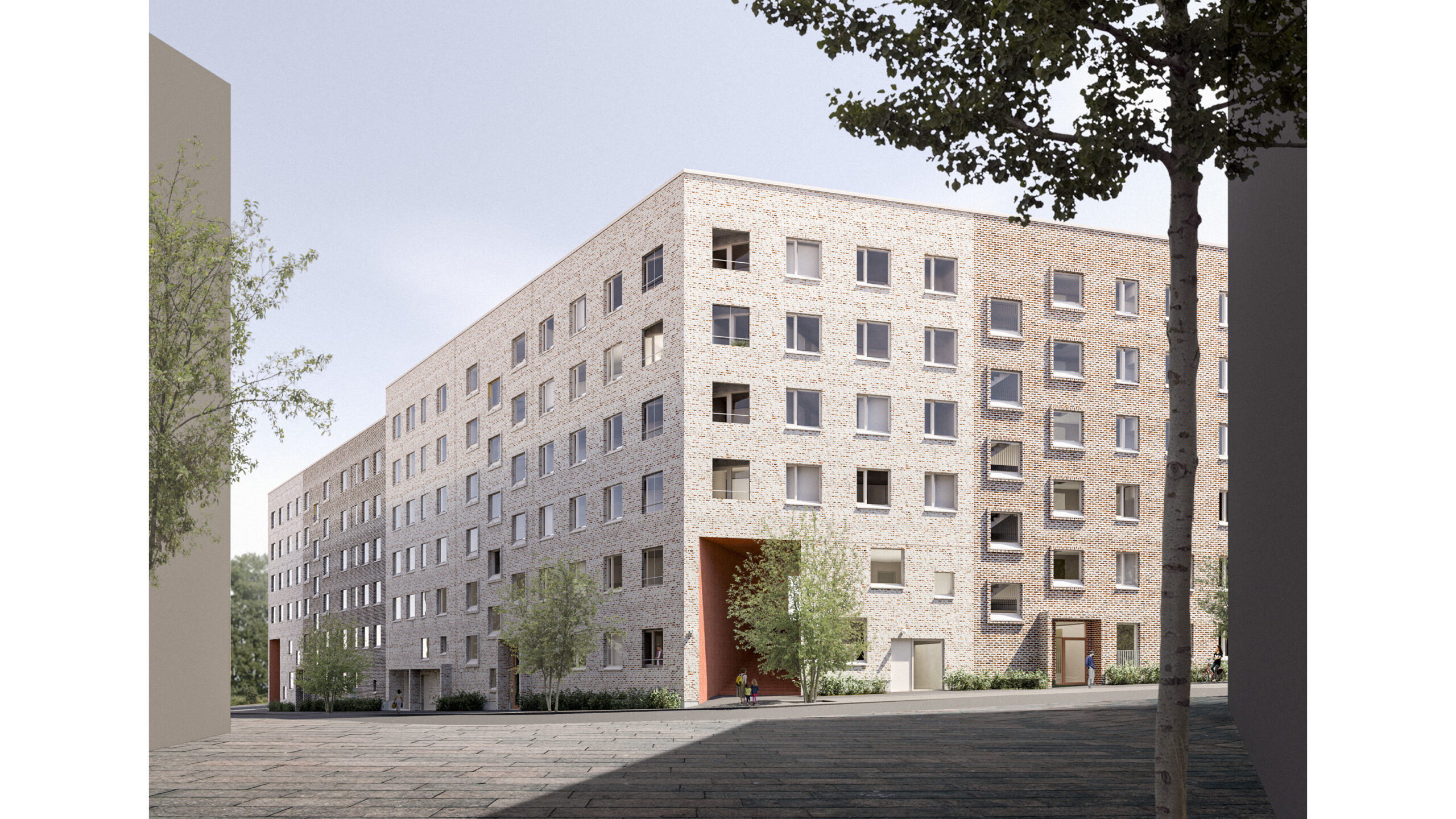
Stansvik – Affordable Housing in a Transforming Neighborhood
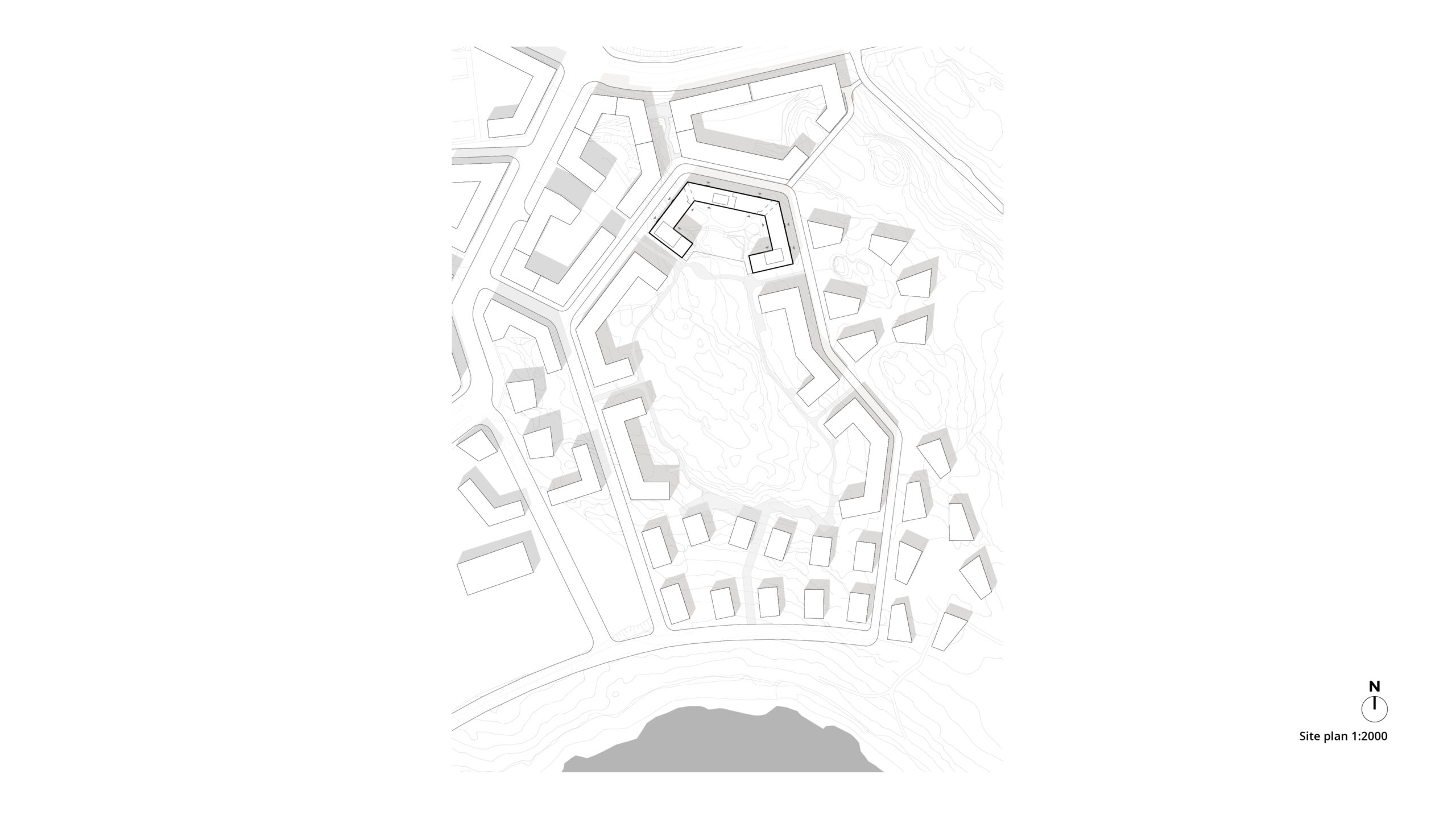
Stansvikinkallionkatu 5 is a block of apartments next to the Stansvik Cliff nature reserve area in a newly developing part of Helsinki, Kruunuvuori, or “The Crown Mountain”. The new development transforms the city’s former oil port in Laajasalo into a residential neighborhood.
Located in East Helsinki across the bay from the Central Market Square, it offers a broad diversity of housing types. With the new car-free Kruunuvuorensilta bridge opening in 2026, the area is easily accessible. The bridge is dedicated to the sole use of public transport, pedestrian traffic and cycling. By tram, it is only a 15-minute ride from downtown.
The Kruunuvuori residential area is divided into several smaller sections and built in stages. First residents moved into the area in 2015. The development will continue over the next several years, with the estimated completion of construction expected around 2030. The section around the Stansvikinkallio Cliff is one of the last ones to be built in the area.
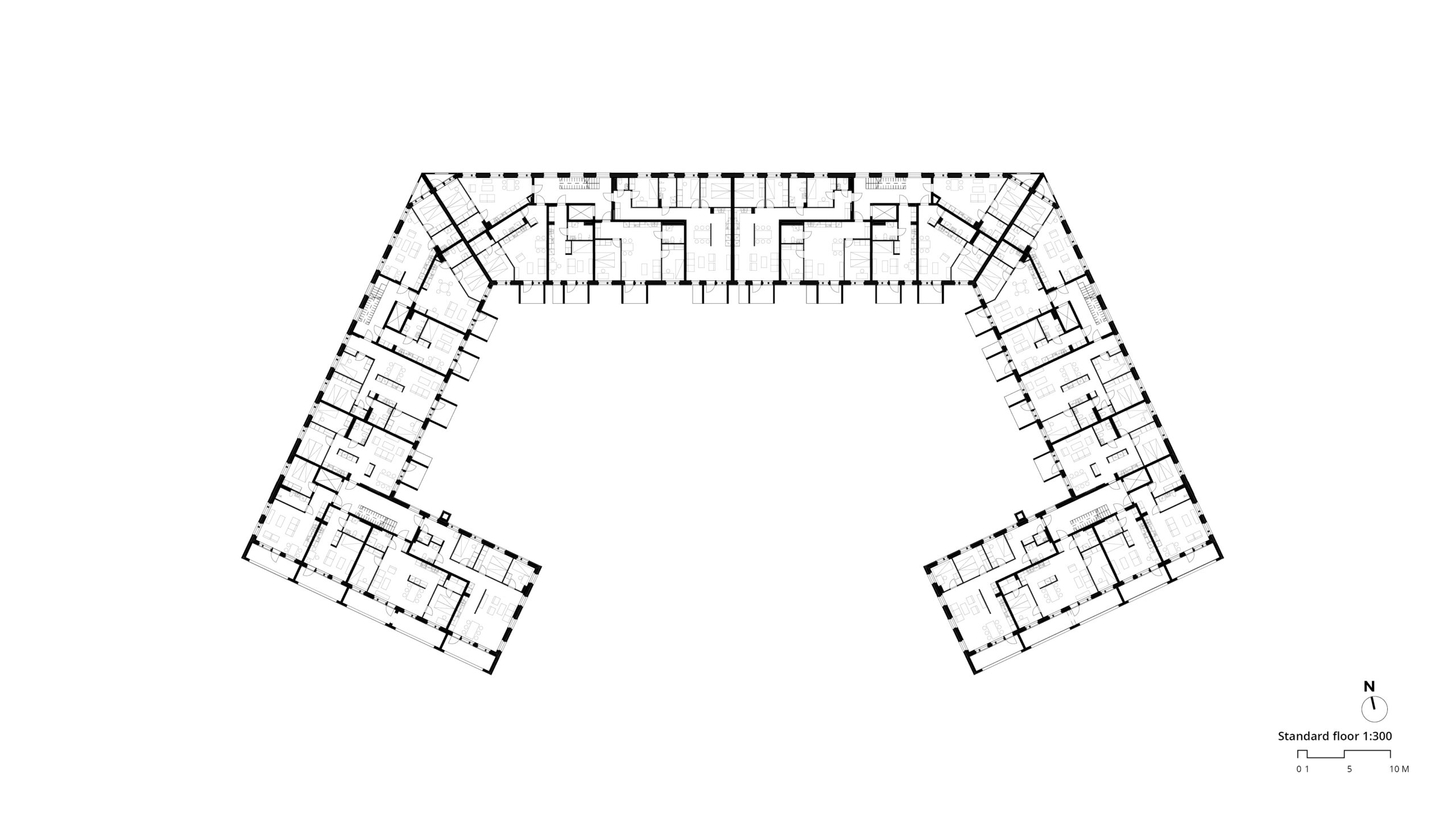
The complex on Stansvikinkallionkatu 5 will offer a total of 141 state supported affordable rental apartments built by the city’s housing office. With careful architectural design and tight collaboration with the city’s building department, a high level of quality is achieved.
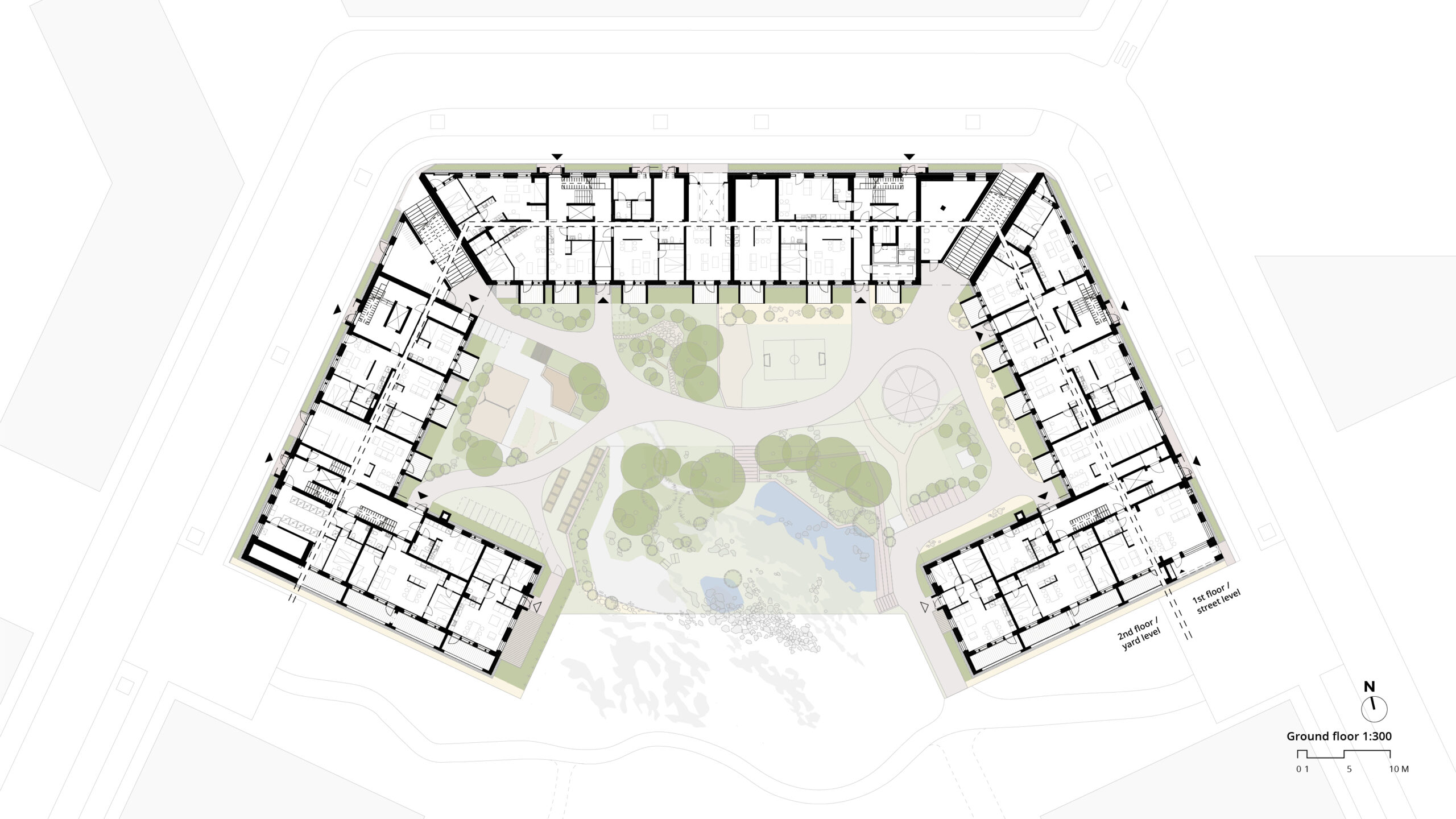
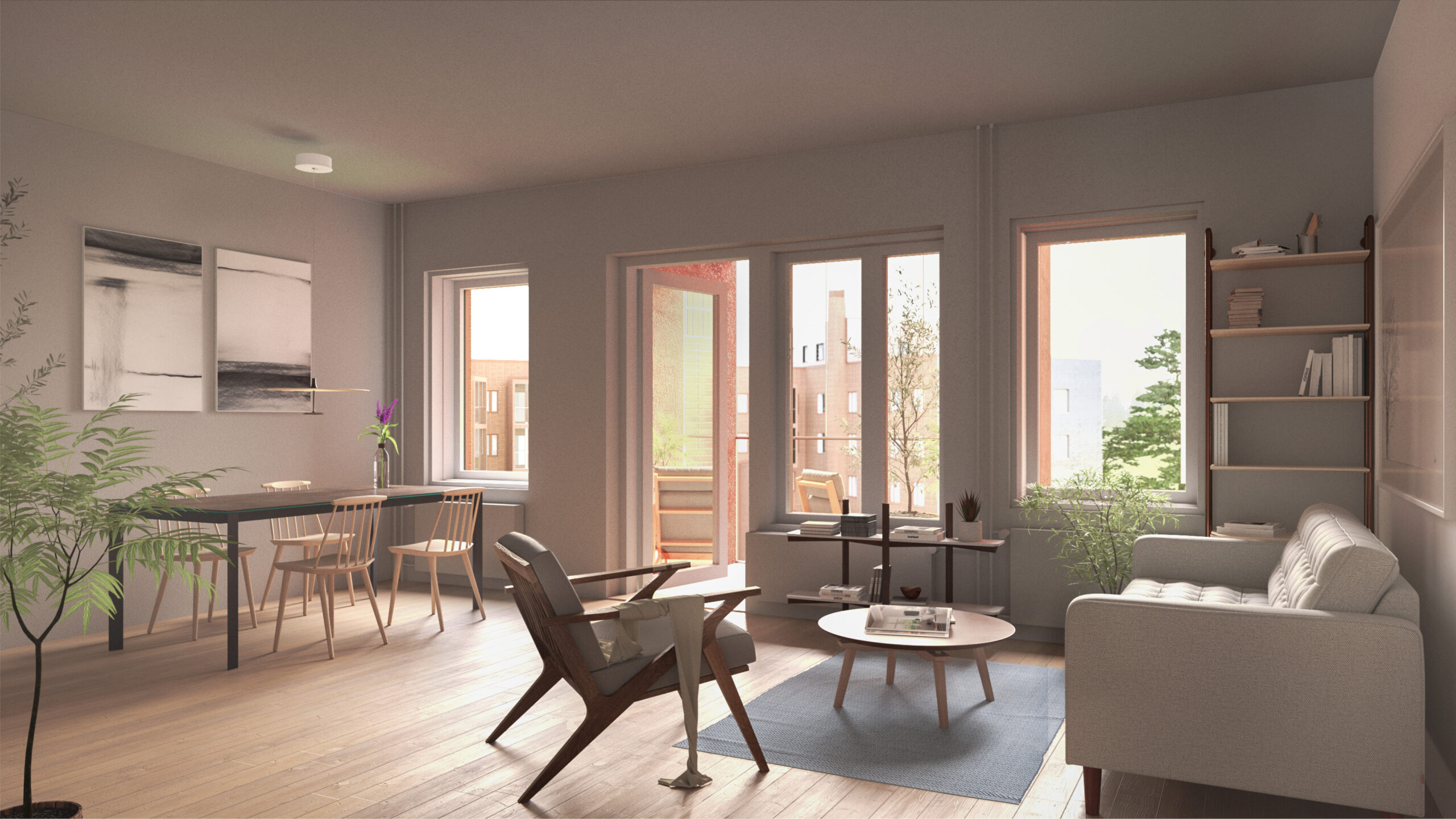
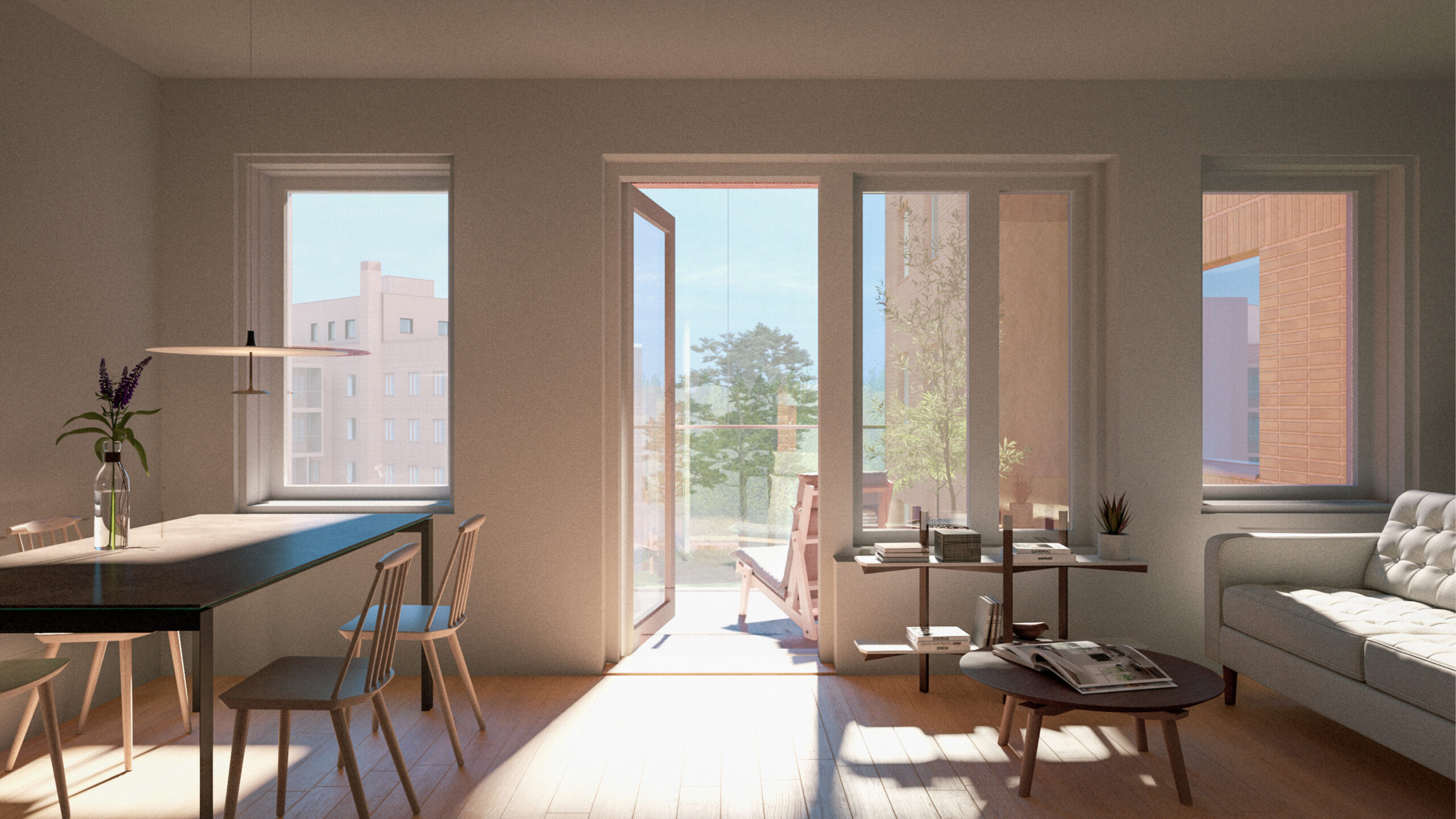
Ranging in size from studios to four-room family units, the apartments are carefully dimensioned to ensure flexibility and functionality. Different apartment types are evenly distributed across the entire block. The layout of the apartments on the first and second floors differs from the rest of the floors. This brings added variability to the block.
Preserving the Natural Values of Stansvik
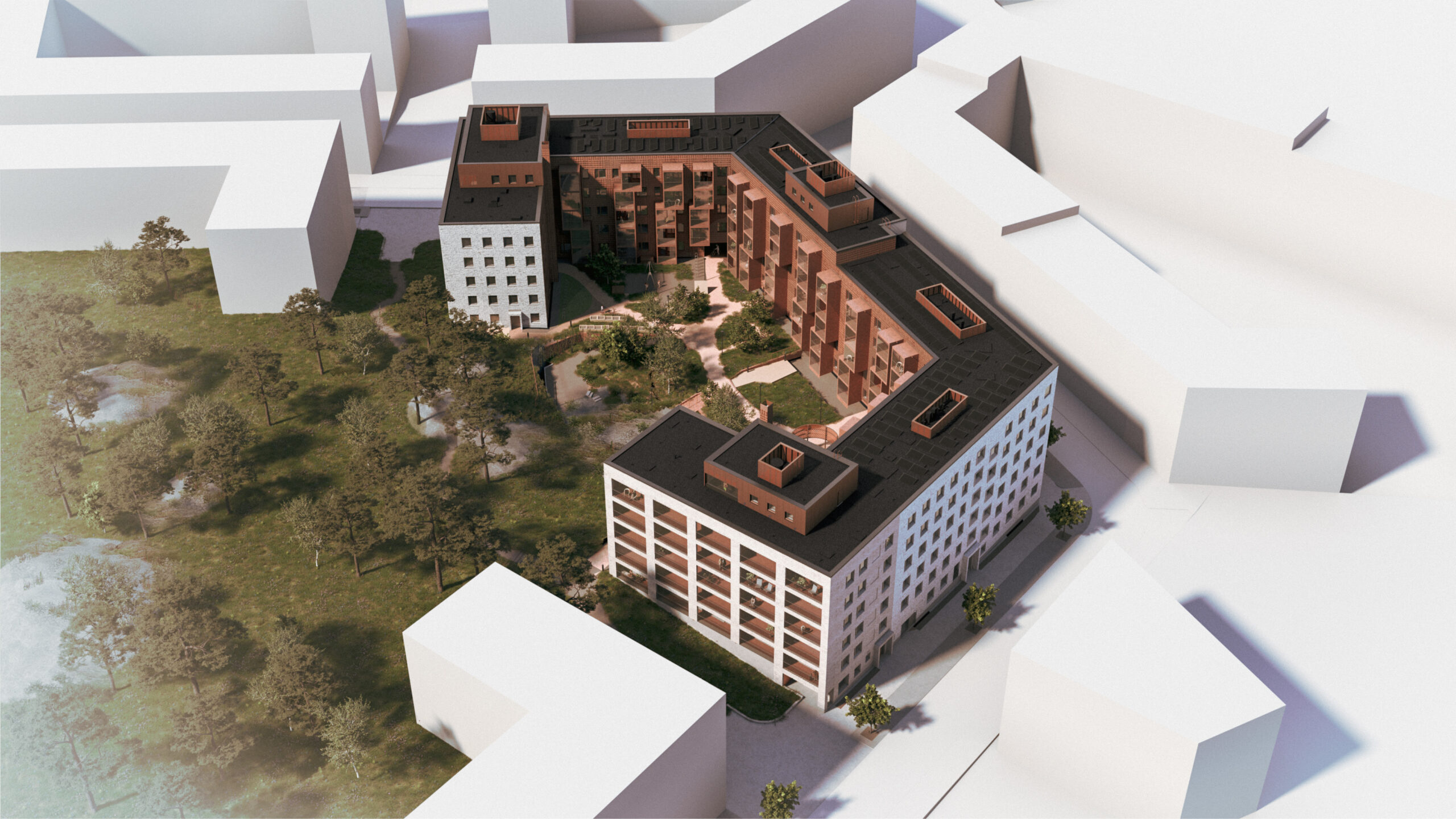
The new block is carefully formed around the rocky landscape of the site. To the east, north and west, the plot borders Stansvikinkallionkatu. To the south, the plot borders Stansvikinkallio Park. Signs of earlier times in the history of the area are visible in the landscape. During the decades when the site was used as an oil port for the city, parts of the rocky terrain were excavated and some of the forest was cleared. The block sits on the edge between the natural cliffs now dedicated as a nature reserve and the mined parts.
Emphasizing the special character of the nature on the site, as much vegetation and the natural landforms as possible will be preserved. Existing elements of the terrain such as the rock wall and wetland are included in the landscape plan for the yard.
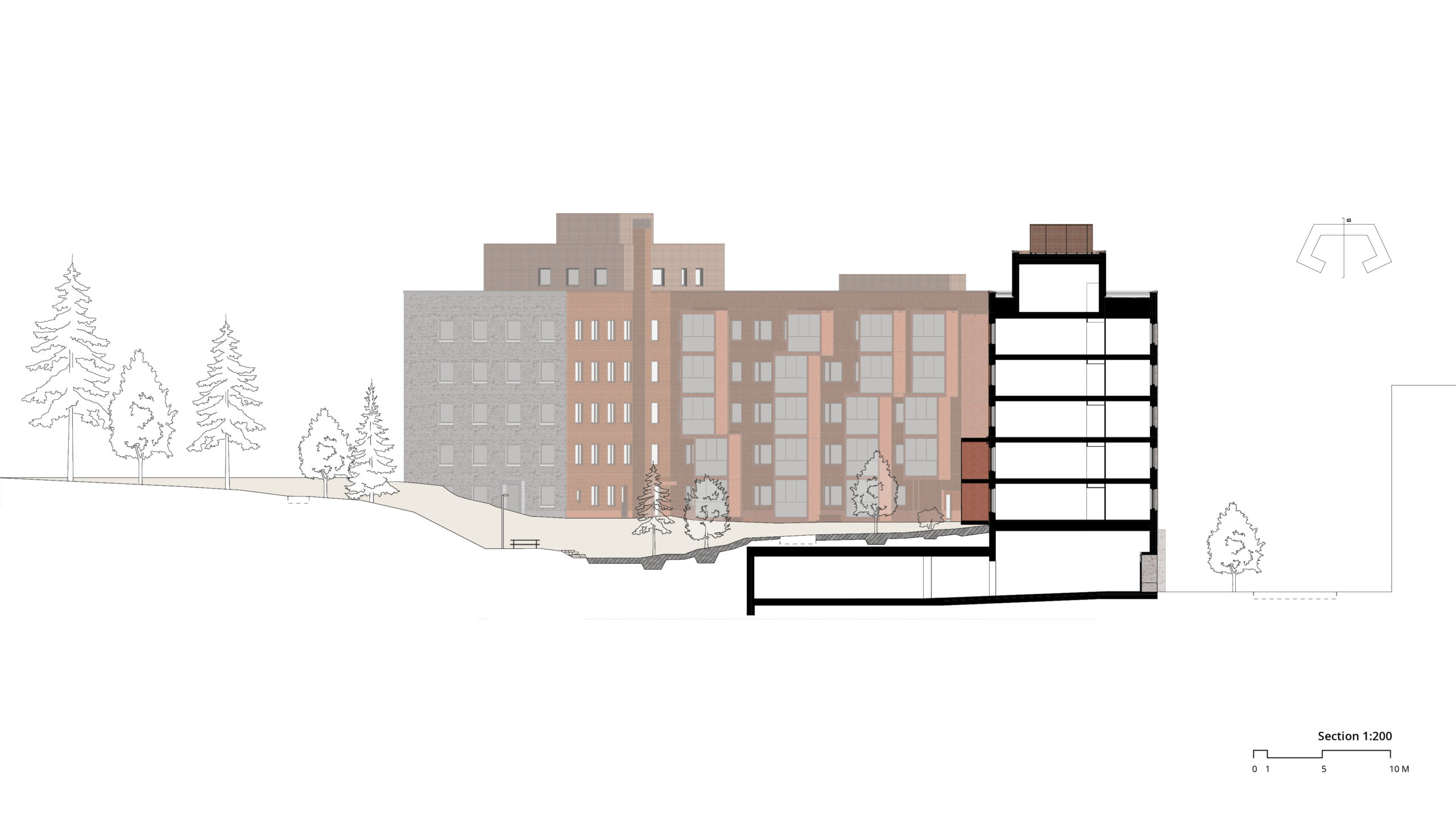
Minimizing the need for excavation, the composition of the block adapts to the hilly terrain of the plot. With the landforms growing taller towards the Stansvik cliff, the building sits on a slope. On the street side, where the elevation is lower, the block has six floors. On the courtyard side, where the ground is higher, there are five floors. The shape of the terrain creates a natural place for an underground parking under a deck on the courtyard.
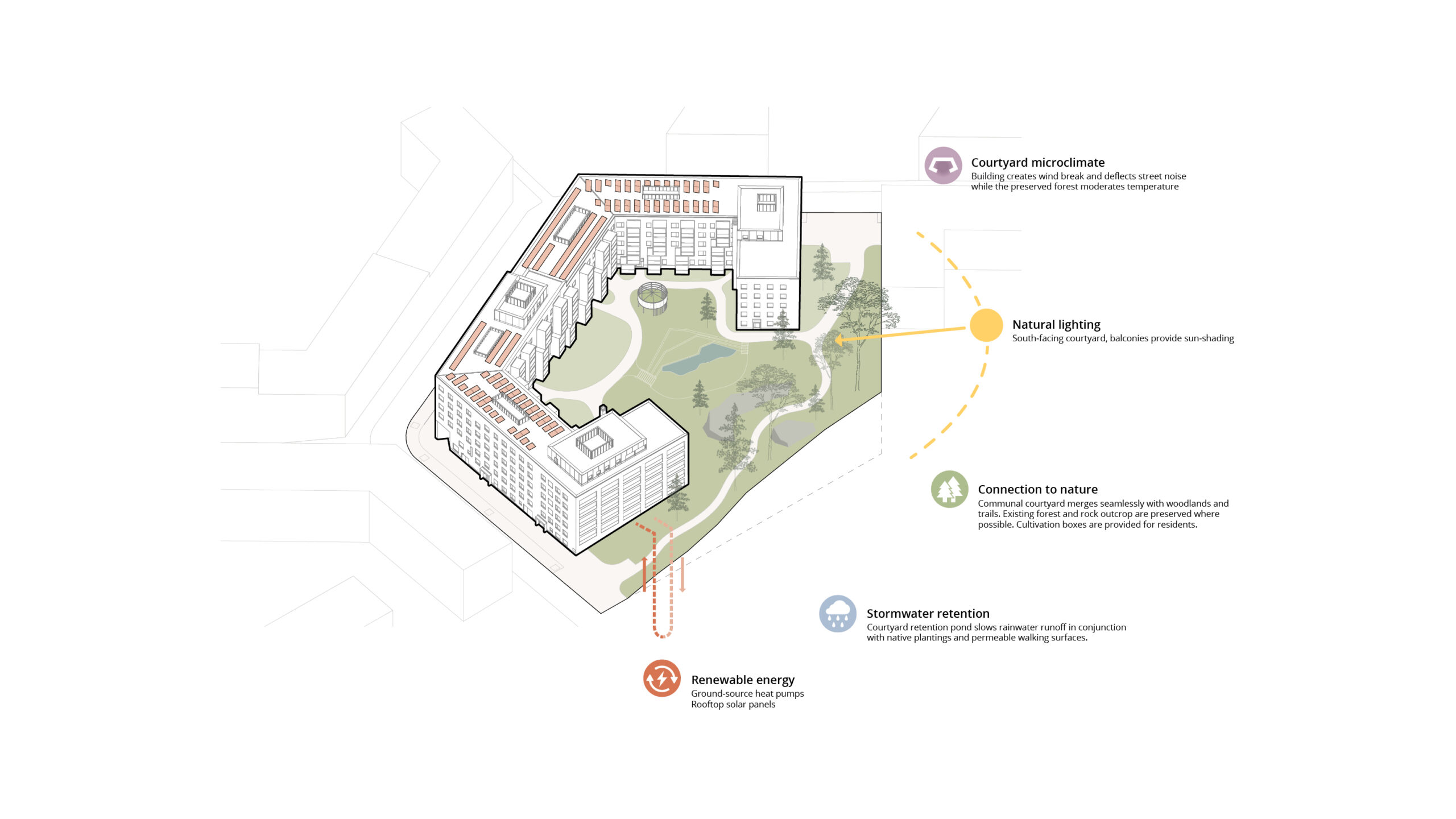
Ground-source heat pumps and rooftop solar panels provide a source of renewable energy for the building.
A Naturally Sheltered Courtyard with a Pleasant Microclimate
The curved arrangement of the building creates a pleasant microclimate on the courtyard on the south side of the block. It forms a protective wind break and deflects street noise. The preserved forest on the site helps moderate temperature. The balconies provide natural sun-shading for the south-facing apartments in the courtyard side of the block.
Emphasizing the connection to nature in the area, the communal courtyard merges seamlessly with the woodlands and trails in the area. Existing forest and rock outcrops are preserved where possible. Combined with native plantings and permeable surfaces, a retention pond in the courtyard slows rainwater runoff helping with stormwater retention. In the yard, cultivation boxes are provided for residents.
A Block with Two Faces
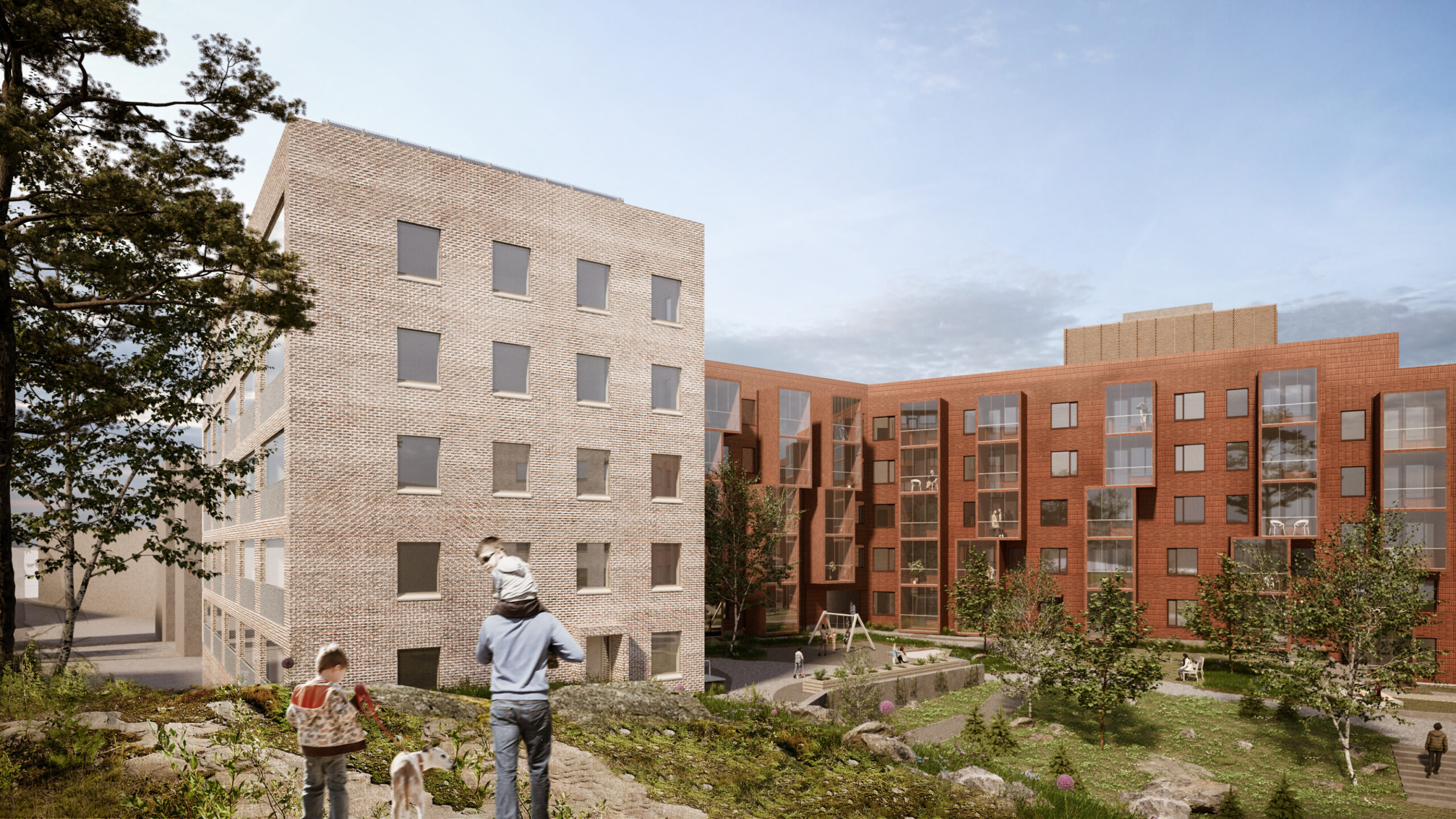
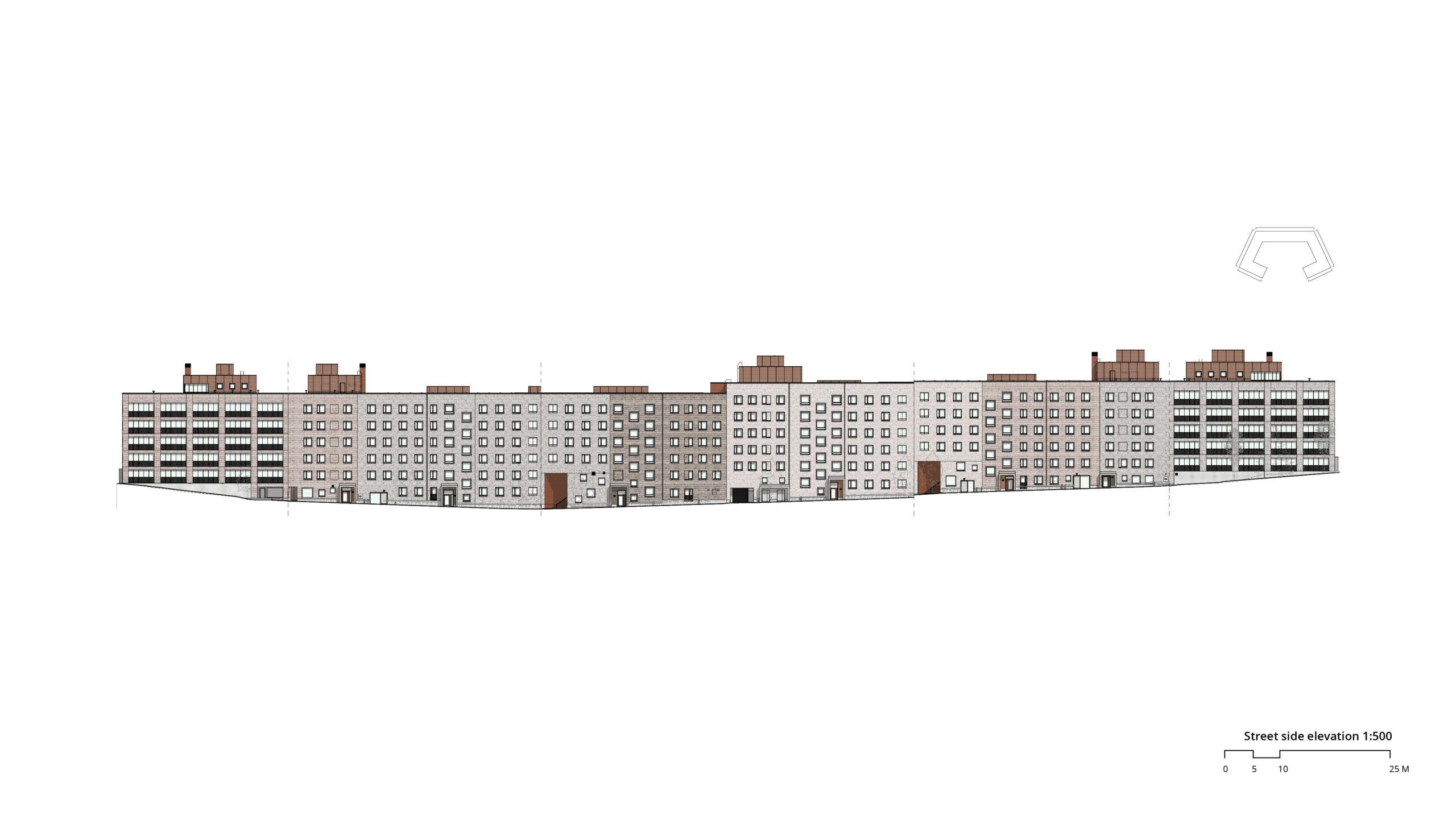
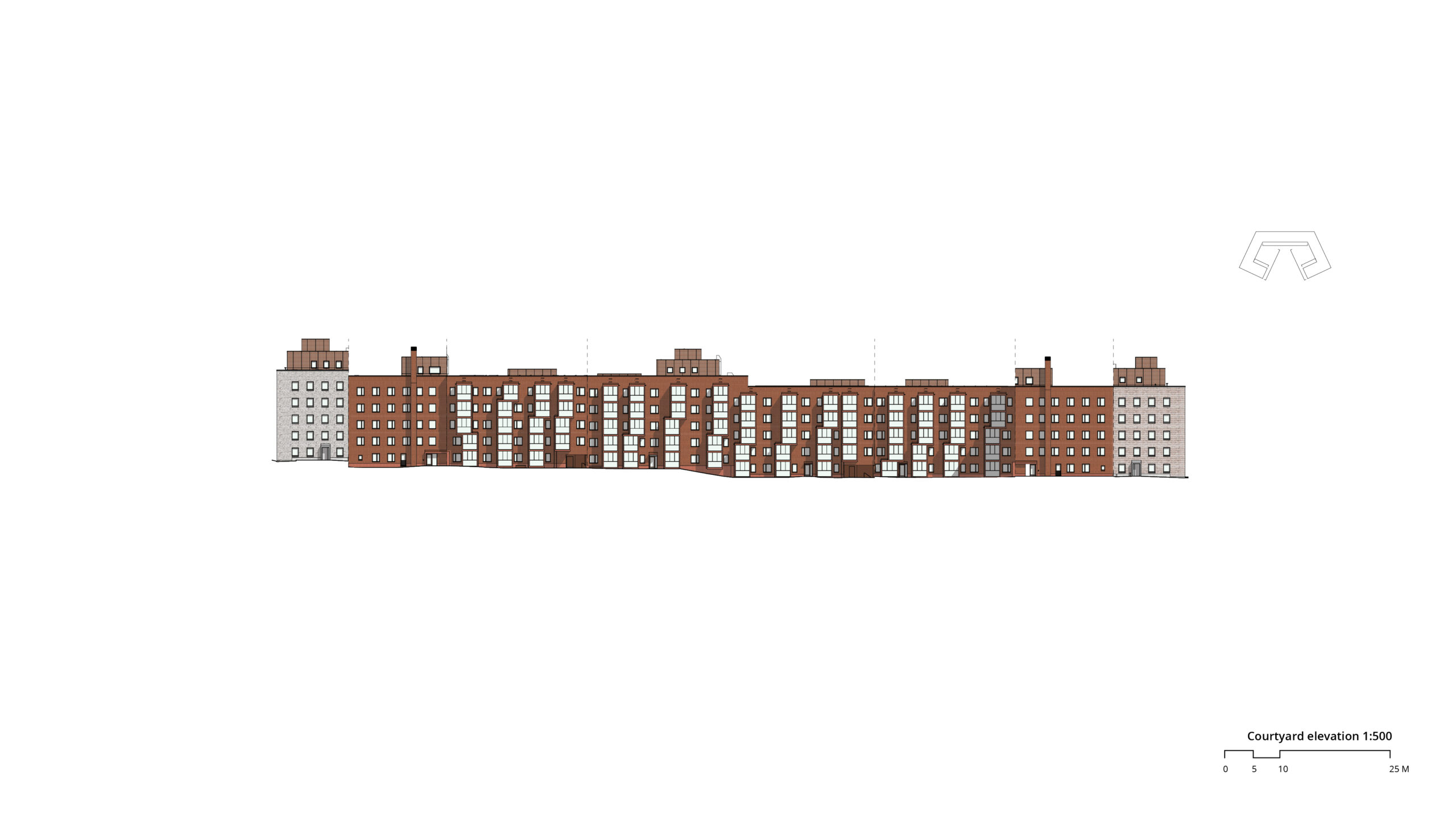
The block is both part of the new urban residential area and also a building in dialogue with the special natural qualities of the Stansvik Cliff. Reflecting the dual character of the block, the building features two sides with a strong contrast between them. Facing the street, the façades are of light-colored brick giving it a single-material appearance. On the courtyard side, the façades have a livelier composition with brick tiles in warm tones of red. This creates a clear distinction between the public façade facing the street and the more private atmosphere in the courtyard.
The block is divided into six parts with access to each section both directly from the street and from the courtyard. Portico-like entry ways in red color connect the street and the courtyard side bridging them into one. A light art installation specifically created for the site further accentuates the dual character of the building. Leading up to the courtyard, all surfaces of the red-colored passageways punctuating the white facade along the street will be treated holistically as part of the light artwork.
Variation in Textures and Colors
On the street side, the even rhythm created by regular openings is softened by variations in the texture of the brick surface and the varying shades of color of the brick tile. The stairwells and common areas are marked by breaking the regularity of the openings and by framing the stairwell windows by a brick collar. The color of the window and eaves flashings and plinth follow the color of the mortar. The entrances on the street-side are highlighted by leaving the brick surface more visible. In the recessed balcony zones on the street side, the interior concrete sills, slabs and back walls are made of light gray reinforced concrete elements.
On the courtyard side, variation in the façade materials and colors is used to visually divide the block into sections the size of a lamella. Alternating two different shades of brick tiles, red and red-brown, and using alternate light-colored mortar joints and alternate over-jointing as the jointing method, four different combinations are formed. Two of them appear twice in the block. However, the two similar sections cannot be observed at the same time.
On the courtyard side, the lateral shifts of the cube-shaped cantilevered balconies bring life to the appearance of the block. The façades and the back walls of the balconies are made with post-jointed reinforced concrete elements with brick tile cladding. The color of the brick tile is red, and the seam is the shade of the brick. The walls and tiles of the balconies in the courtyard are red through-dyed reinforced concrete elements. The drainage of the balconies and the sheeting of the windows and eaves will also be made in the shade of the brick tile.
A Generous Array of Communal Facilities
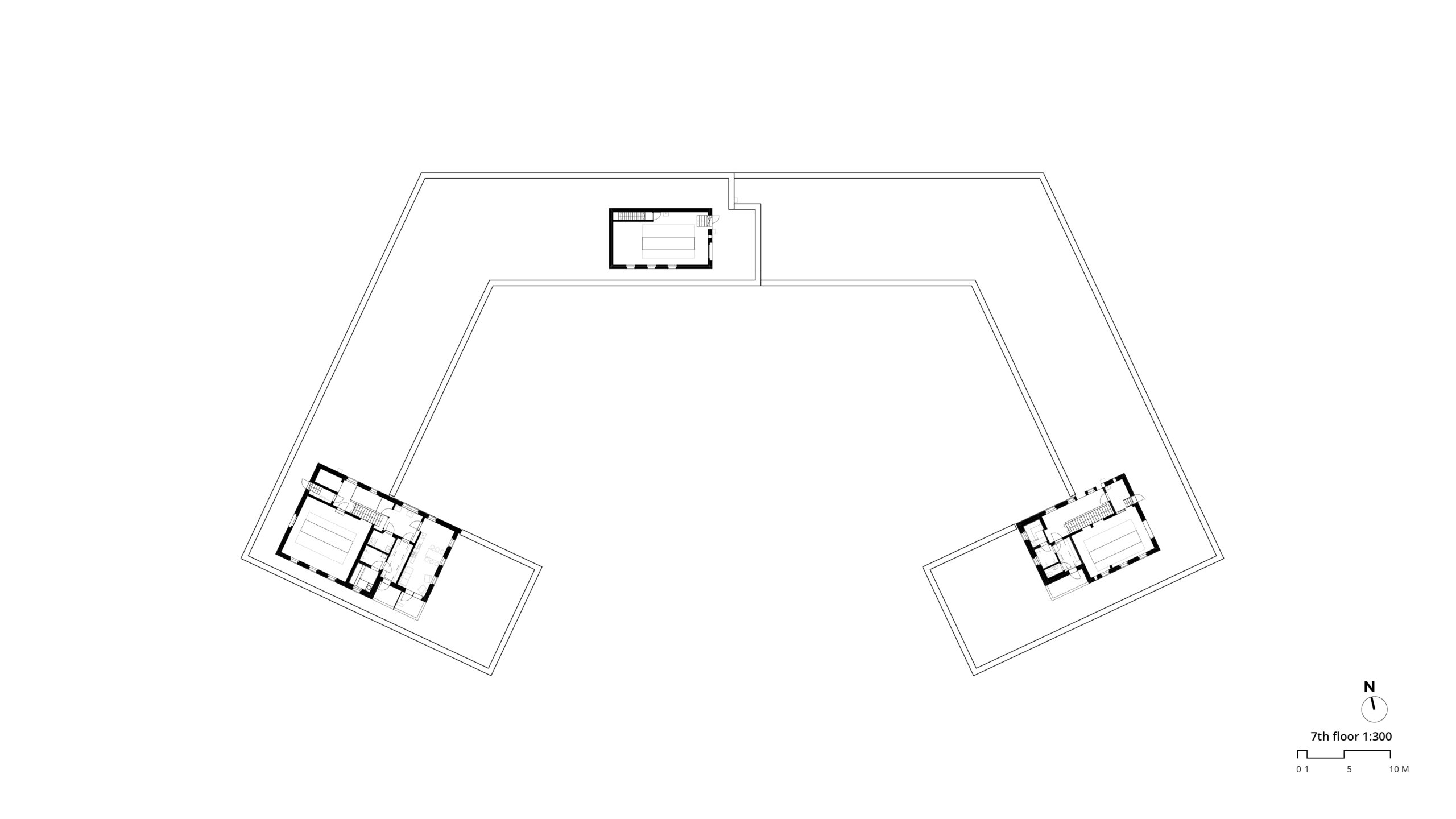
Complementing the communal courtyard, the block offers a generous array of communal facilities for shared use. The shared spaces will be located on the first, second and top floors. There will be three saunas, two of them on the roof floor and one on the courtyard level. There will also be shared roof terraces in connection with the sauna sections on the top floor.
The building will have two club rooms in, one next to the square on the east side and the other on the roof floor in connection with the sauna section. In addition, the residents will have access to an additional club room located nearby in the common spaces intended for shared use by the residents of the neighborhood.
Laundry facilities with drying rooms will be located next to the western square. In addition, to better serve the residents on the east side of the plot, there will be one laundry drying room in connection with the sauna section on the second floor.
There will be space dedicated for stroller storage on the entrance floor in each stairwell. The storage rooms for movable goods will be located on the first floor between the parking garage and the spaces opening onto the street.
Parking with Ample Places for Bikes
Parking is arranged in a cold parking garage with space for 54 cars under the courtyard deck. In addition, there are 359 bicycle parking spaces in total. 189 bicycle parking spaces are placed in storage spaces with direct access from the street. 44 bicycle spaces are placed at the courtyard deck level in the building. 38 bicycle spaces are in the parking garage and 89 bicycle parking spaces are placed in the courtyard area.
Spaces for bicycle storage will be located on both the east and west sides, directly accessible both from the street or courtyard level. Also, a workshop space for bicycle maintenance will be provided on the first floor.
Two of the stairwells have direct elevator access to the underground parking for ADA accessibility.
- For more background on the plans for developing Kruunuvuorenranta, see our news post announcing the granting of the building permit for the block HERE.
- An amended local plan for the Stansvik area is intended to be presented to the Urban Environment Committee of the City of Helsinki in May or June 2026. For more information on the proposed amended plan for the Stansvikinkallio area, visit HERE.