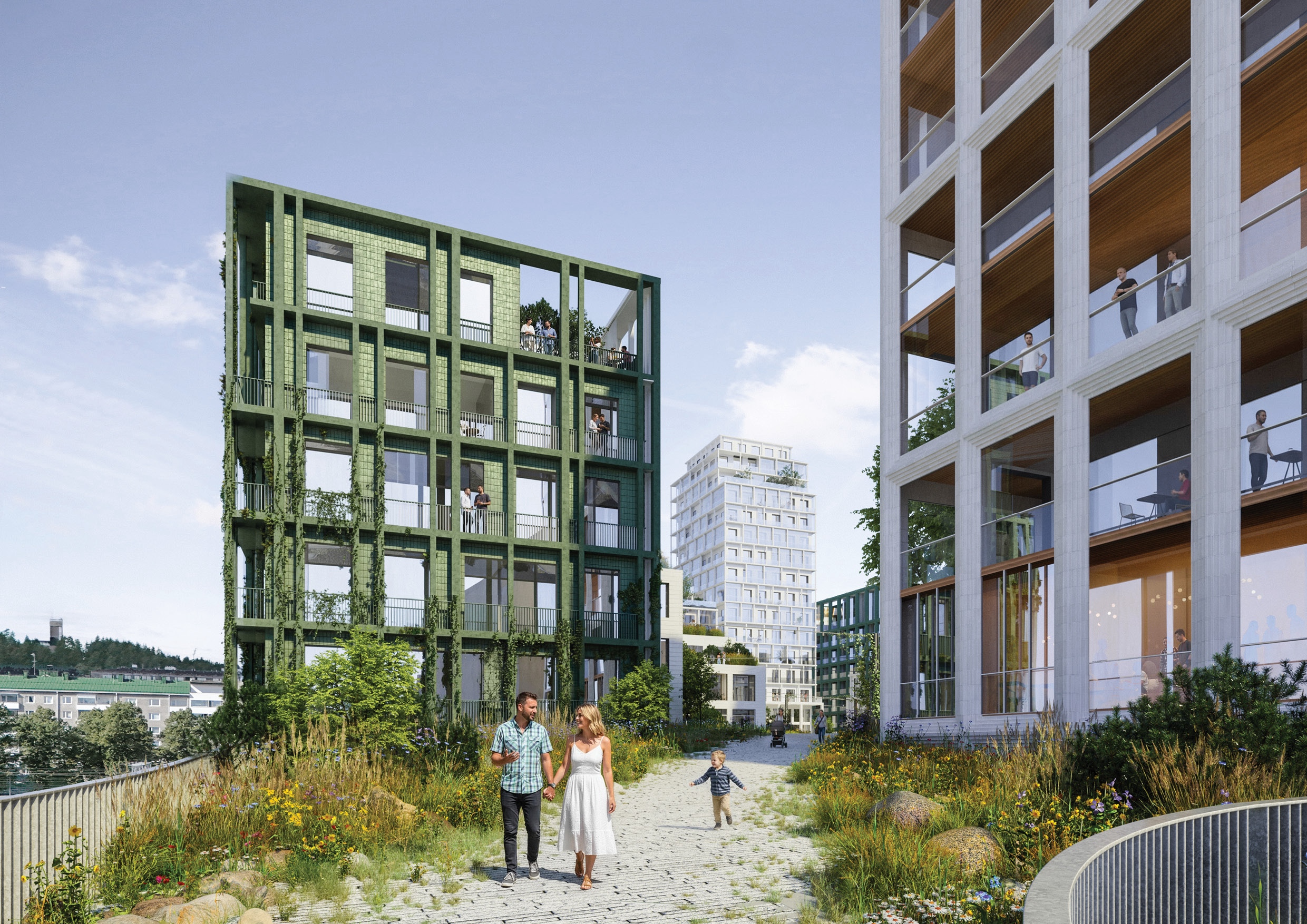
Ratapihan Siltakorttelit – Bridging Two Neighborhoods in the City
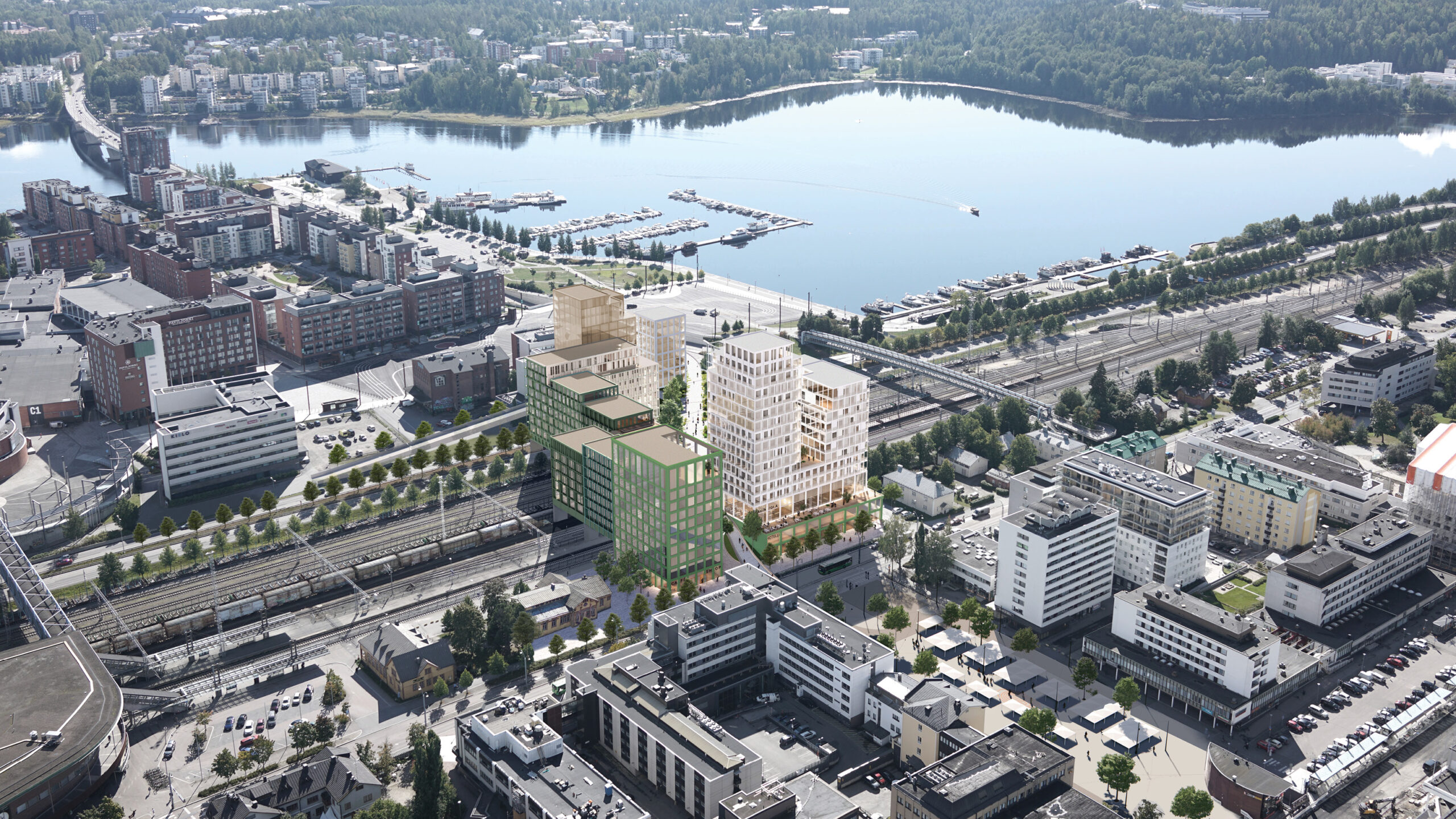
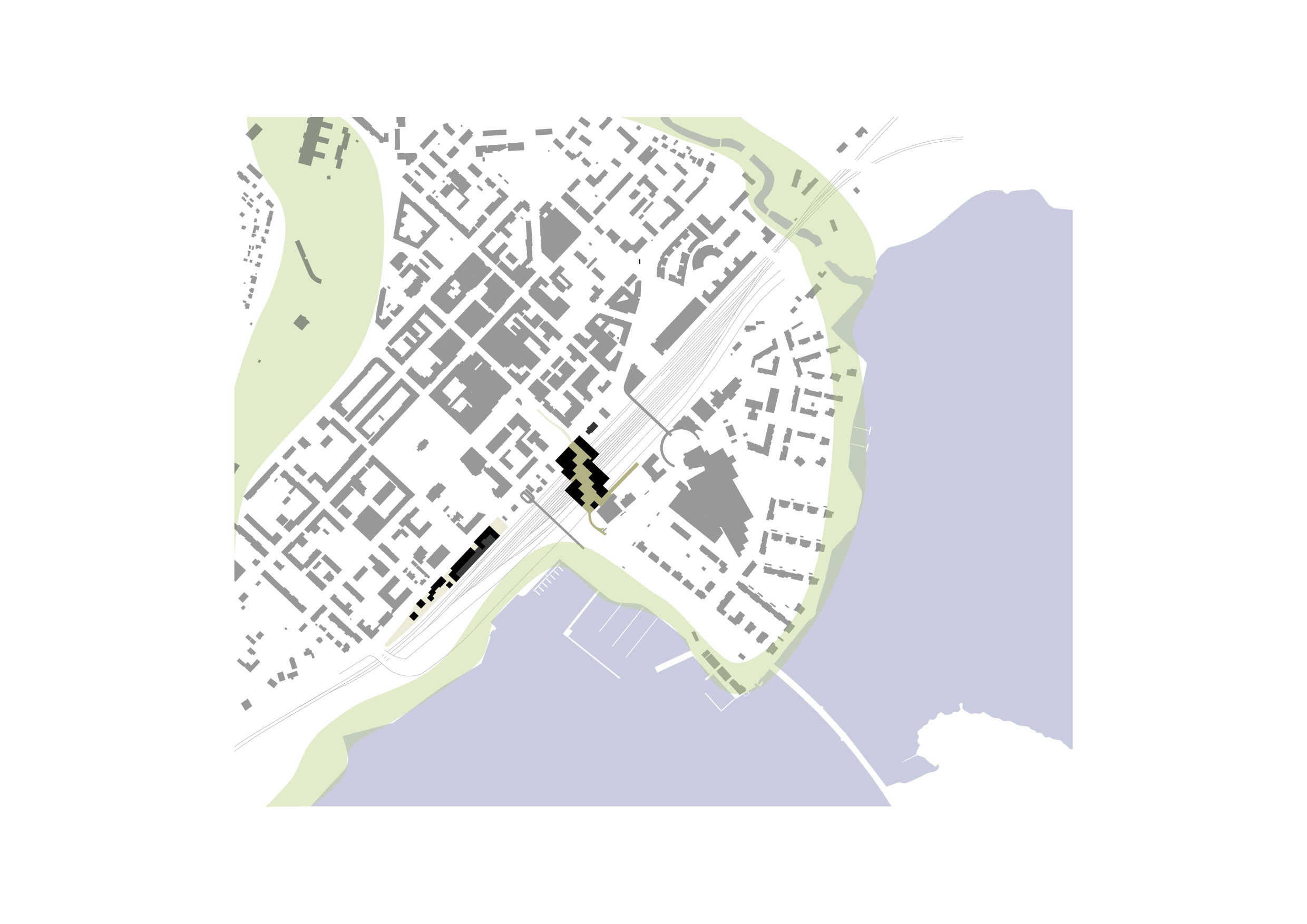
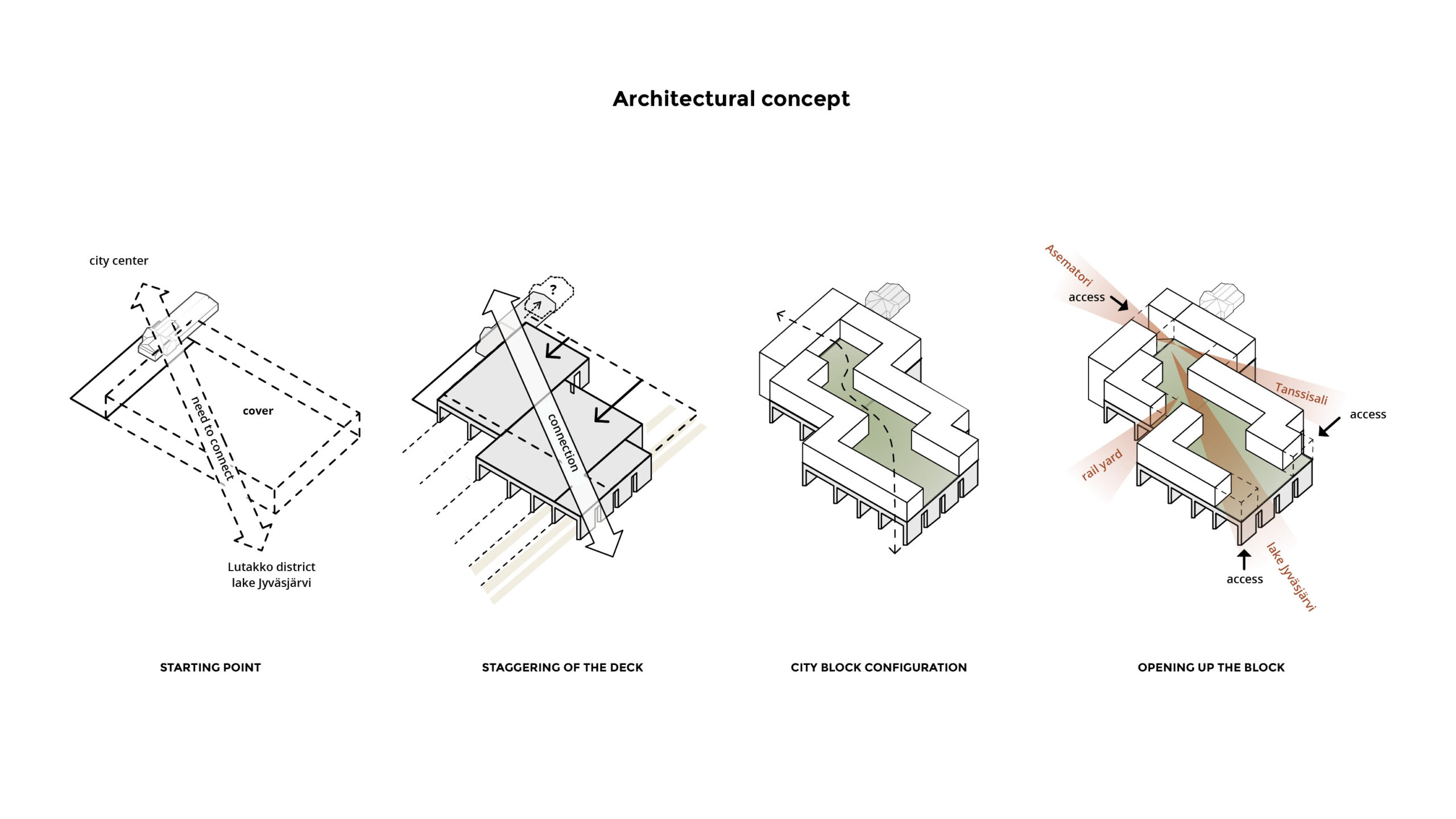
Jyväskylän Ratapihan Siltakorttelit, the Jyväskylä Bridge Blocks form a connecting joint between Jyväskylä City Center and the Lutakko area. Weaving the two separate parts of town into a continuous urban fabric, the new addition will also activate the area around the railway station and the travel center. The block will provide facilities for a diverse program of functions from green spaces and parks to a campus for education buildings, retail spaces, premises for businesses and offices along with housing and student housing.
The aim is to offer an inspiring and high-quality concept plan that supports regional identity and strengthens the vitality of the downtown area by complementing and developing the existing urban structure. The Siltakorttelit block connects the city center and Lutakko areas and acts as a new facade when approaching the city from different directions, by train, by car, or even by boat on the Jyväsjärvi lake.
Building on the the existing strenths of the area, the concept outlines an experiential, functionally diverse and structurally clear plan. Special emphasis has been placed on creating safe and functional pedestrian and bicycle routes that ensure good accessibility of the new block from both the city center and Lutakko sides. The nature of the space formed between the buildings and their relationship to each other, the routes created and the views that open up from the new area into the city and onto the lake have been key aspects in developing the plan.
A New Face to the City
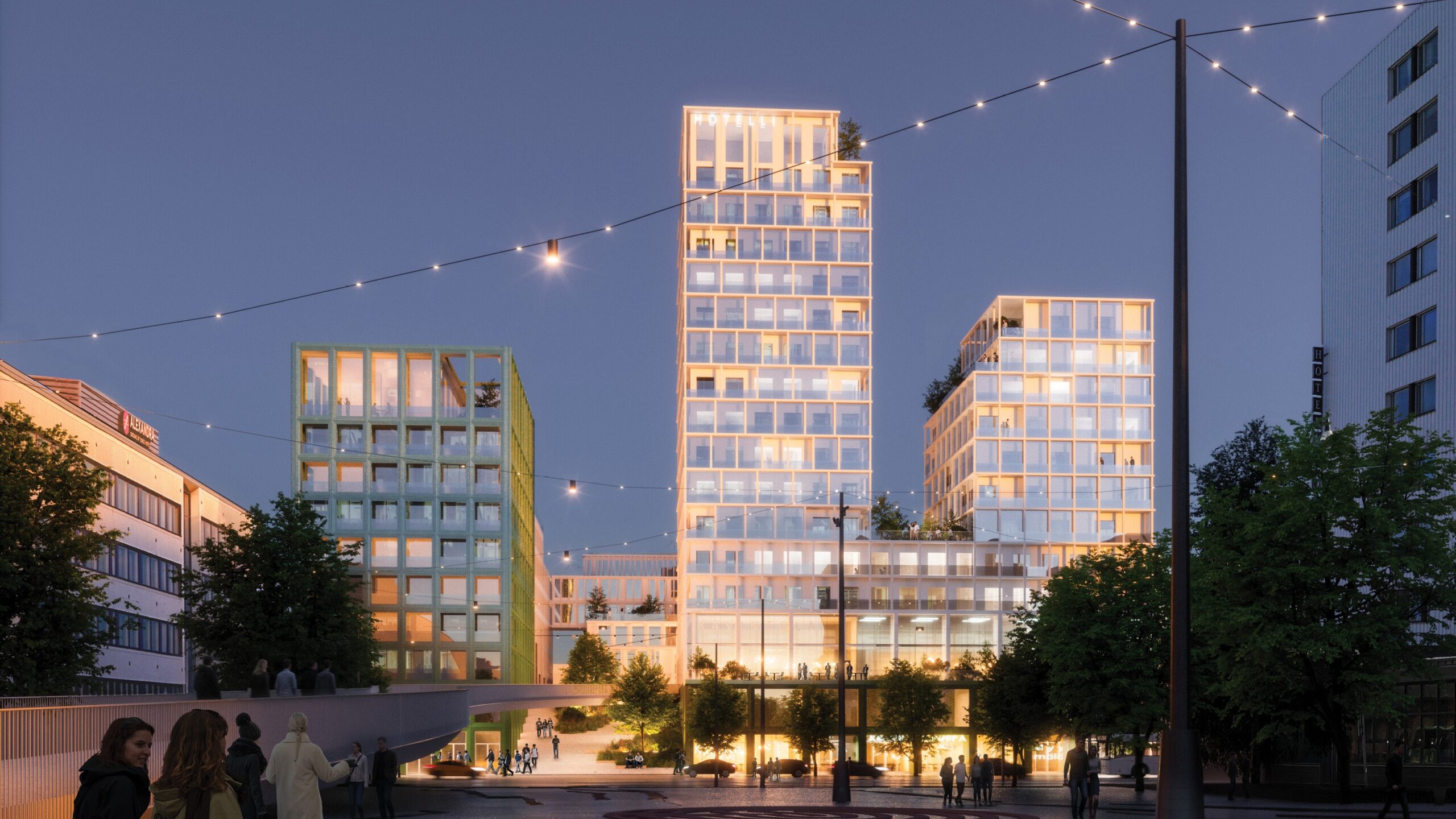
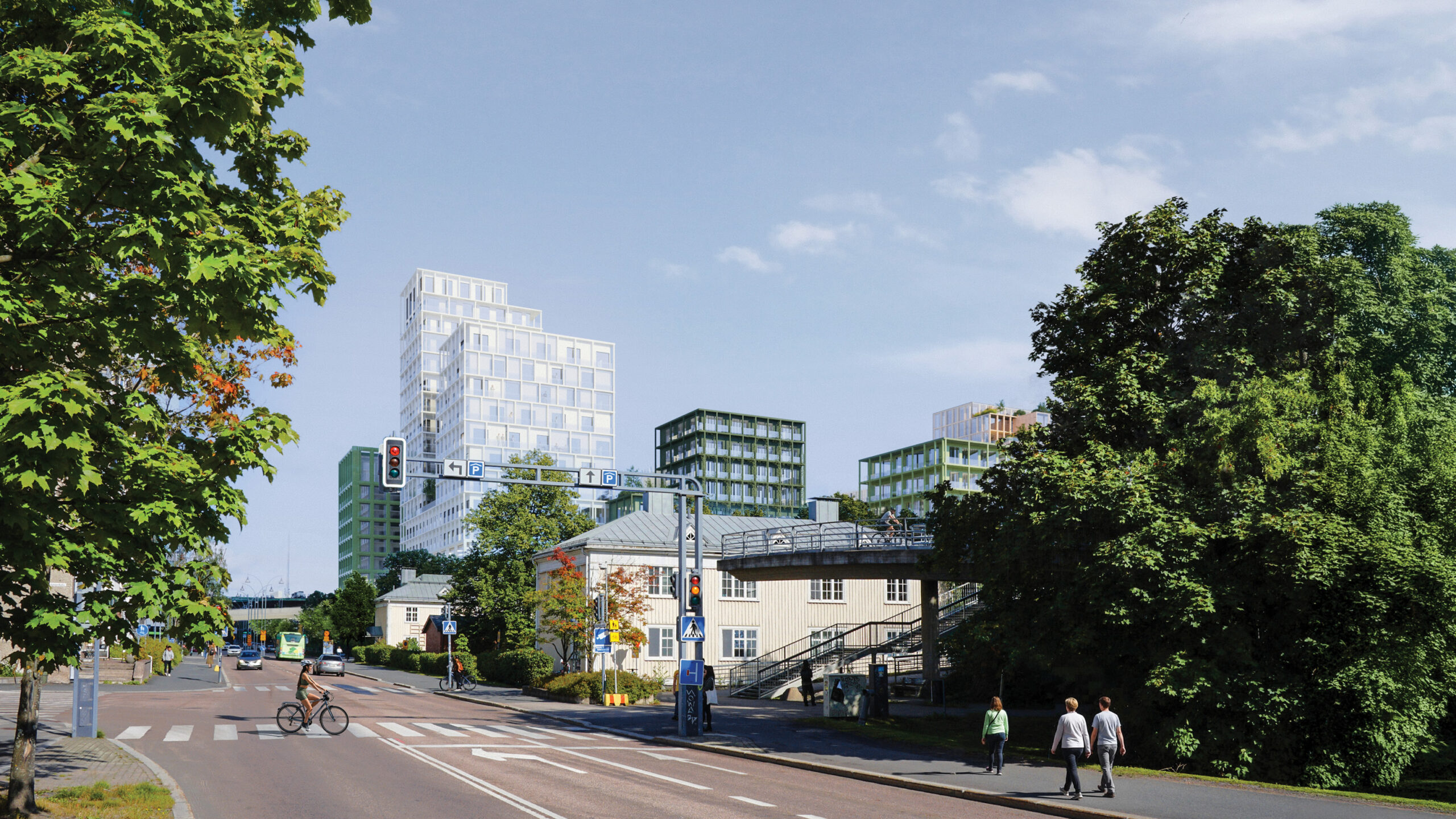
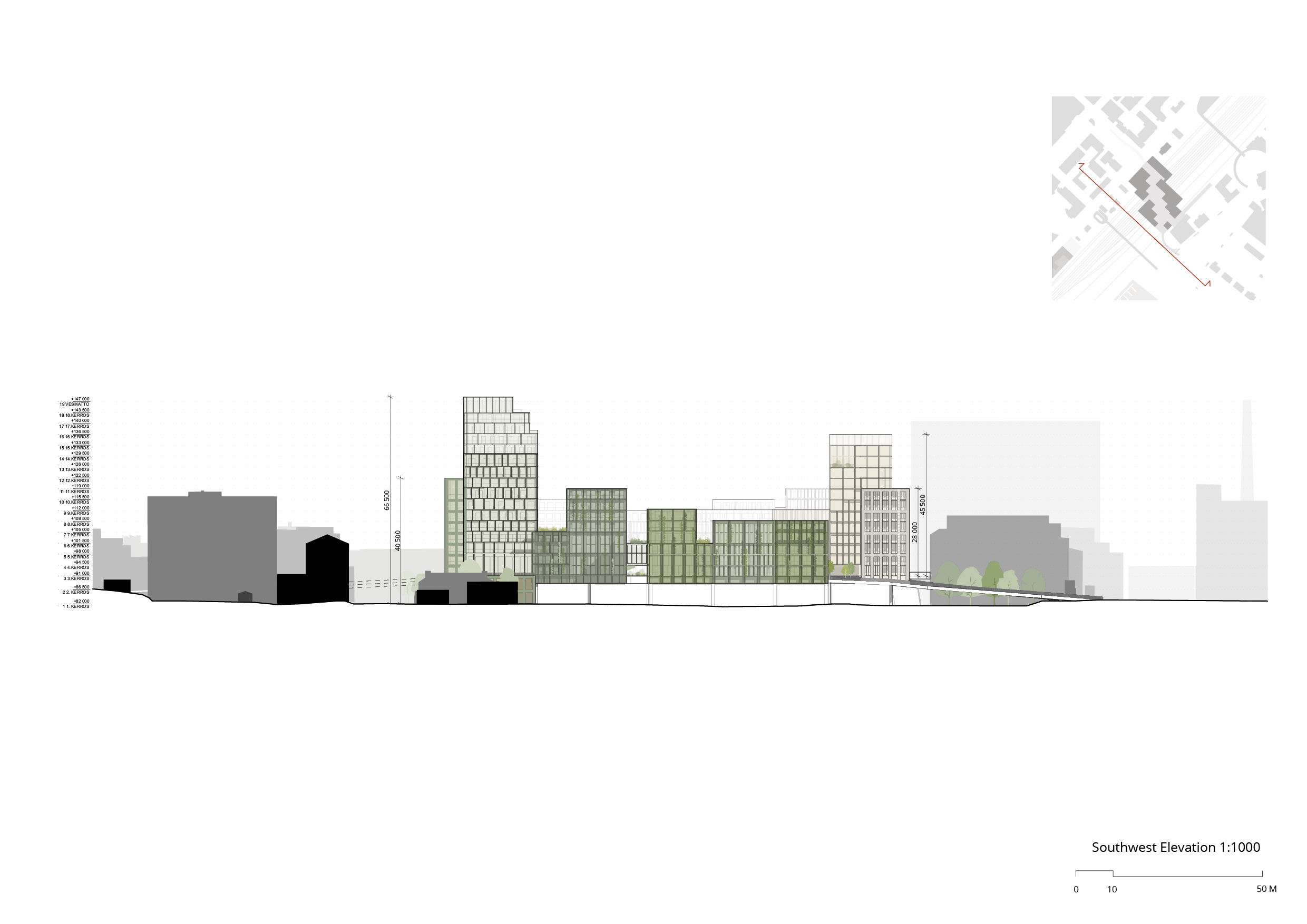
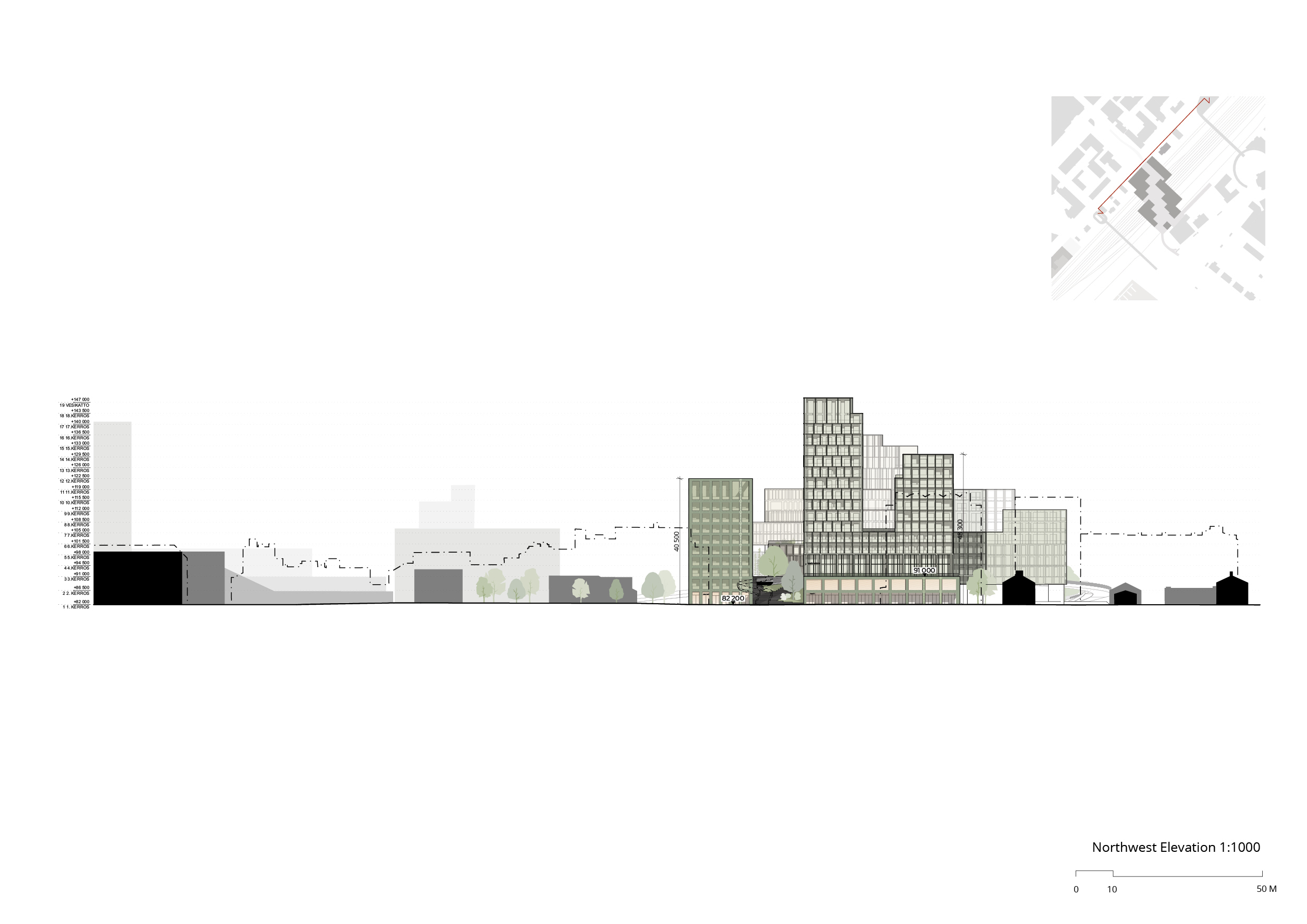
The Siltakorttelit bridge blocks form a completely new facade when approaching the city from different directions. The material world of the facades is strongly linked to the character of the buildings in the center of Jyväskylä.
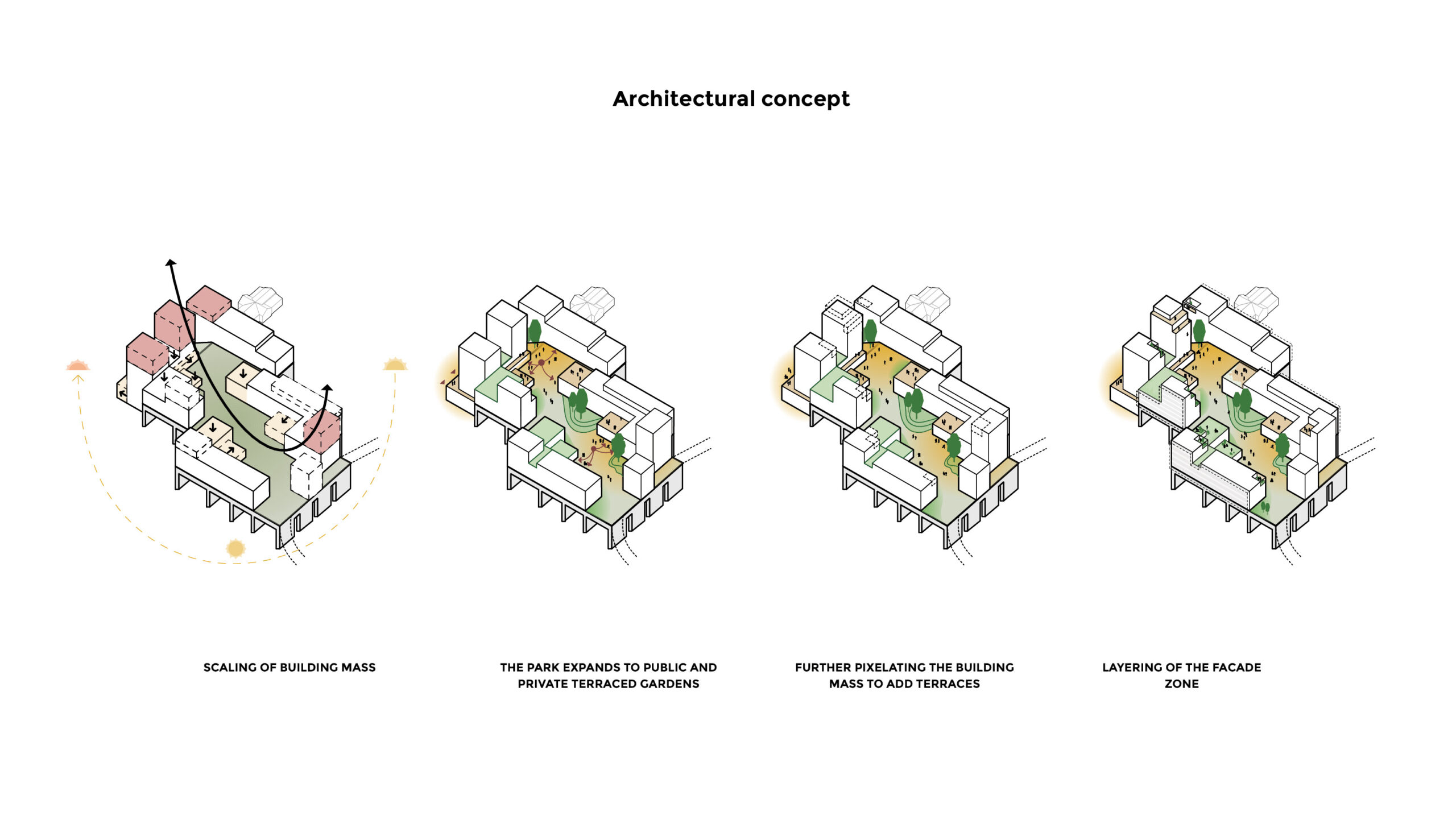
To maximize natural light, the facades facing the park on the deck are delibrately light. Despite the dense structure of the block, the interior of the block receives as much natural light as possible. The natural light is further amplified through the reflection effect created by the surface materials of the buildings. The outer perimeter of the block shimmers in different shades of green. The goal is to create a light, bright, sparkling and even ethereal material world in the facades and exterior surfaces as a counterbalance to the dense urban structure of the block.
High-quality, durable and beautifully aging materials will also help to manage the inherently challenging maintenance needs of the buildings bordering the railway yard and the highway. The lattice-like structure, repeated in variations on the facades, combined with glass surfaces on different levels, forms a relief-like layering and creates pleasant zones for outdoor living, facade-related greenery, and enables maintenance and upkeep.
Siltapuisto Park – Adding a Layer of Green Space to the City
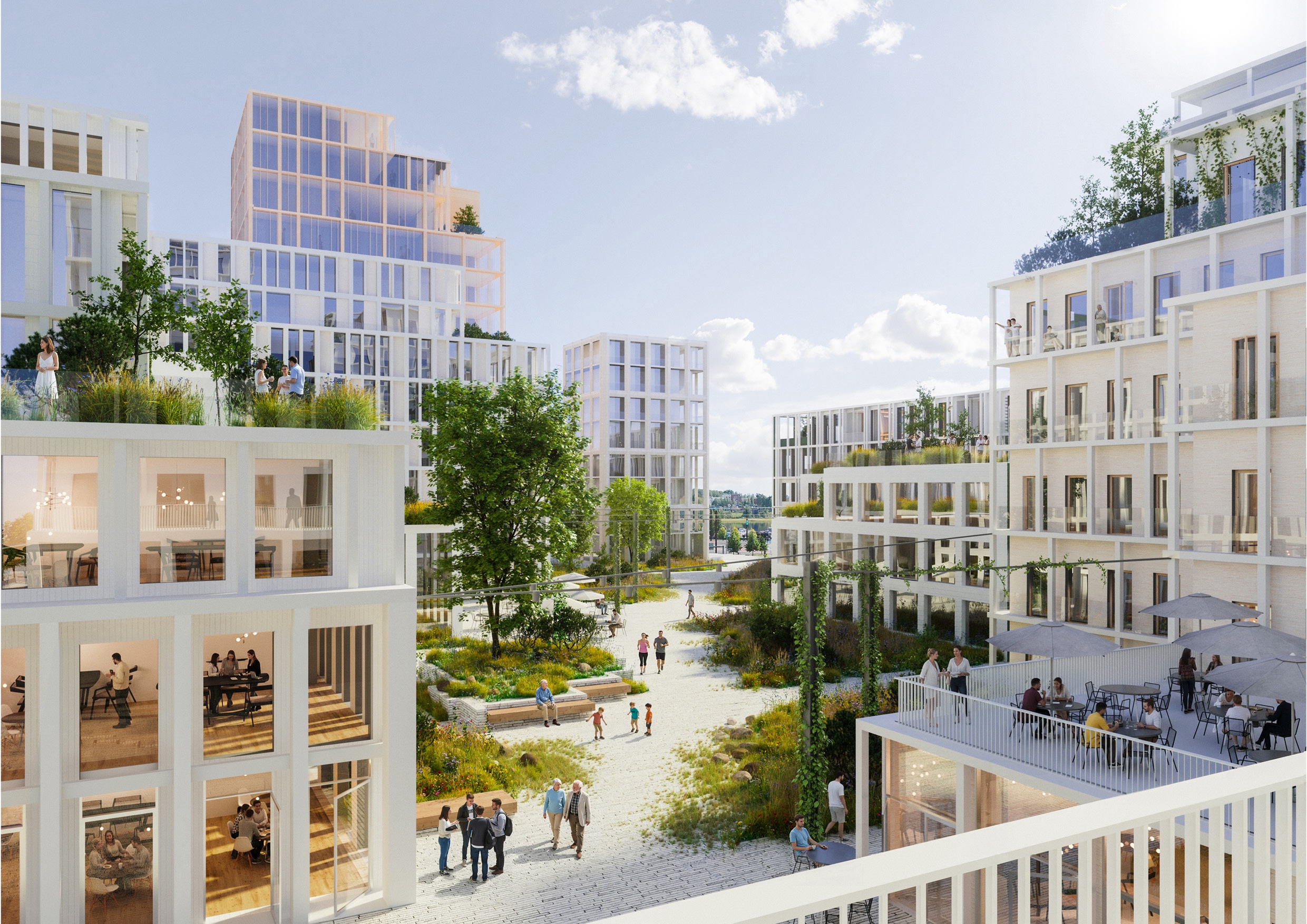
The Siltapuisto, Brige Park provides a green space in the heart of the city. Structured along the route running through the Siltakorttelit blocks, it will form a green layer connecting the new development with the green zone around the highway. It will also enable the development of a green connection between Harju and Jyväsjärvi. It will not only be a connection between the city centre and Lutakko, but also a public space and a place for urban nature and recreation inviting people to spend time in the area.
The park level will be connected to the courtyards with green roofs and gardens on the roofs of low-rise buildings. Together with the vegetation stretching between them, they will form a layered element of greenery in the city. The idea is to anchor the greenery with large trees on the land-based areas at both ends of the park, in connection with the stairs rising from Hannikaisenkatu and the bridge rising from Lutakonaukio. The trees on the street level will be complemented with layers of greenery on the deck level. The deck has a few larger individual deciduous trees and a range of vegetation of a smaller-scale suitable for deck construction.
The horizontal structures located between the buildings serve as part of the lighting solution for the park. They also function as a support structure for vegetation. As the bridge blocks border the edge of the Asematori, the Station Square, the new park on the deck forms a natural continuation of the park-like area around the railway station along Hannikaisenkatu. The lattice-like structure of the building facades acts as a softening mediating zone between the block and its surrounding areas in the city and as a shading element. Offering natural places for greenery to grow, it also provides an element that supports pollinators.
A Place for a Multiplicity of Functions
The goal of the concept plan has been to create a functional and site-appropriate overall scope of construction, as well as a solution that is as flexible as possible in terms of its program. The starting point in the analysis has been the natural placement of functions within the block structure and the formation of an active public urban space.
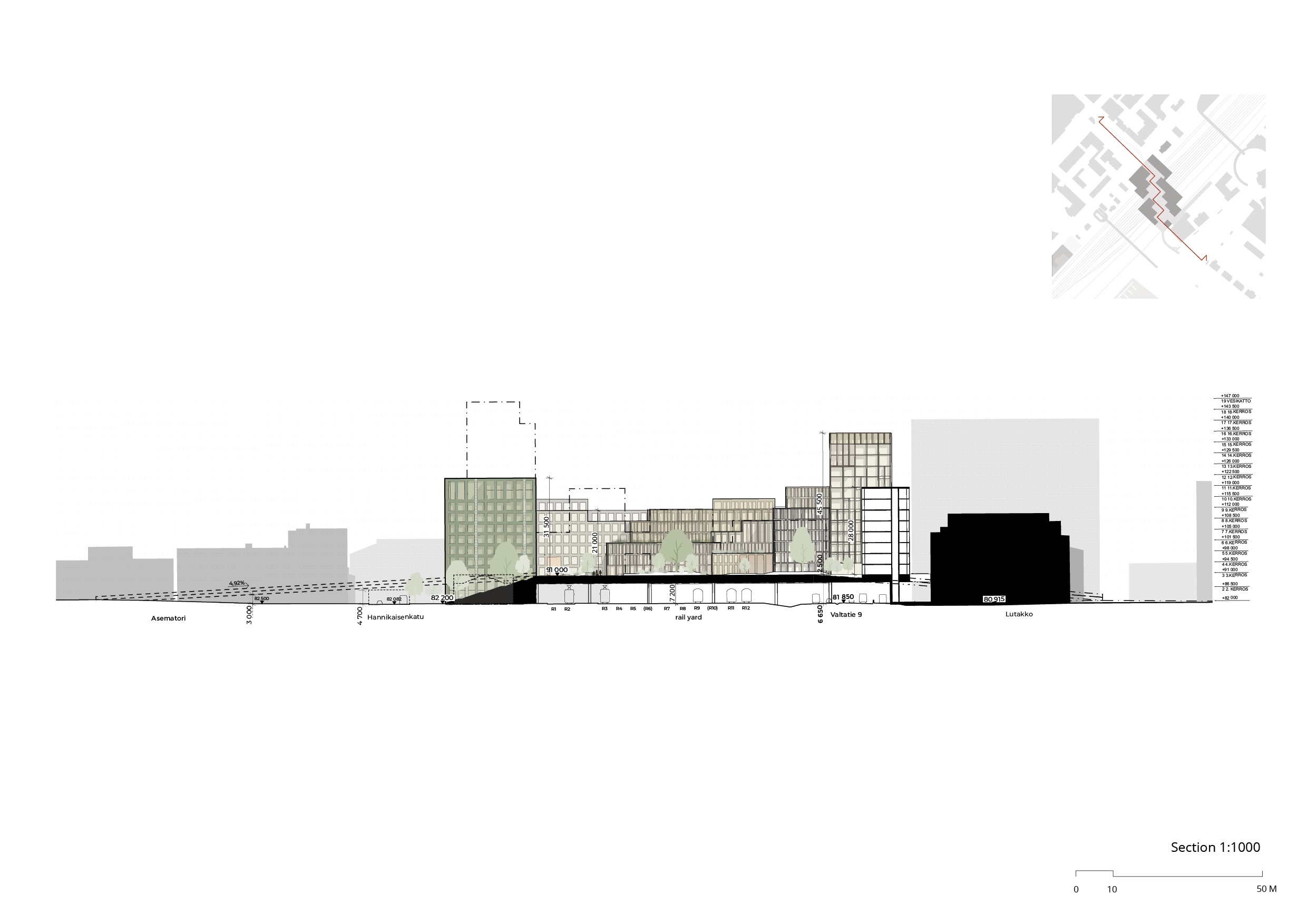
In the design of the buildings the aim is flexibility in terms of both frame depth and floor height to accommodate the needs of different functions. The floor height is generally 3.5m. However, the lowest floors located along Hannikaisenkatu have a floor height of 4.5m. The variation in frame depth is between 15-23m.
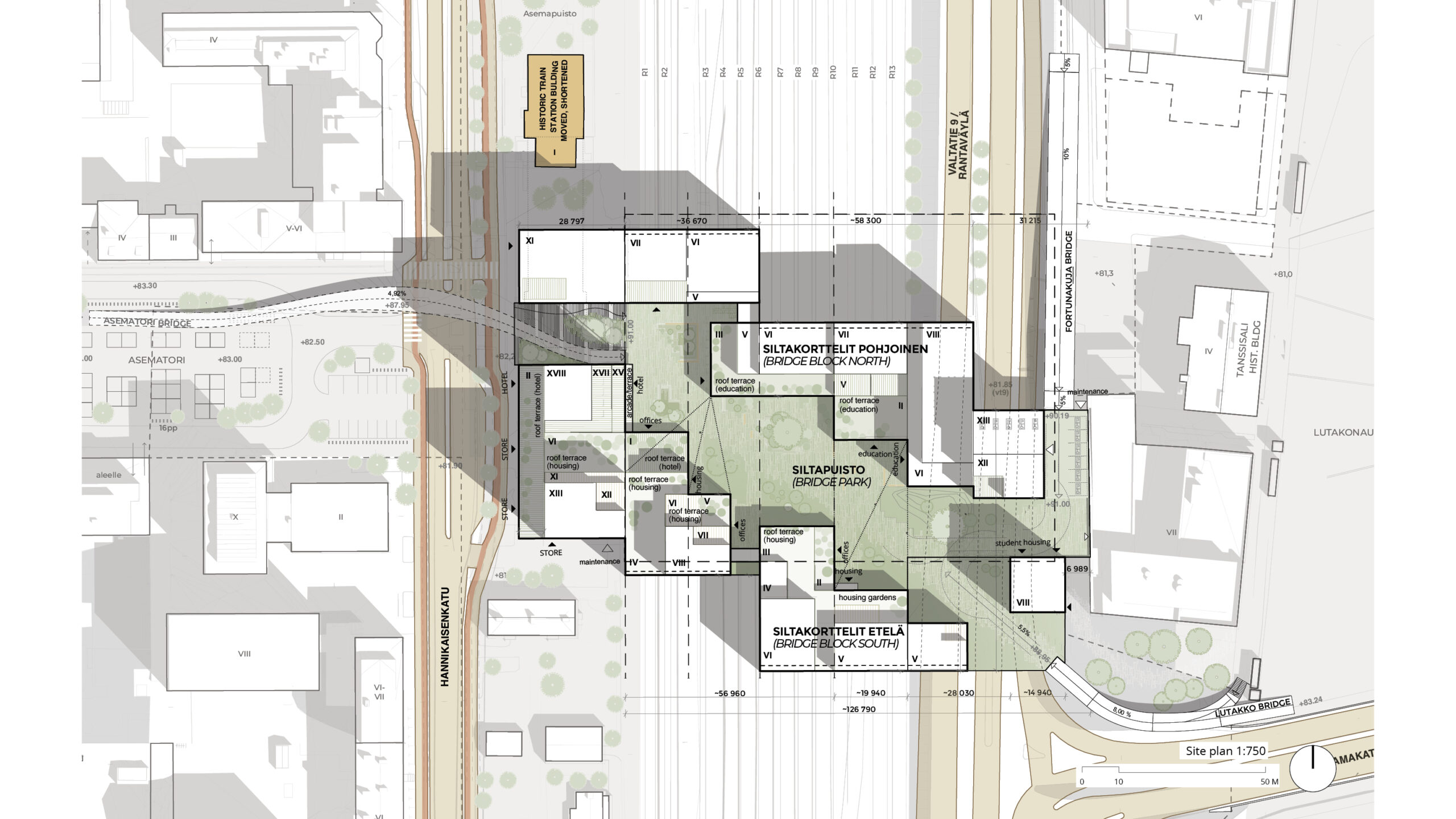
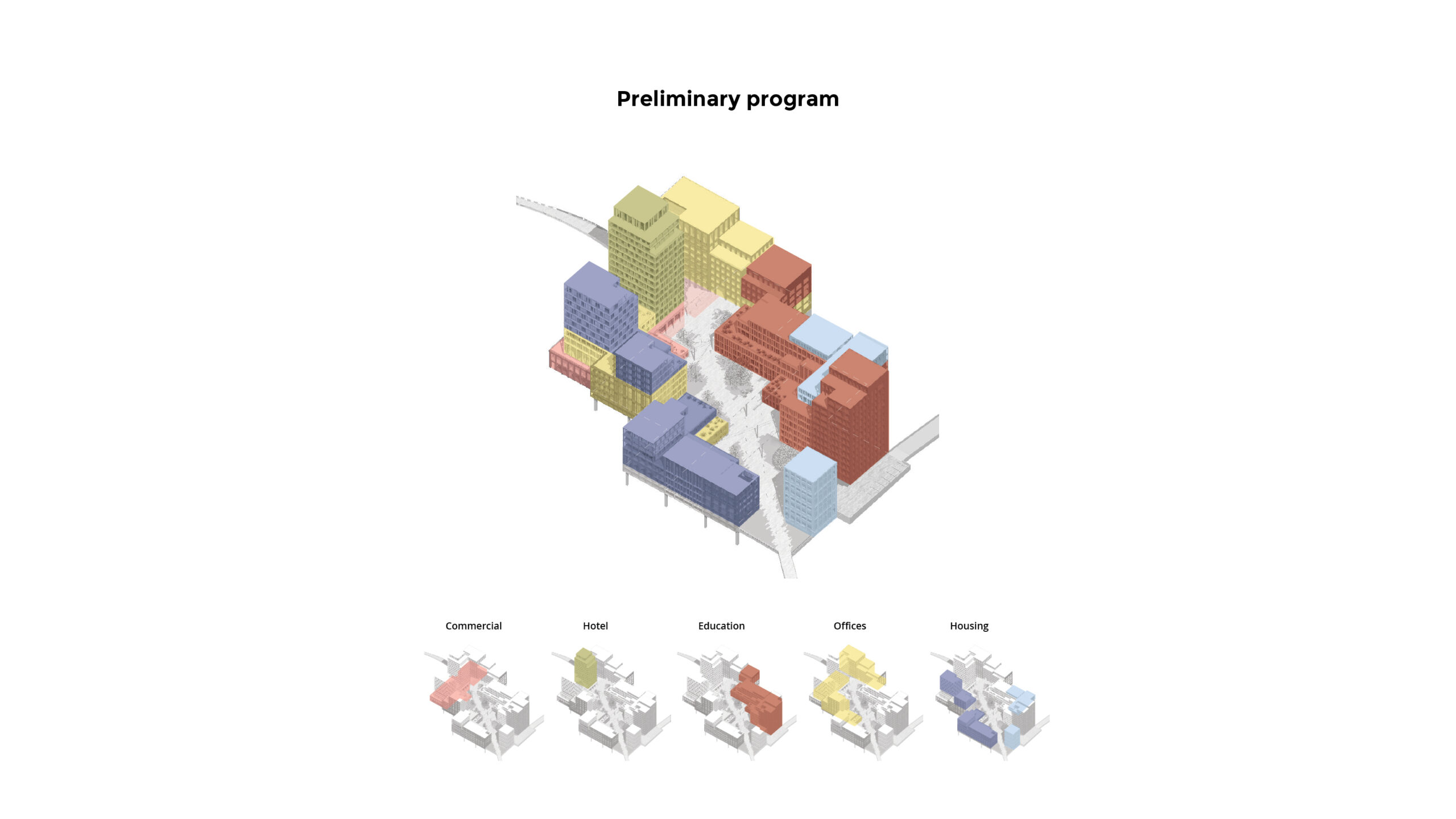
Commercial functions are located on the low pedestal section along Hannikasenkatu and around the square created at deck level. The complex of buildings on the side of the travel center is presented as a campus for research and education functions, which is connected to the industrial park next to the area.
The parts with a moderate number of floors that are associated with the educational complex are placed at the nodes of the masses, forming human-sized and inviting places for entrances and lobby spaces. The deeper parts enable auditorium and other functions. Some student housing has also been proposed in connection with the campus. On the other side of the park, a hybrid of office premises and housing is proposed. It is natural to place the office premises at the deck level and the more private apartments on the upper floors further away from the public route.
An Area Composed of Complementary Parts
The primary goal is to implement the Siltakorttelit blocks and the Siltapuisto park and the park as a single entity. Based on the structural principle, the concept plan is divided naturally into thee sub-areas: buildings bordering the city centre and related to the Hannikaisenkatu, the deck structure, as well as the part built on top of the deck. The part to be built on top of the deck can be further divided into two parts: the part to be built above the raill yard on the side of the city center and the part to be built above the Highway 9 on the Lutakko side of the new Siltakorttelit area.
The deck construction is further divided into smaller blocks due to the structural boundary conditions related to the implementation. In addition to the deck structure itself, the complex includes various bridge structures: a two-lane vehicle bridge for rescue, maintenance and escort traffic through Fortunankuja, as well as light traffic bridges from the Asematori square and the Lutakonaukio square.
The implementation of an accessible bridge by the railway station is presented in the concept plan as an option. In its positioning, the technical and spatial boundary conditions specified by the renovated station have been taken into account.
The Lutakko bridge is presented as being as short as possible, so that it does not cover the view of Lutakonaukio. For this reason it would not be considered accessible in terms of its longitudinal slope. The bridge can also be implemented in a way that makes it accessible. This option would, however, narrow the possibilities for event use at the Lutakonaukio Square to some extent.
Connecting to the City
The Siltakorttelit area is located in a central location in terms of traffic and is therefore easily accessible by all modes of transport. The new connection created through the Siltakorttelit blocks and the Siltakupuisto park will connect the city centre and Lutakko into a much more compact whole than before, especially from a pedestrian perspective. The main cycling route between the city centre and Lutakko will continue to be via Kilpisensilla, although Siltakorttelit is also easily accessible by bike.
Maintenance and service access to the deck, emergency evacuation and rescue routes as well as access for people with reduced mobility is organised via Fortunankuja. In principle, all other logistics will be managed from the ground level either via Hannikaisenkatu or along Fortunankuja from below the deck. Apart from parking reserved for people with reduced mobility, there will be no parking in the Siltakorttelit block. Parking will be organised in other parking facilities in the area.