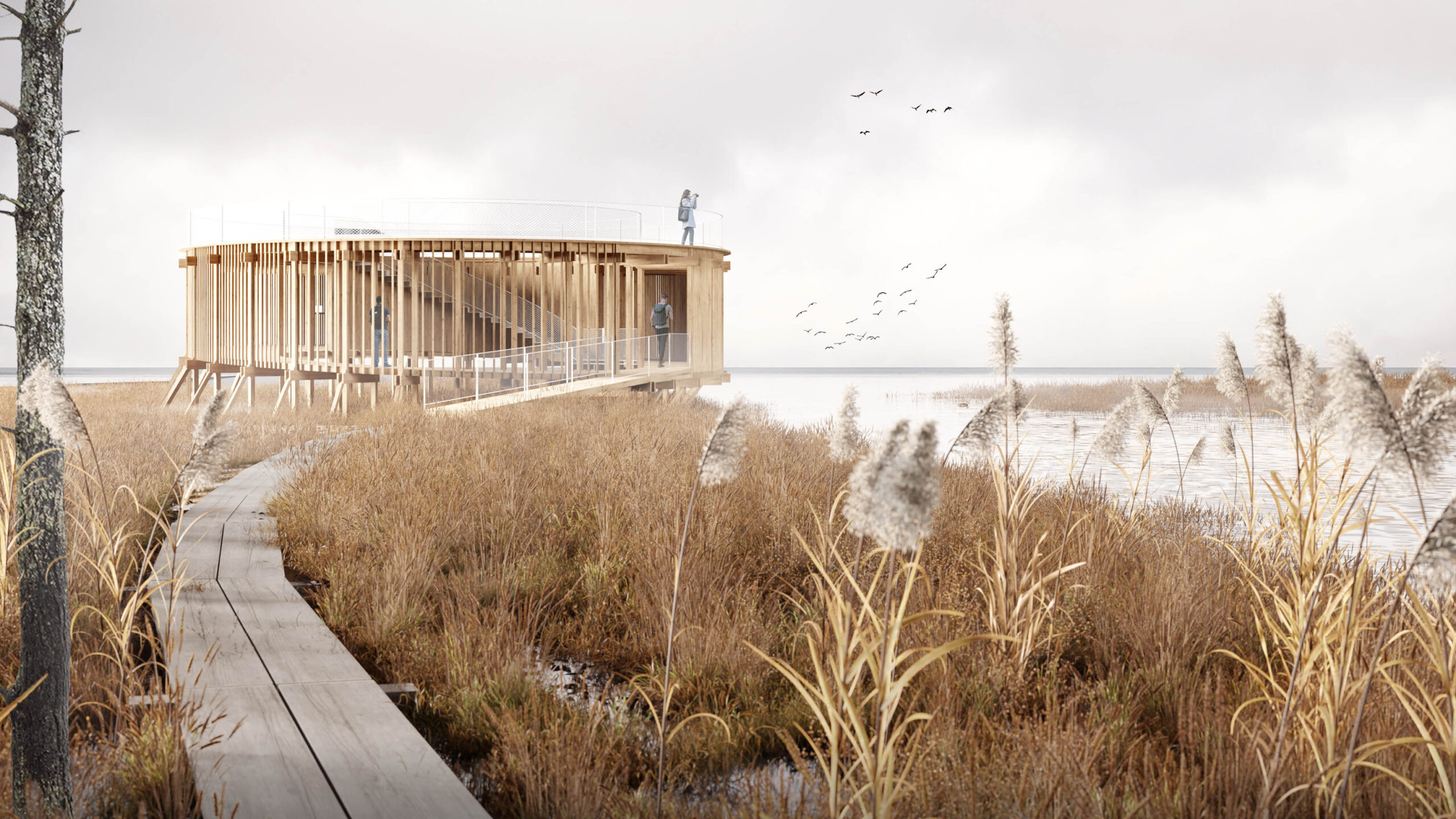
Liminka Bay Birdwatching Tower – Kehrä, a Light Wooden Structure
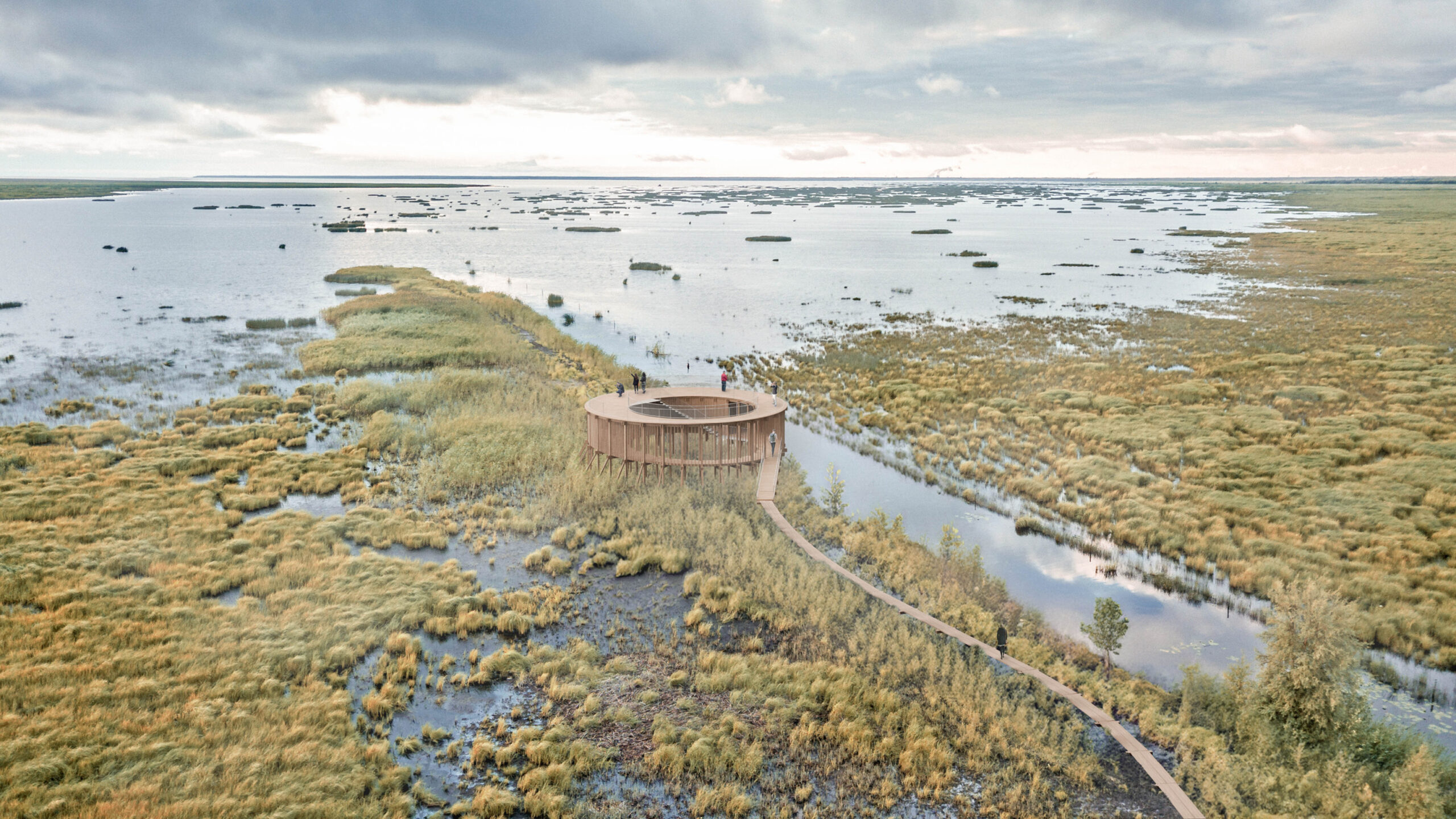
‘Kehrä’ is a proposal for a birdwatching tower in the Ramsar wetlands in the Liminka Bay, where tens of thousands of migrating birds rest, feed and nest. The building is timeless in appearance, but at the same time strongly sculptural. It subtly takes its place in the delicate landscape of the bay.
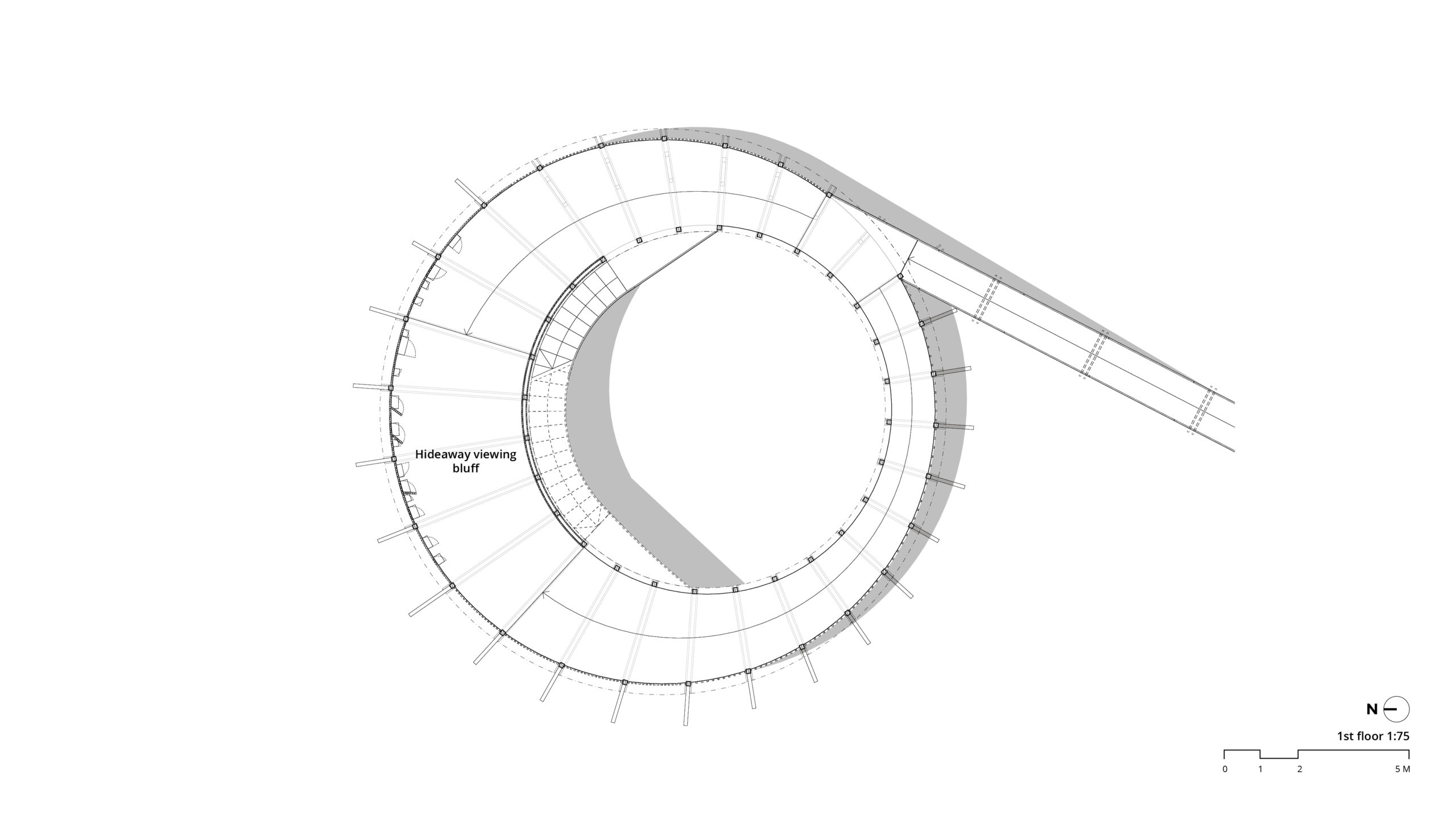
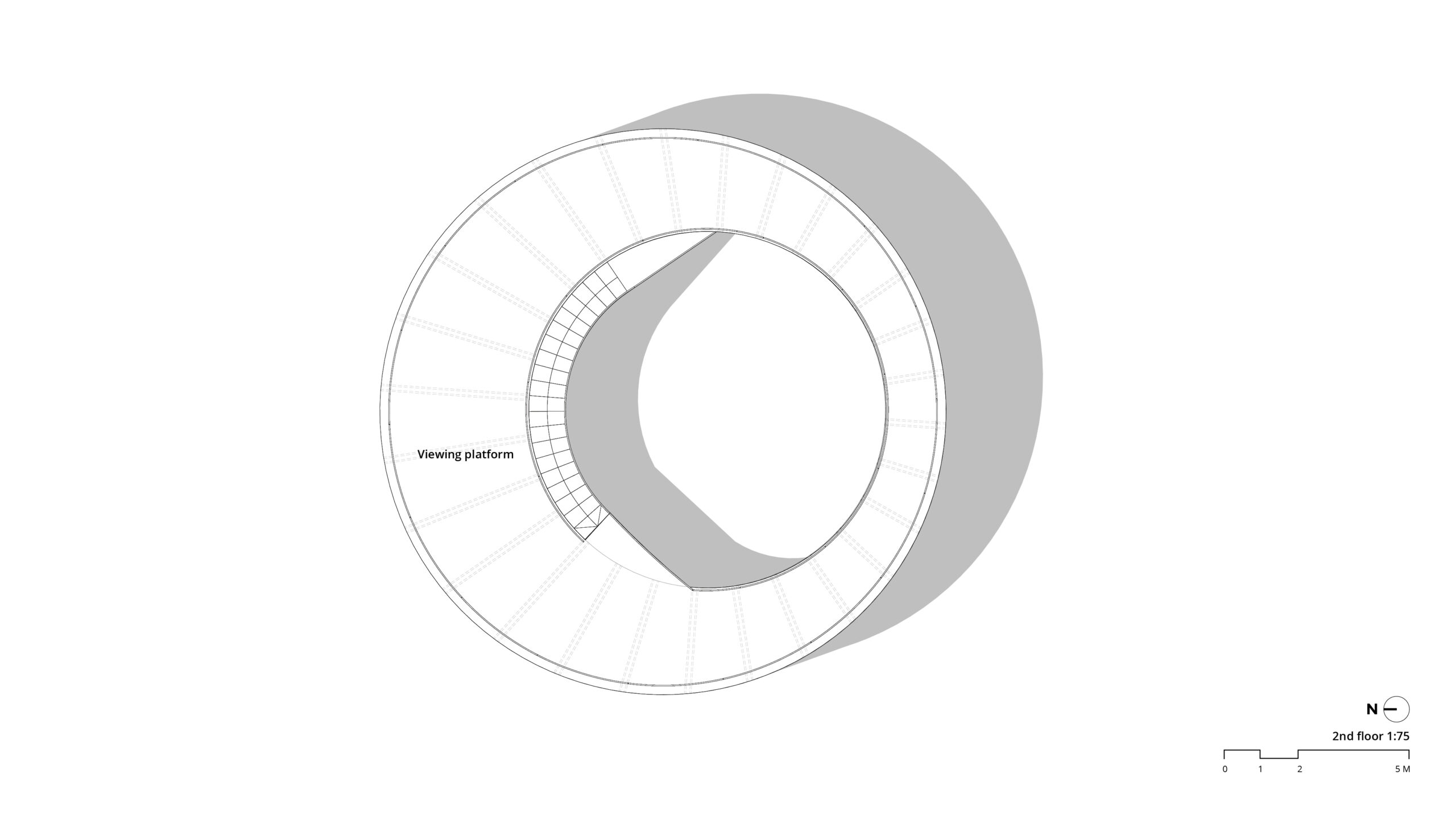
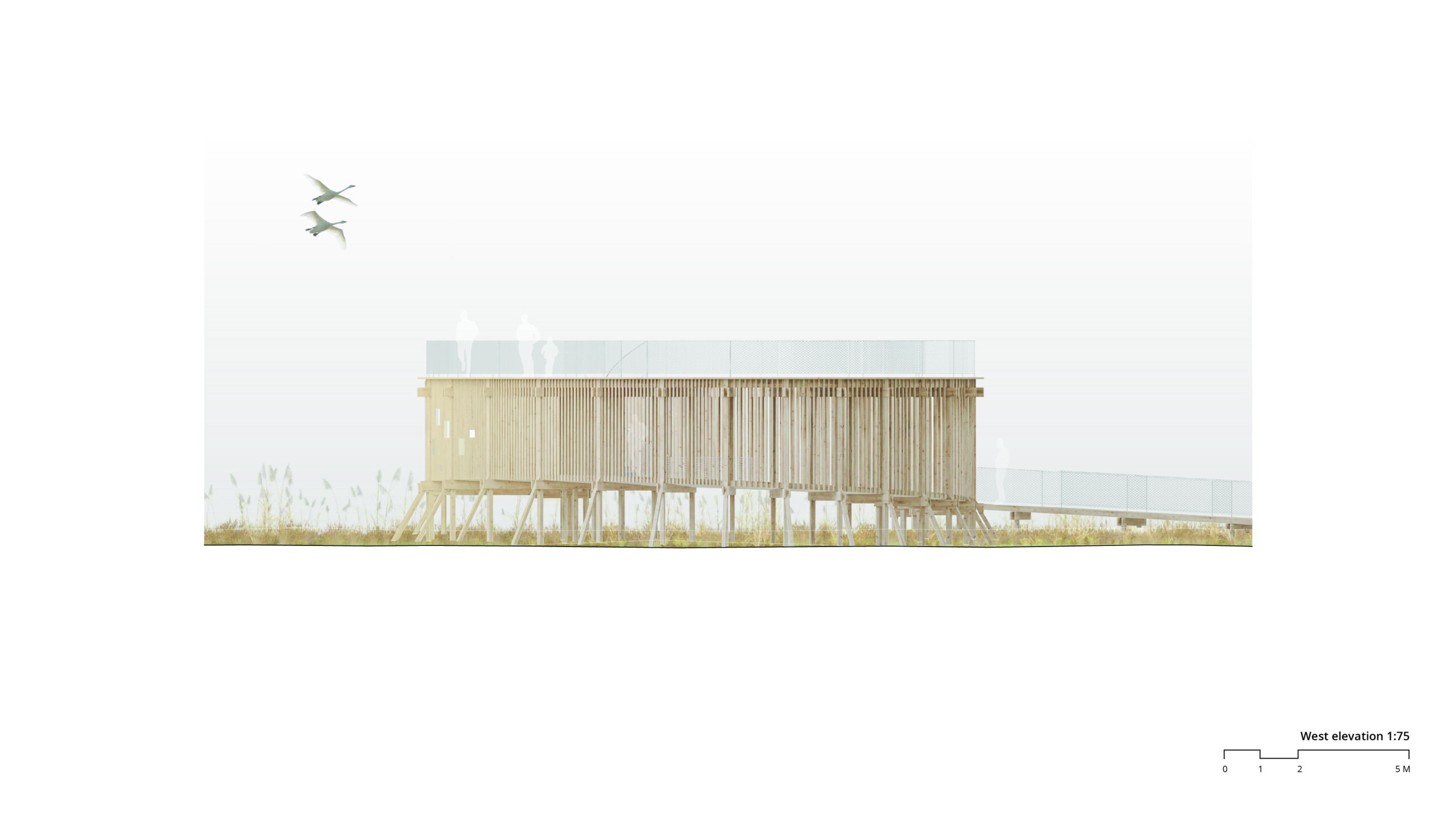
With minimal disturbance to the nature of the protected bird sanctuary, the two-story wooden structure offers a hideaway viewing bluff for bird watchers on the lower level and a viewing platform on the upper level. Kehrä is intentionally low so as not to stand out too much in the delicate nature of the wetlands. On the flatlands of the bay formed on the seabed, it affords good views in all directions.
Kehrä adapts harmoniously to the nationally valuable cultural landscape of Liminka Bay. It takes its que from the traditional buildings in the area forming a continuum with the local built environment. The birdwatching tower acts as an attractive and recognizable destination for tourism in the region.
A Light Wooden Structure in Harmony with the Nature of the Bay
Wooden duckboards form a path leading to the tower. It is carefully designed to be accessible while also keeping the landscape around the tower undisturbed by visitors. The tower serves as the final destination point at the end of a route starting from the nature center where people can find information regarding the bird sanctuary along with maps for nature explorers.
The birdwatching tower is an open wooden structure formed by a spiralling loop that goes around in a circle on both levels. It creates a path that leads the visitor on a journey into the fascinating world of the wetland nature. It opens views of the surrounding nature and offers the opportunity to observe the plant and animal life of the area without disturbing it.
Birdwatching Tower as a Place for Observing Nature
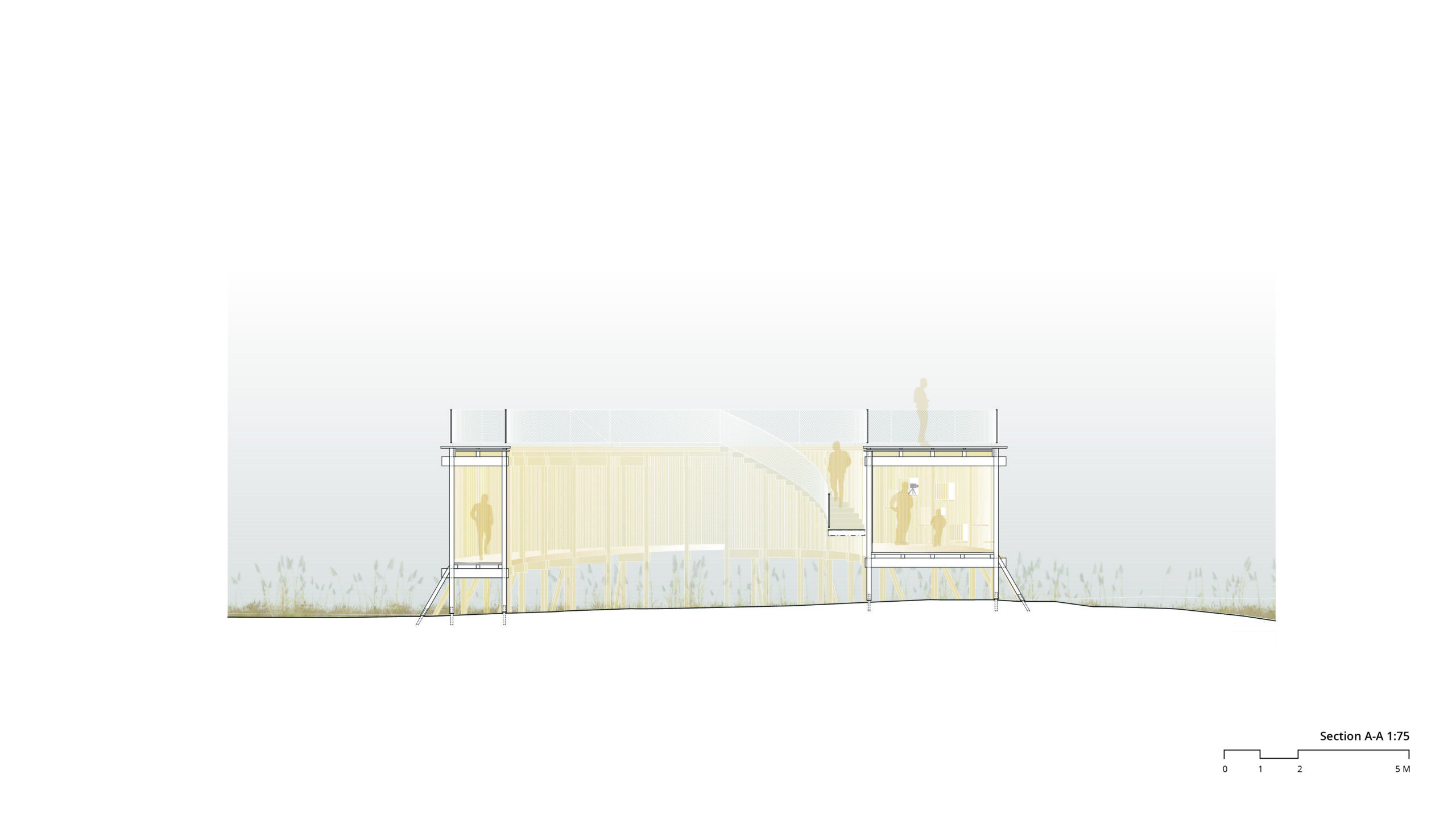
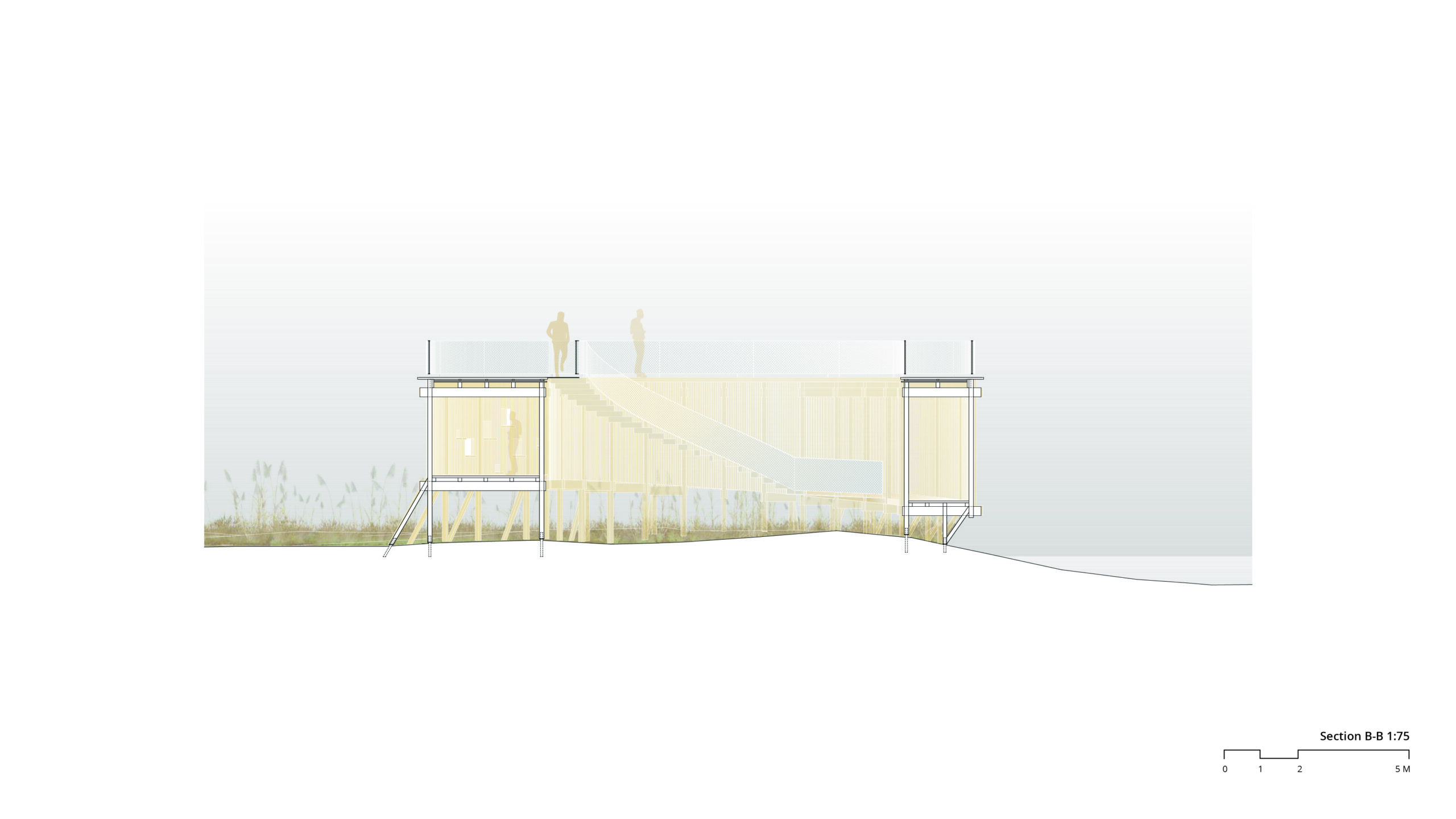
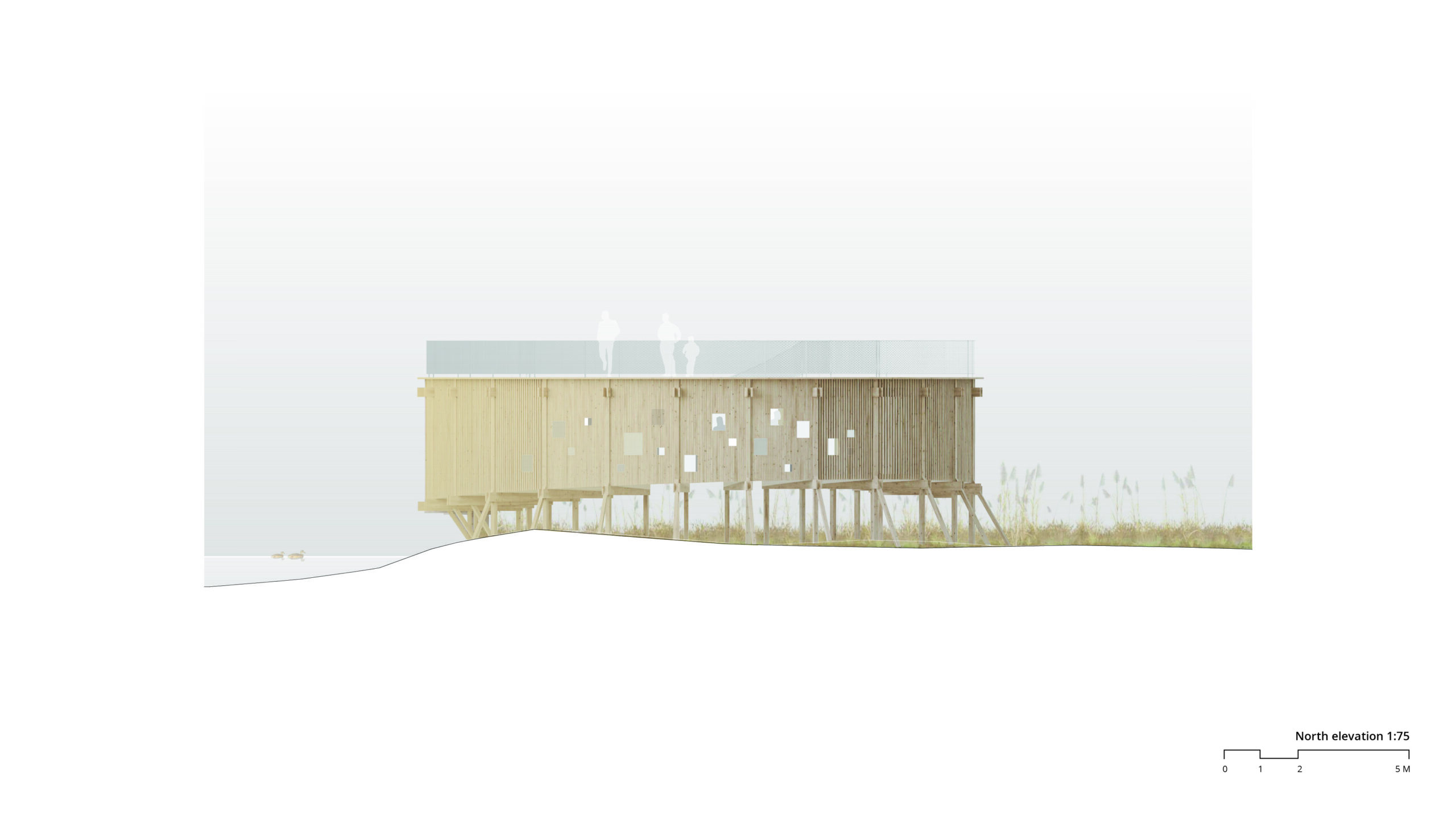
The journey to the sensitive and varied nature of the wetland begins already when you approach the birdwatching tower. Along the path, new perspectives are offered at each stage to experience the surrounding nature. At the end of the duckboards, a wooden ramp leads to the lower platform of the tower. Inside the building, the floor continues to gently rise towards the edge of the perimeter. There views open towards the bay while keeping the viewer hidden from sight behind wooden scantlings so as not to disturb the animals. The lower platform is more closed and works like a hidden booth. There you can observe nature from a shelter, without attracting attention.
The view of nature remains as the key focus when you make your way to the upper platform. The circular stairs go around an interior yard formed by the structure of Kehrä. In that way, the wetland with its plants is strongly present also inside the structure and gets integrated into the building. The upper level is open and allows unobstructed views in all directions. Standing on wooden stilts, the building stretches over the water. It offers an opportunity to observe the marsh and its wetland plants from a slightly different angle only slightly elevated above the ground and the water.
The shape of the building, which expands and contracts, creates different spatial experiences in different parts of it. It also makes it possible to accommodate even large number of people to stay on both levels at the same time. It works equally well for both casual tourists and bird watchers, offering each group a different opportunity to view nature and the environment. Movement flows naturally in the entire spiral building, making the journey through it smooth. It also helps to avoid the forming of bottlenecks.
Sustainable and Enduring Materials
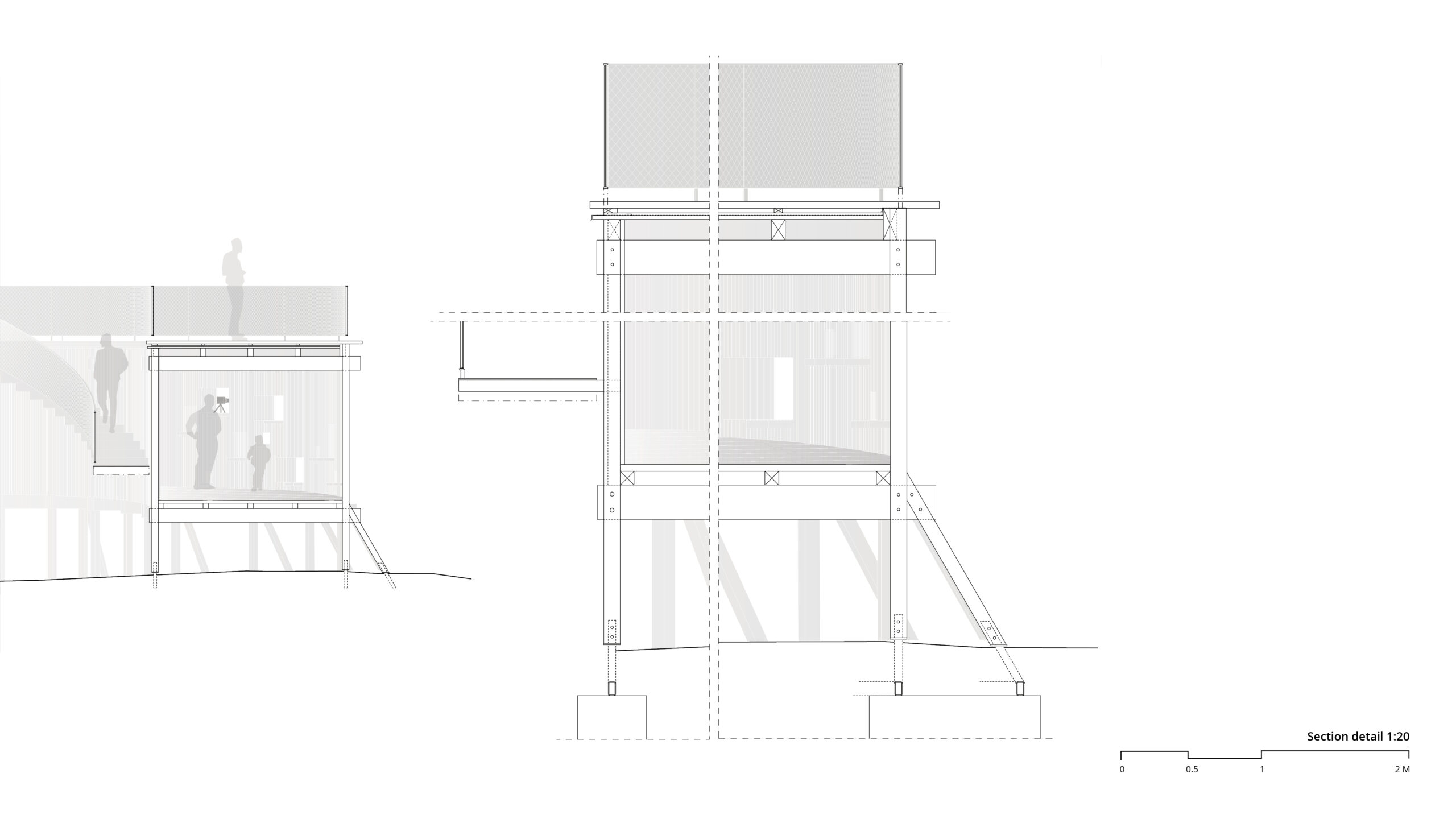
The wooden structure of the tower is made of domestic spruce. The frame of the building can be prefabricated and partly also realized with elements. The joints of the structure are intentionally simple and practical. The prefabricated wooden parts are put together on site with notched joints and secured with bolts. The parts are carefully designed to be small enough in size so that the installation can be done by human power, as the sensitive nature of the area cannot withstand heavy machinery. Both the floor of the lower level and the deck of the open upper level are made with spruce planks.
The vertical batten cladding of the walls hides the observers protecting the surrounding nature. It is dense around the hideaway viewing bluff and thins out as the circumference of the circle progresses, opening wider views. The hatches on the wall of the hideaway viewing bluff allow bird observation and photography from the booth without disturbing the life around. The structure can also be supplemented with windows if necessary.
On the top level, wire netting serves as a protection. It is visually transparent and allows to keep the tower light in appearance. It also makes it possible to open views for smaller visitors as well. The stairs and handrails are made of galvanized or stainless steel.
In the choice of materials, ecological sustainability and durability during use has been a key consideration. Materials are local and renewable, and they have a long lifecycle. They have a potential for recycling after their use in the building. The chosen materials also make it possible to minimize the need for maintenance.
A Building Designed to Adapt to Changes in the Weather Conditions
The structure is designed in such a way that the tower is capable of withstanding very strong winds while swaying and shaking as little as possible. The wooden structure is anchored to a steel ring, which rests on 16 sensors. The wood is separated from the soil with a steel joint. Wooden surfaces are left untreated to allow them to turn gray as they age. When the wood turns gray, the building becomes integrated into the surrounding nature.
The starting point of the architectural concept is the principle that what gets wet by nature can also dry naturally. It naturally adjusts itself to changes in the weather conditions and seasons. This guarantees a long-lasting structure and makes it flexible and easy to maintain. The birdwatching tower is designed to withstand all kinds of weather conditions and can be used also in winter.
Kehrä responds to the special nature of the place and the potential offered by its characteristic features. In its subtle architecture, the scenic and functional aspects are brought together to form a long-lasting, finely tuned whole.
- For more information about the competition in Finnish, see HERE.