





Kumulus – Museum for History and the Future
Kumulus, the entry developed by OOPEAA and Tmi Otto Heinonen proposes a museum designed to create an inspiring dialogue between the history and the future of Turku as a city known for its innovative spirit. The proposal was awarded honorary mention in the international open architecture competition for the Museum of History and the Future in Turku, Finland. The competition attracted a lot of interest and over 400 proposals of a very high caliber were submitted.
A Museum that Weaves Together History and the Future
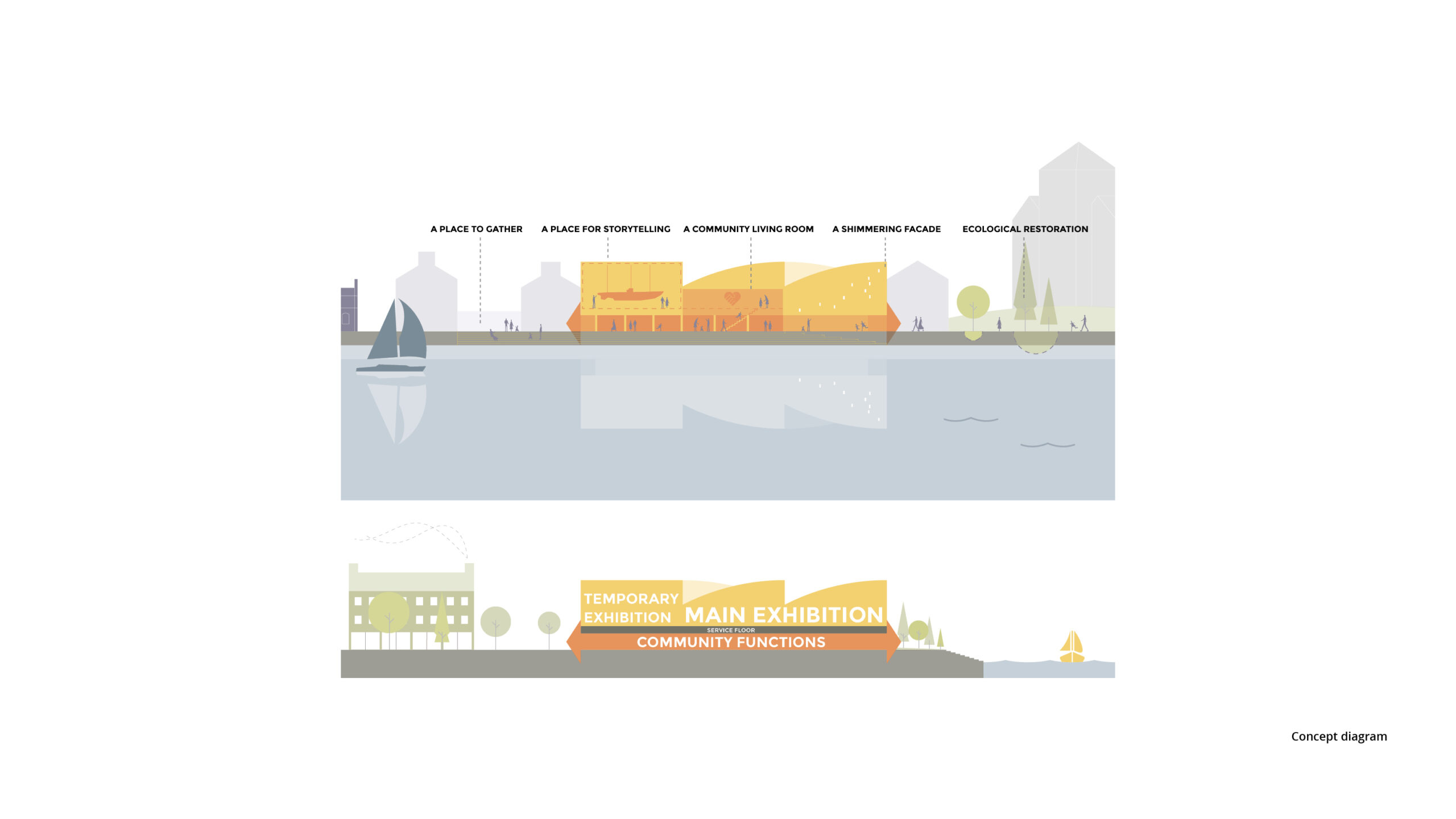
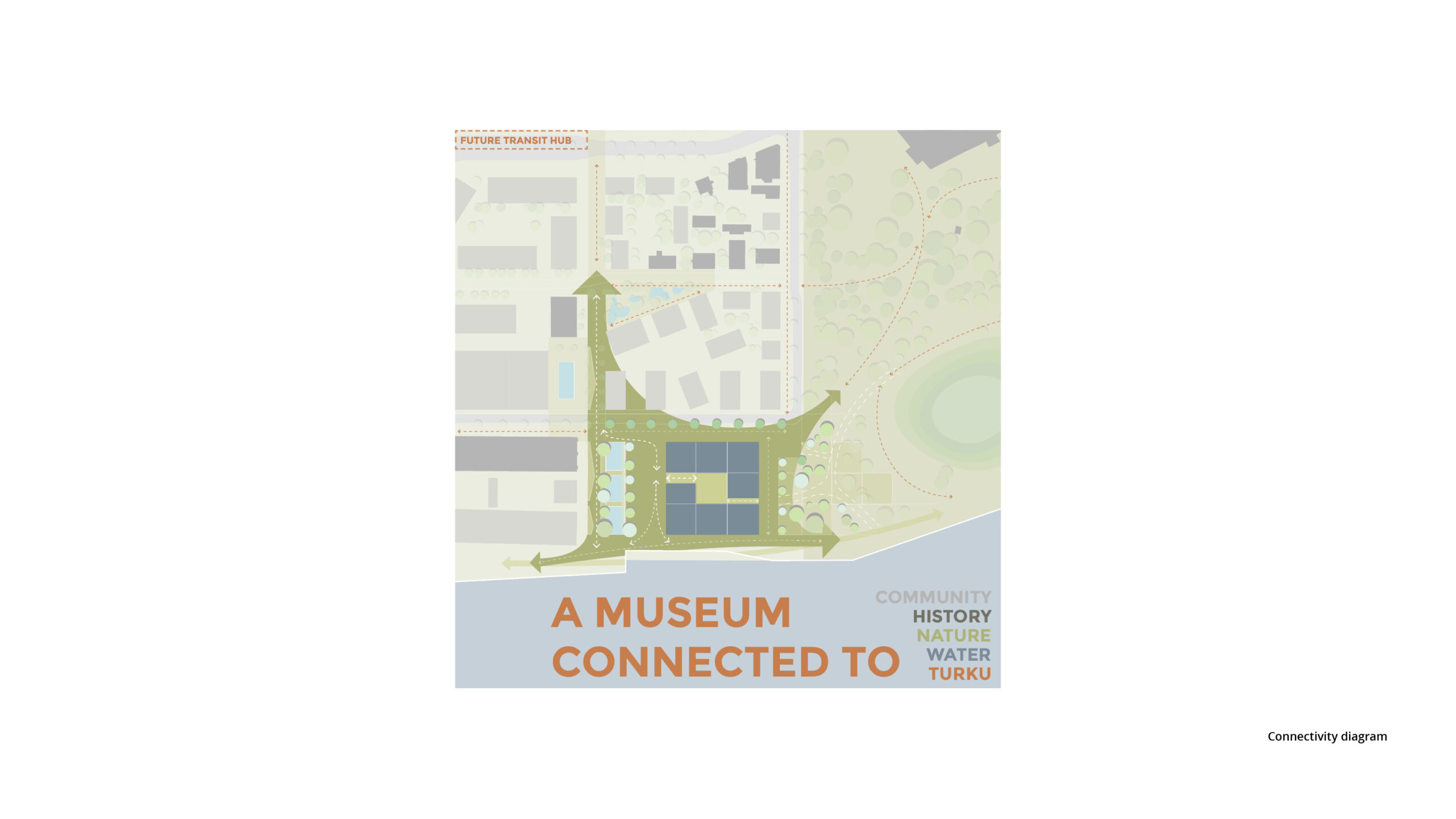
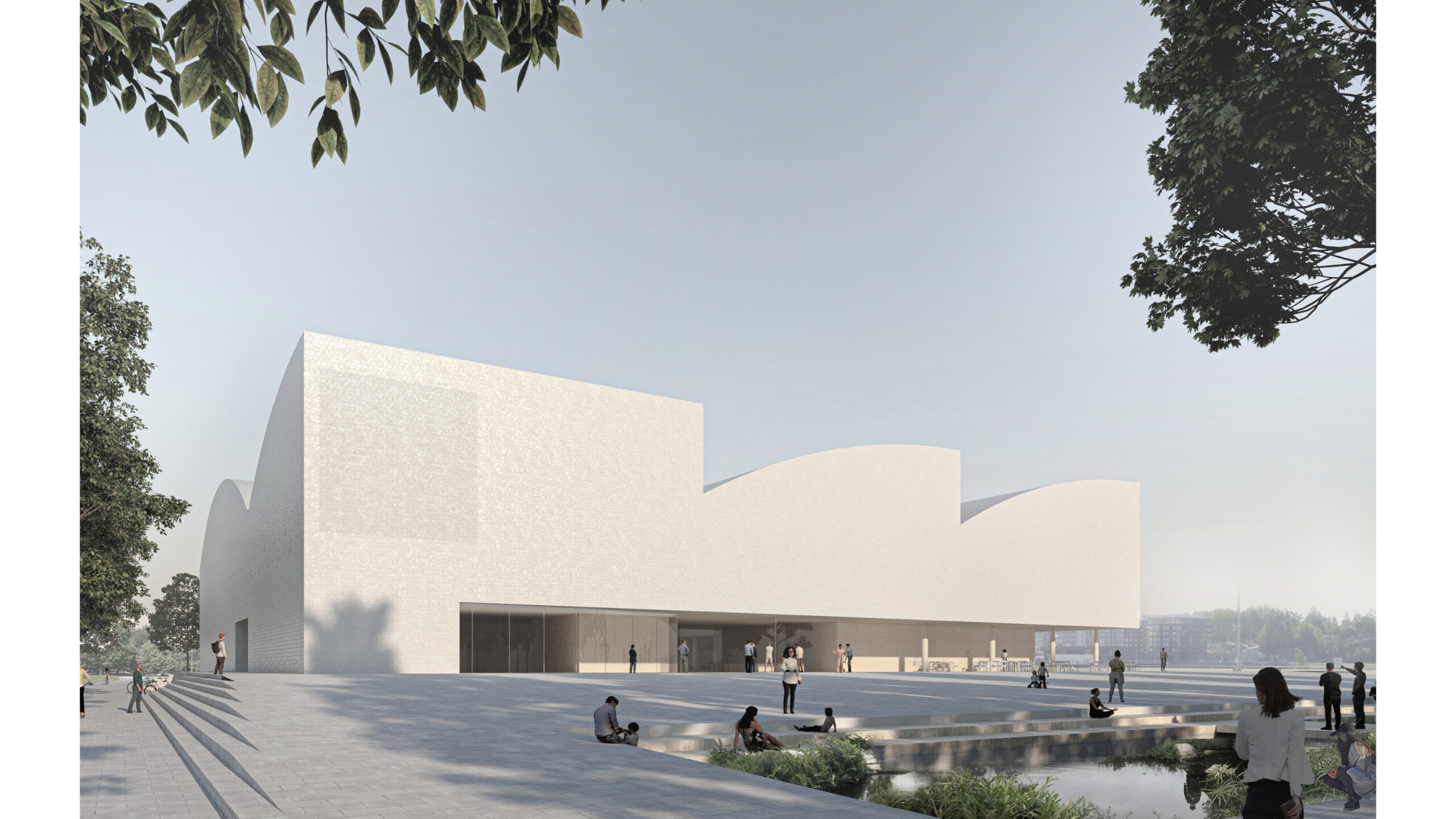
As a museum connected to community, history, nature, water, and Turku, Kumulus is a place for storytelling and learning. It provides a place to gather for people from near and far. It is also a community living room for the neighborhood. With its strong sculptural form and the artwork on the facade of light-colored glazed roof tiles made of local clay, Kumulus weaves together the history and the future of Turku as a city of culture, science, and innovation.
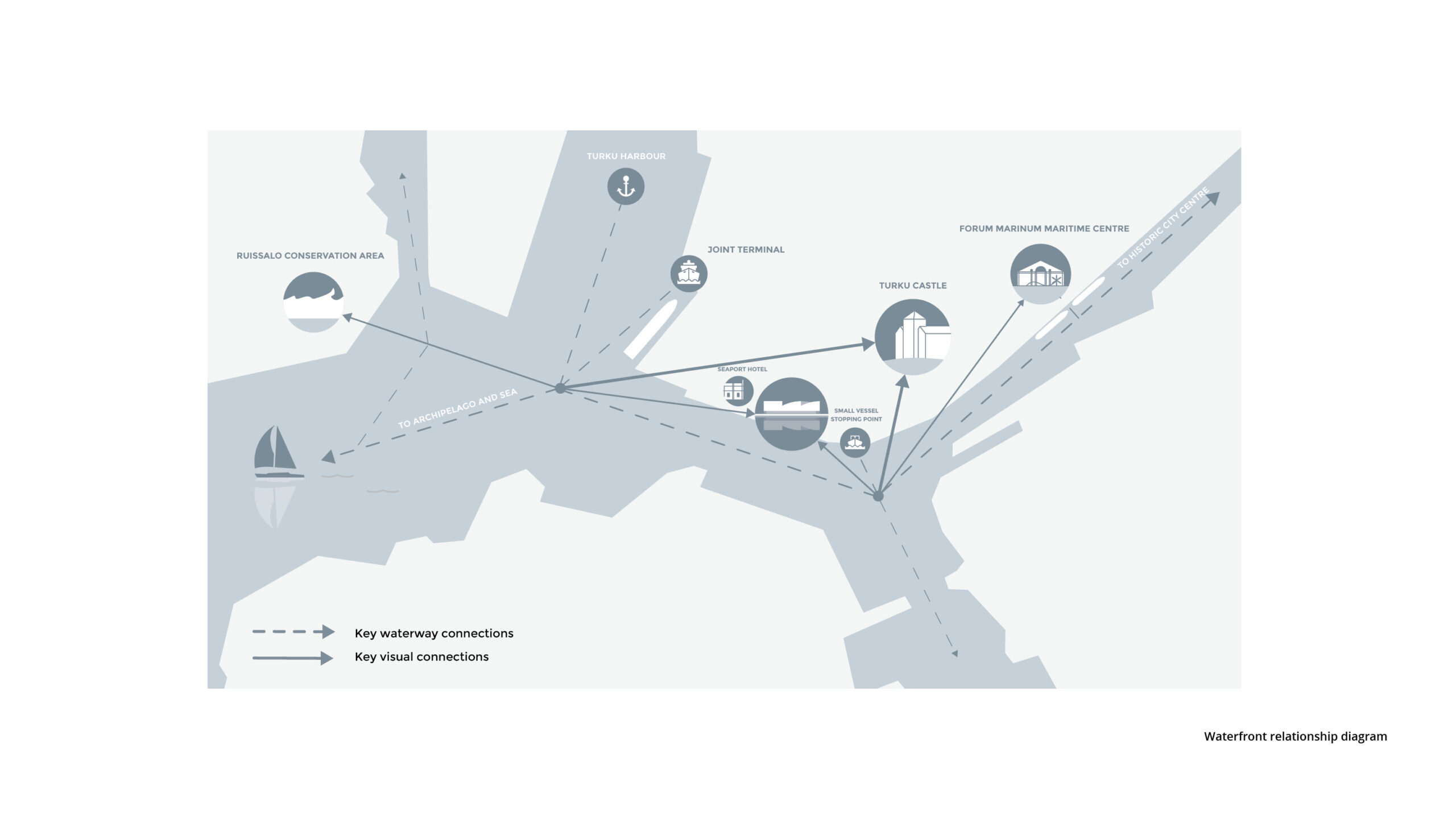
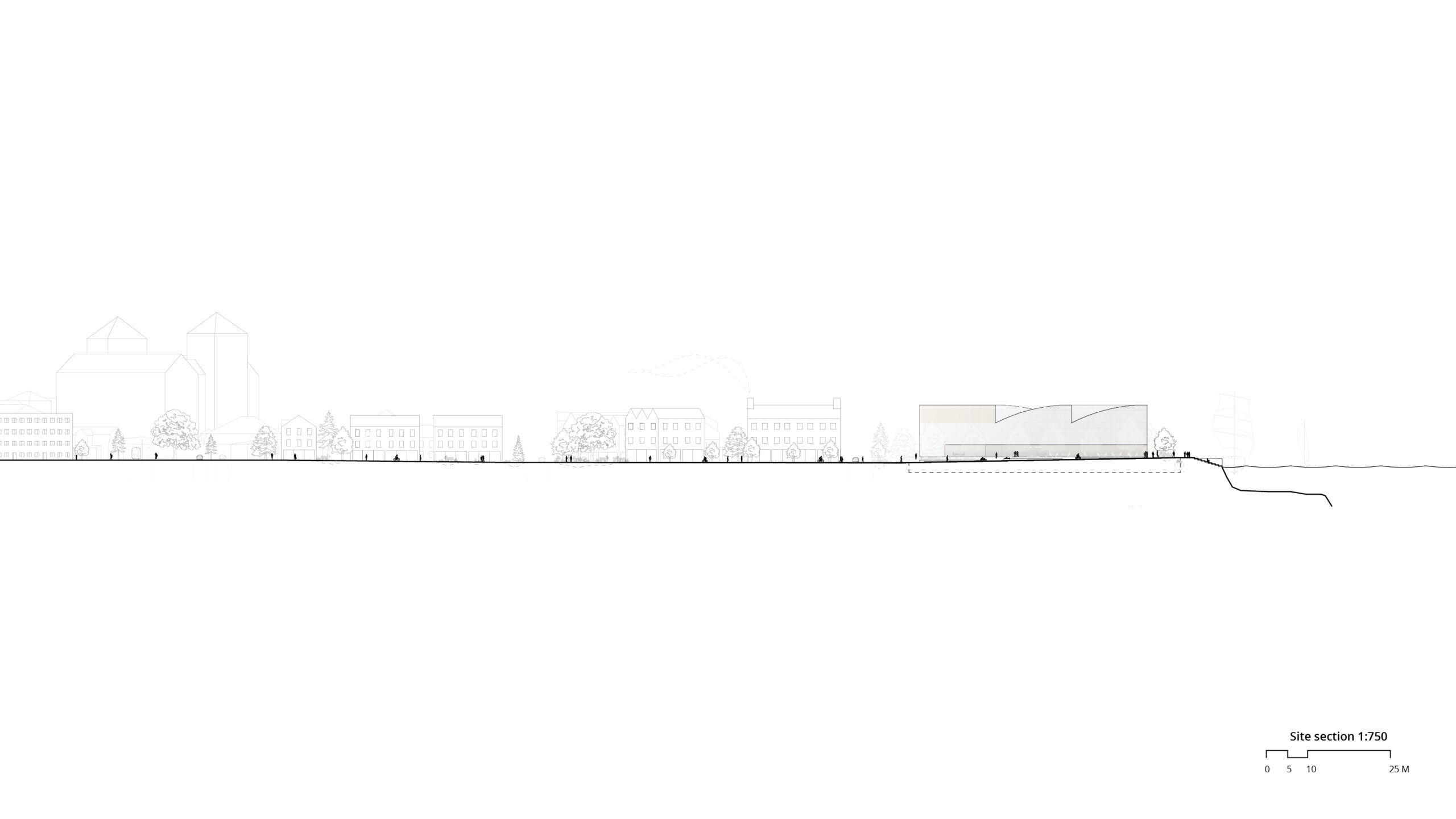
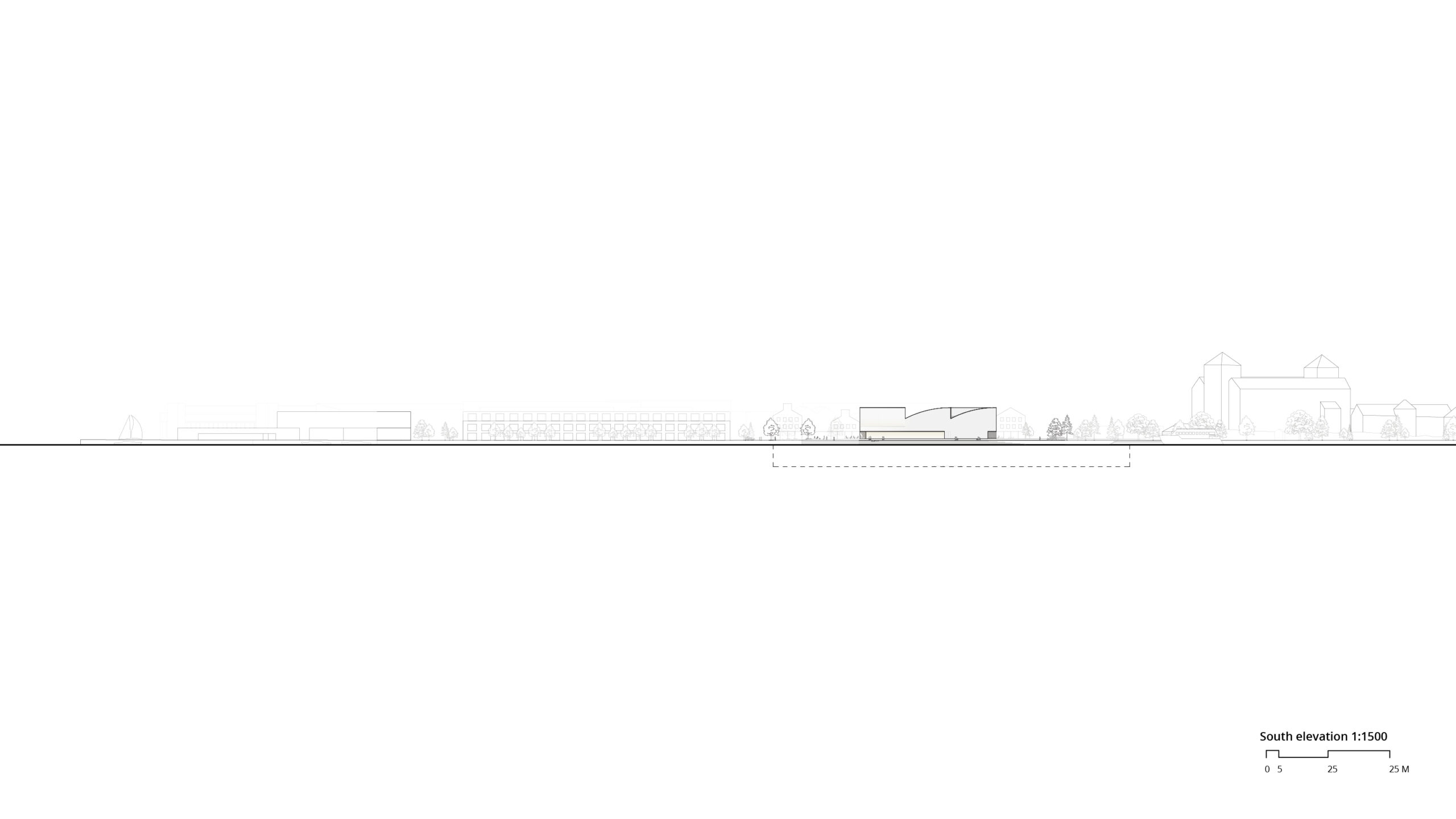
Kumulus combines the functions of a city museum and a science center into one. It introduces a strong new element into the network of museums and cultural organizations in the city. It will form the heart of the new art district in the harbor area. In its program, the museum boldly examines history allowing room for a multiplicity of perspectives on the future. This is reflected in the physical form of the building and in the way it takes its place on the water’s edge. The new museum creates a mediating link between the open horizon of the sea and the historical Turku Castle.
Museum of History and the Future – A Landmark with a Strong Identity
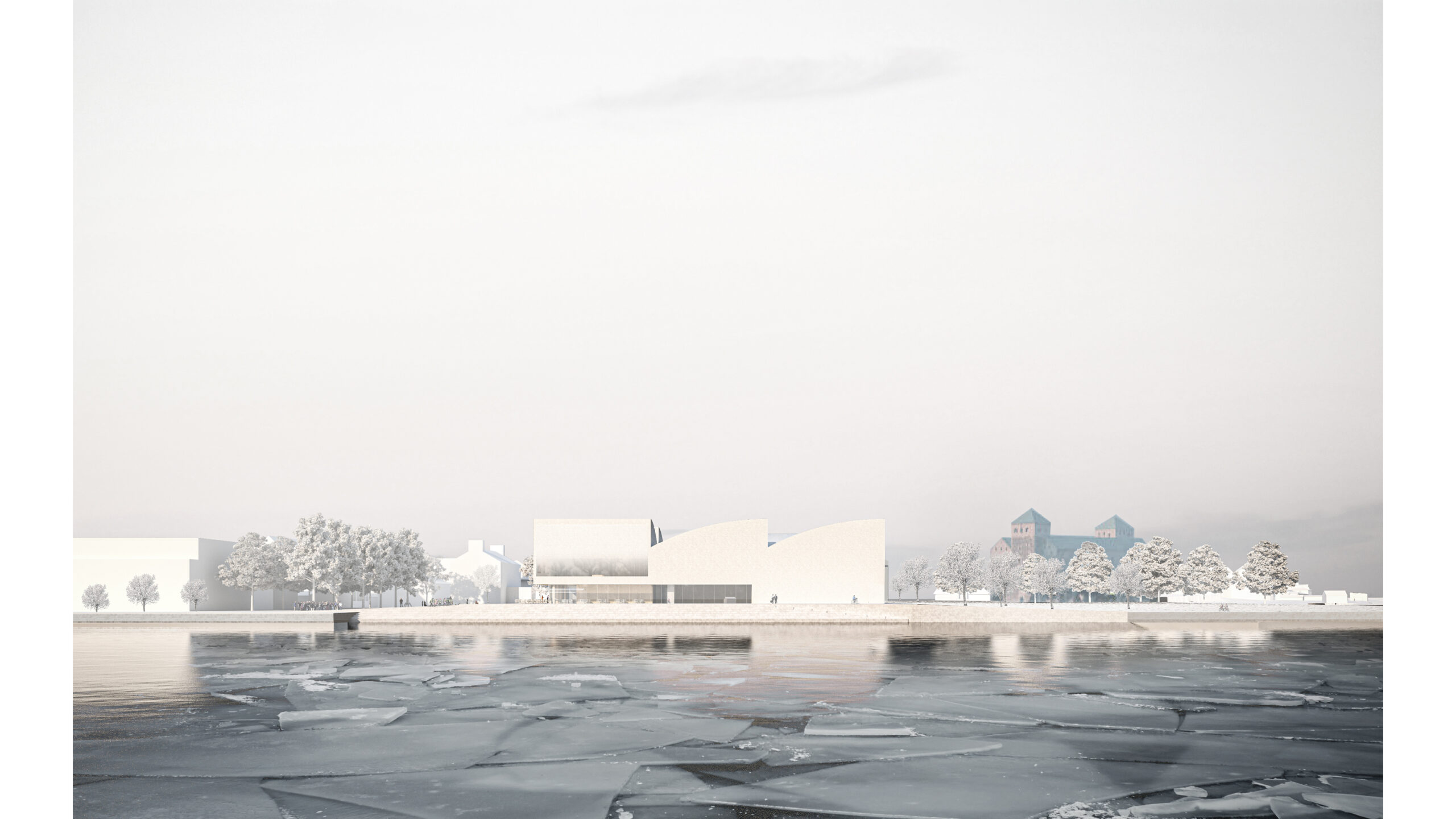
As a home for the new museum Kumulus forms a distinct landmark by the water’s edge. It greets the visitors approaching the city from the sea and frames a view with the historic Turku Castle in the background. It is also visible from afar when making one’s way from downtown towards the water. Enriching the historic shoreline, it forms an inviting point of destination in the city. With its generous spaces dedicated to a varied range of activities, the new museum provides a community living room for the people of the neighborhood and a gathering place for all.
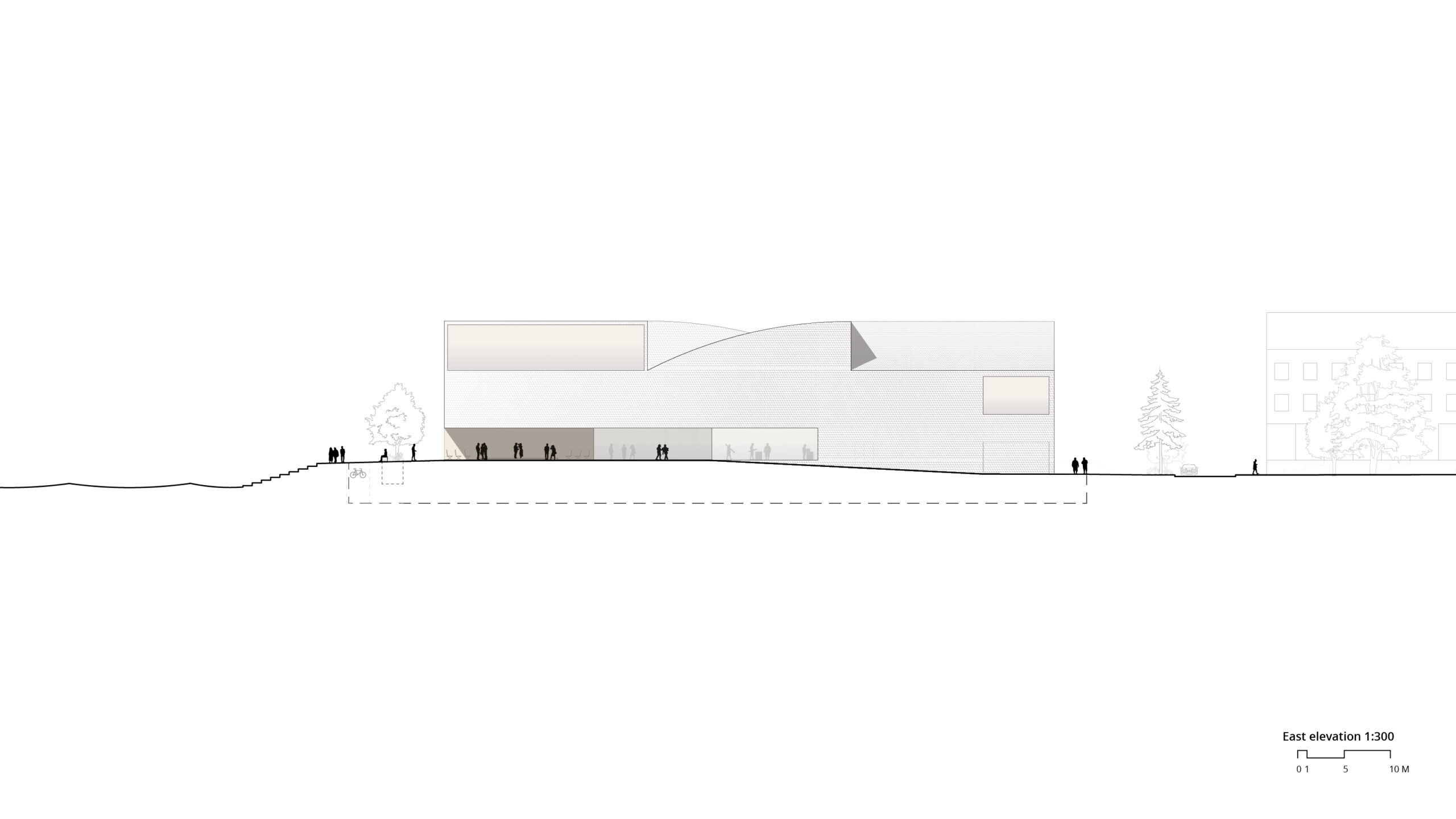
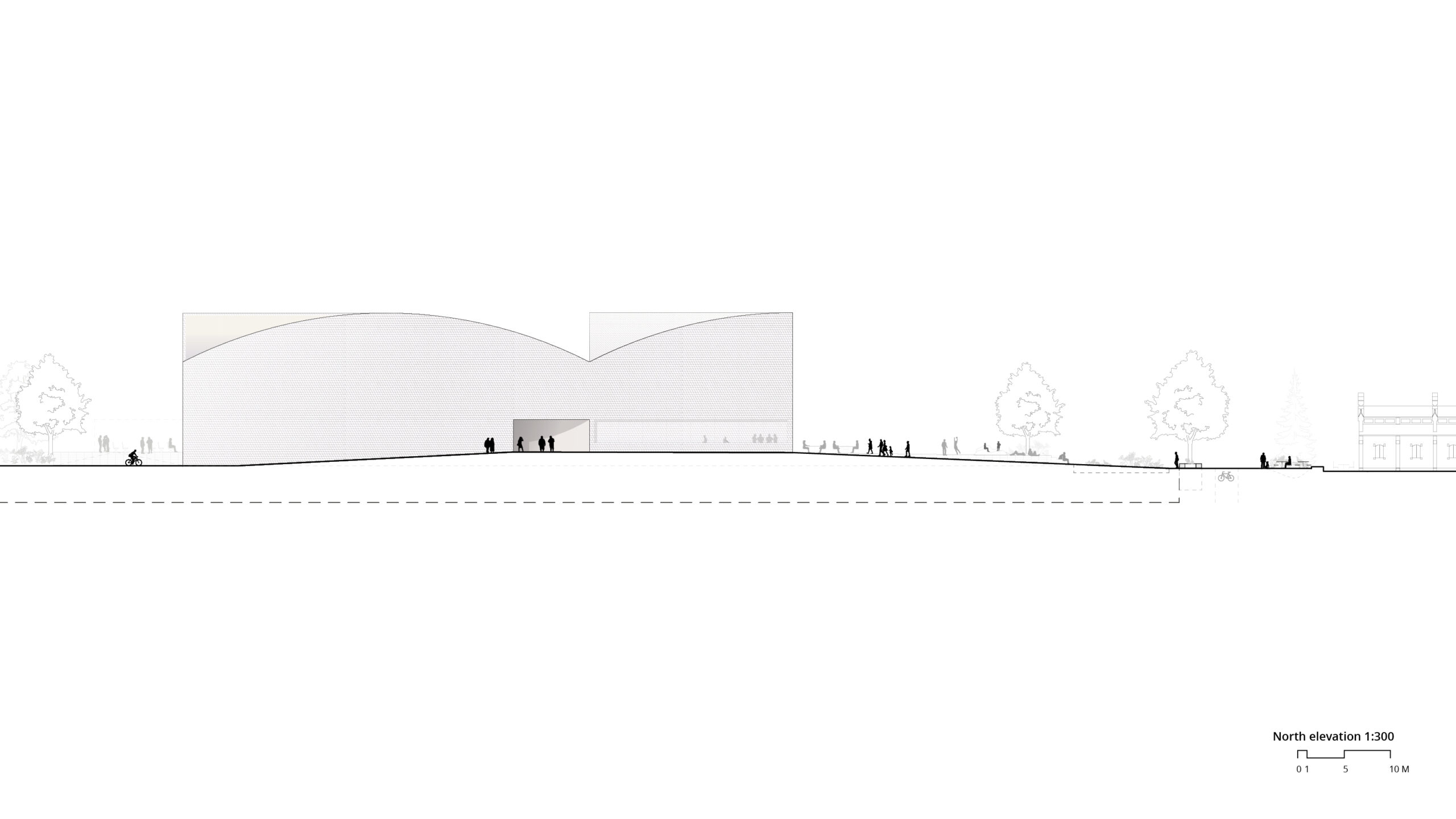
The facade material with its characteristic ripples gives the building a lively, shimmering expression that reflects the motion of the sky and the water. It will be realized as an art project and designed to be easily repairable if needed. Speaking to history, the form references the former wood storage buildings on the site. The shape of the building with the arched roofs is at once both recognizable and compact.
The arches create variability in the scale of the interior spaces. They also allow for diffused natural light to enter the atrium and the gallery spaces through a series of clerestory windows. The wooden structure is a combination of glue laminated and cross laminated timber. The building parts are joined with hidden connector pieces. This makes it possible to repair or replace them if needed. They can also be reused and recycled at the end of the building’s lifecycle.
Engaging the Neighborhood
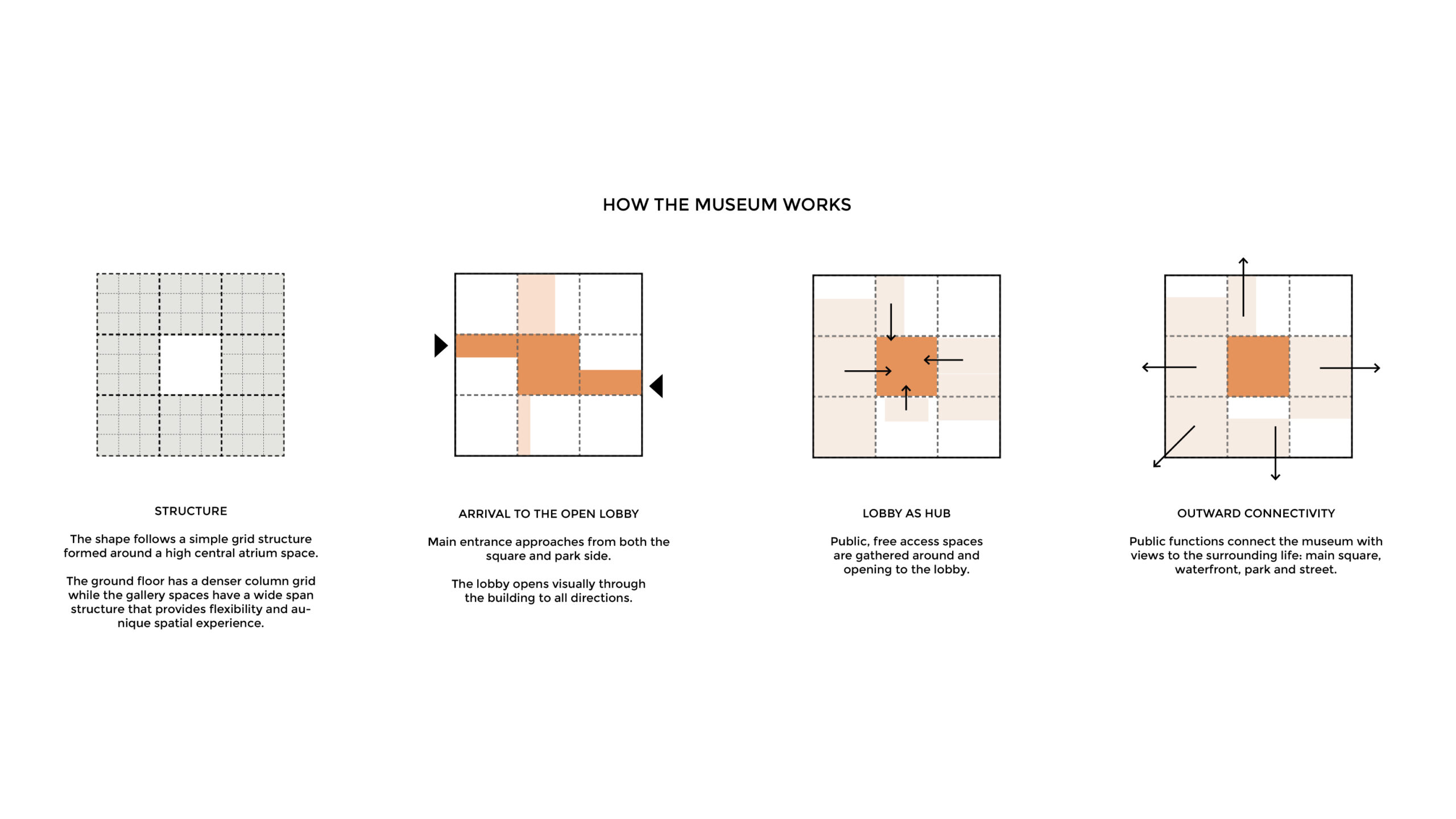
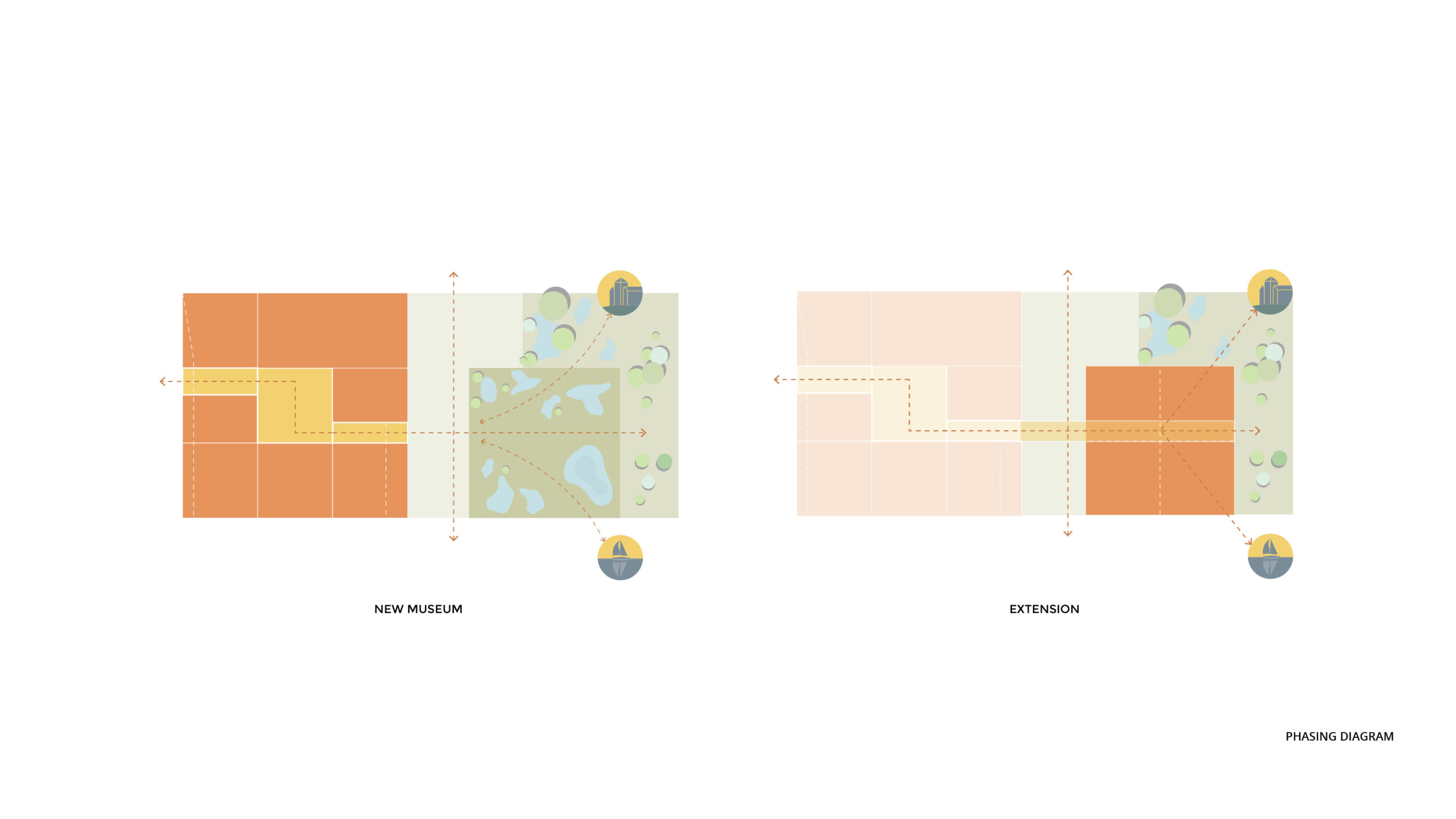
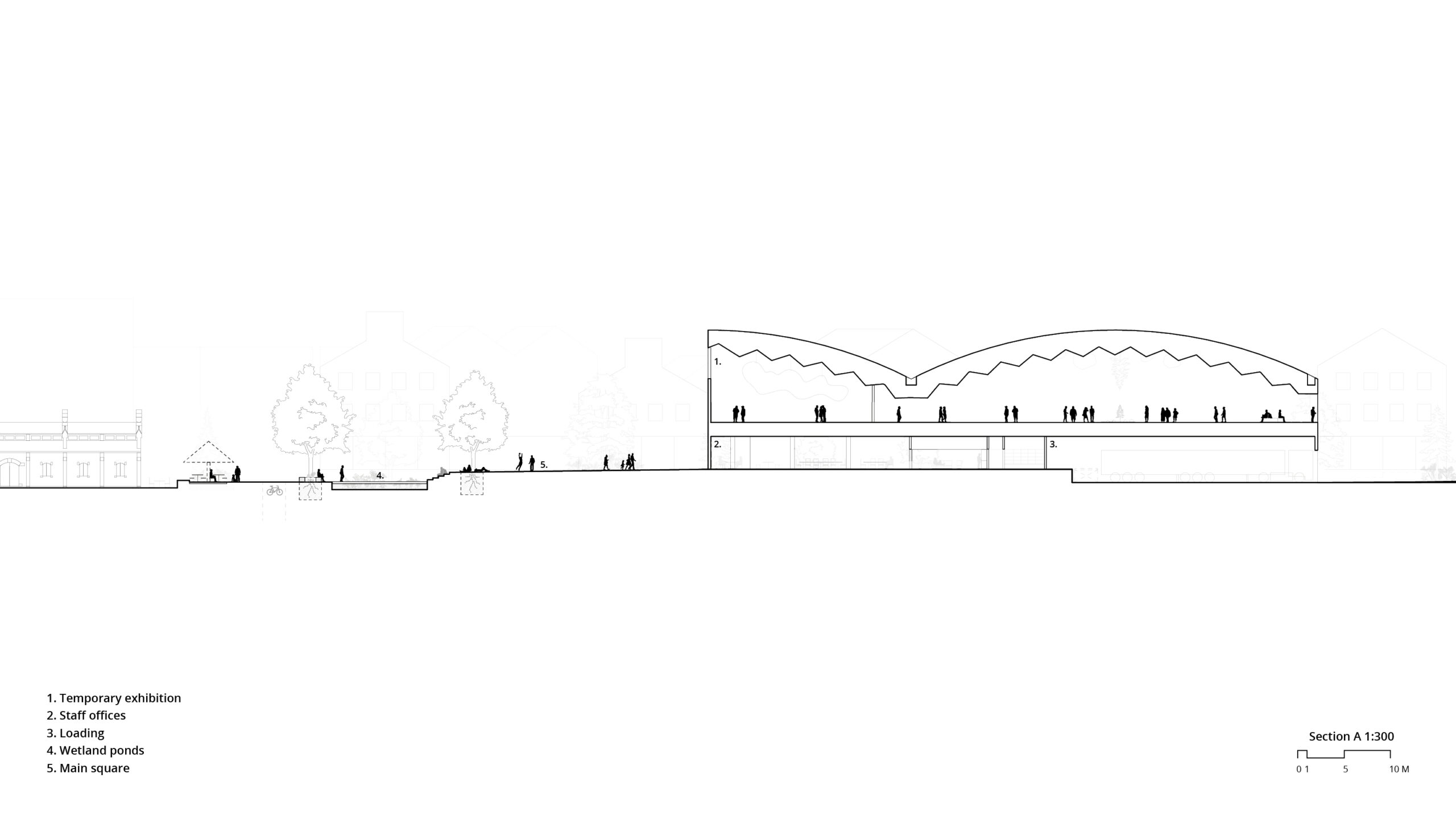
The Museum of History and the Future takes its place by the water as a symbol of the vibrant energy of the city. The new building carefully placed in the point where the seafront meets the new neighborhood to be formed. It is positioned between a public square on one side and the Linnanpuisto Park on the other. There is a restaurant with terraces on the square and an open-air stage facing the park. They make it possible for the life in the building to extend out, enlivening the area around the museum. The building offers generous views both towards the open horizon of the sea and towards the Castle.
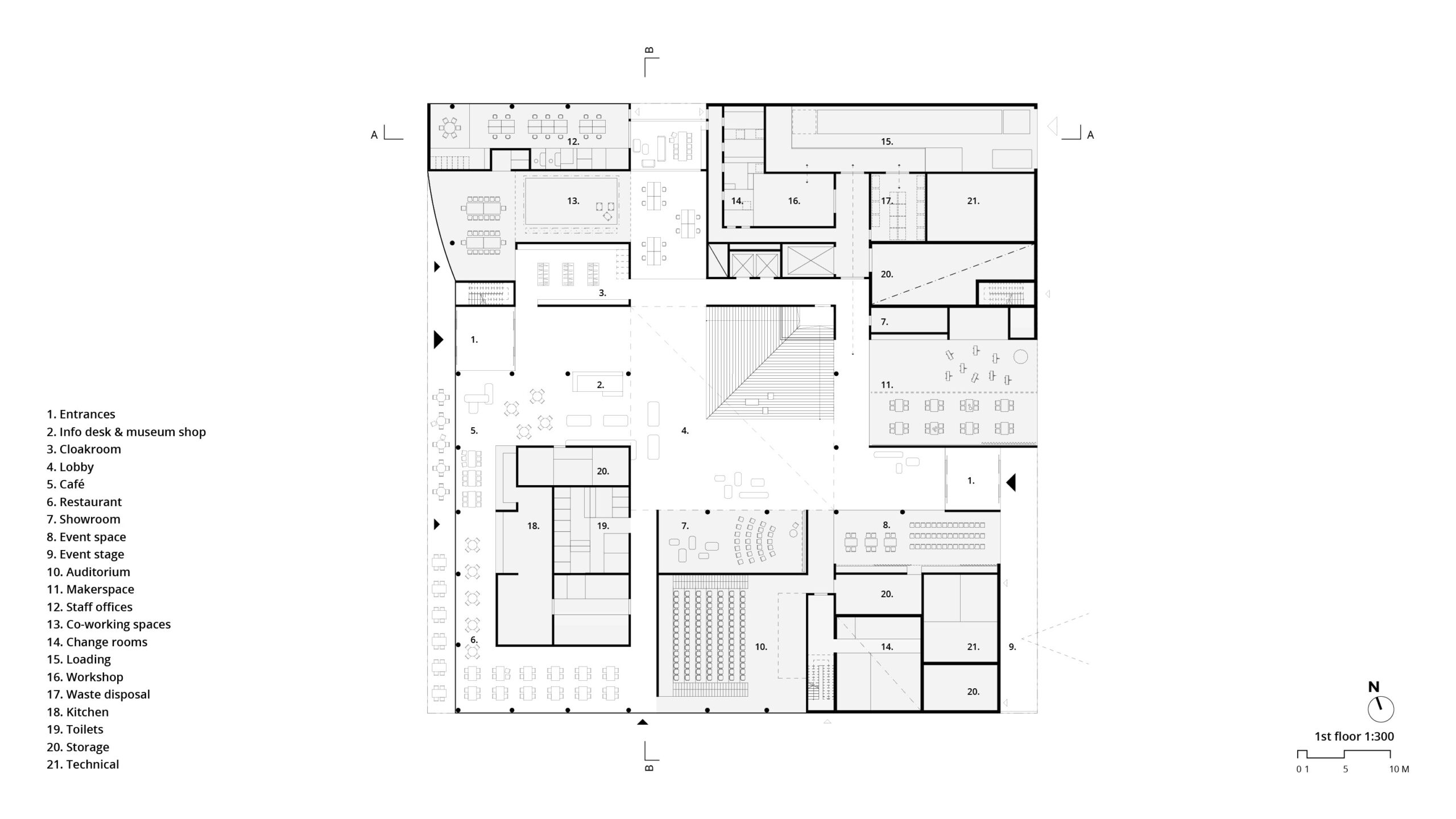
There is access to the museum both from the square and from the park. In addition, the restaurant and café as well as the various spaces for events and activities have their separate entrances. They can be used also during the hours when the exhibitions are not open.
On the Linnanpuisto side of the building, there is space for artworks and sculptures. A possibility to expand the museum in later years is proposed with a new extension to be built on the side of the Linnanpuisto Park.
Broad Range of Activities Arranged Around an Open Lobby and a Sculptural Stair
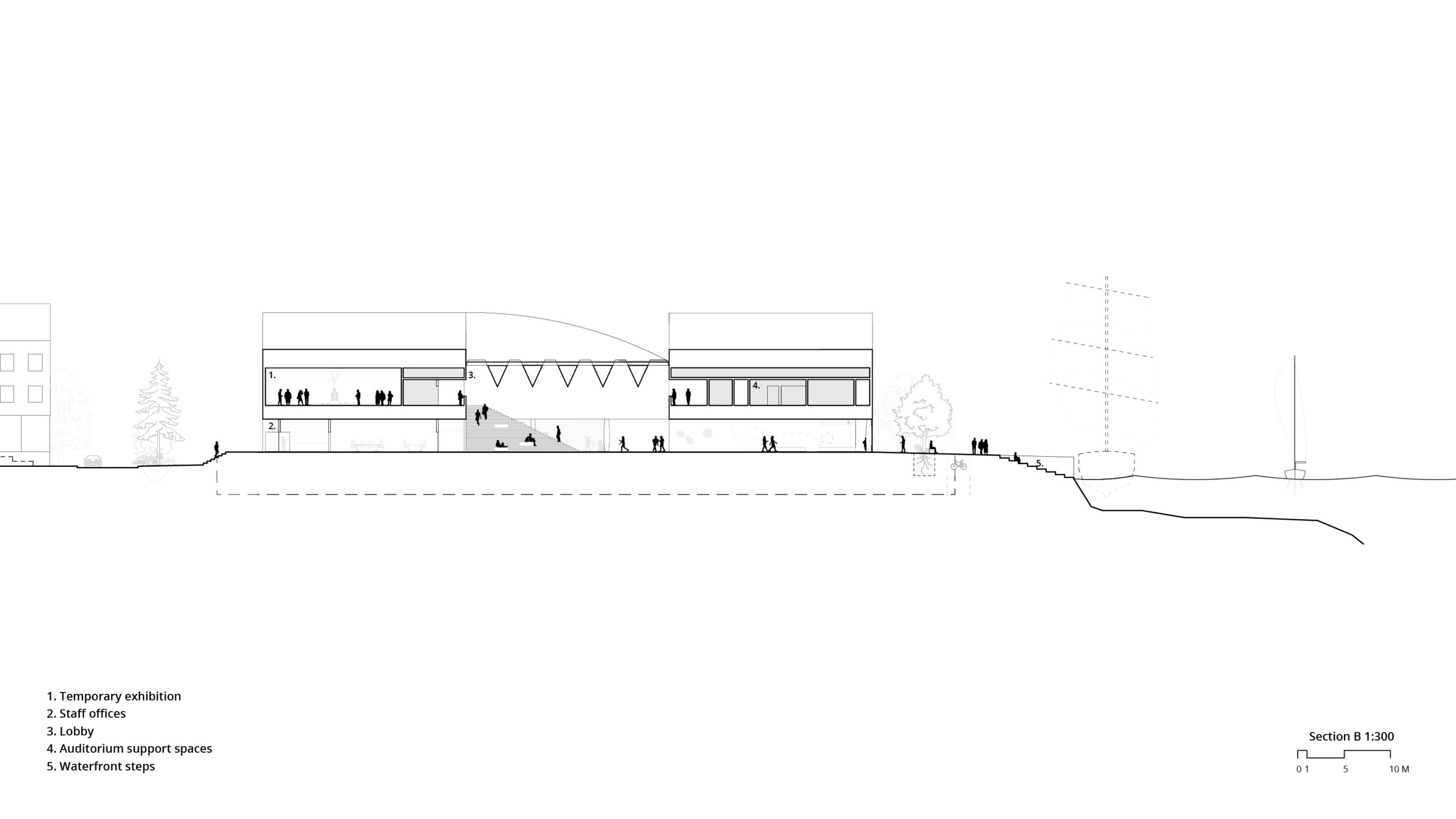
A tall, open lobby with a grand wooden stair in the middle forms the heart of the building. All functions wrap around the central stair and all activities are conveniently accessible through the lobby. The eight meters of free height in the lobby give the museum a spacious and open feel. The height of the lobby space also provides an excellent opportunity for displaying artwork that requires a tall space. Public art can also be placed on the square and in the park. It is possible to project art onto the façade of the building.
The sculptural wooden stair invites the visitors to move upstairs to explore the exhibitions. Raising up the stairs creates a sense of excitement and anticipation and prepare the visitor for the experience awaiting them in the galleries. The stair also provides a relaxed place to gather and to sit down. On the steps one can reflect on the rich offering of the museum. There are spaces for exhibitions, events, and for engaging activities in the maker space and the co-working spaces.
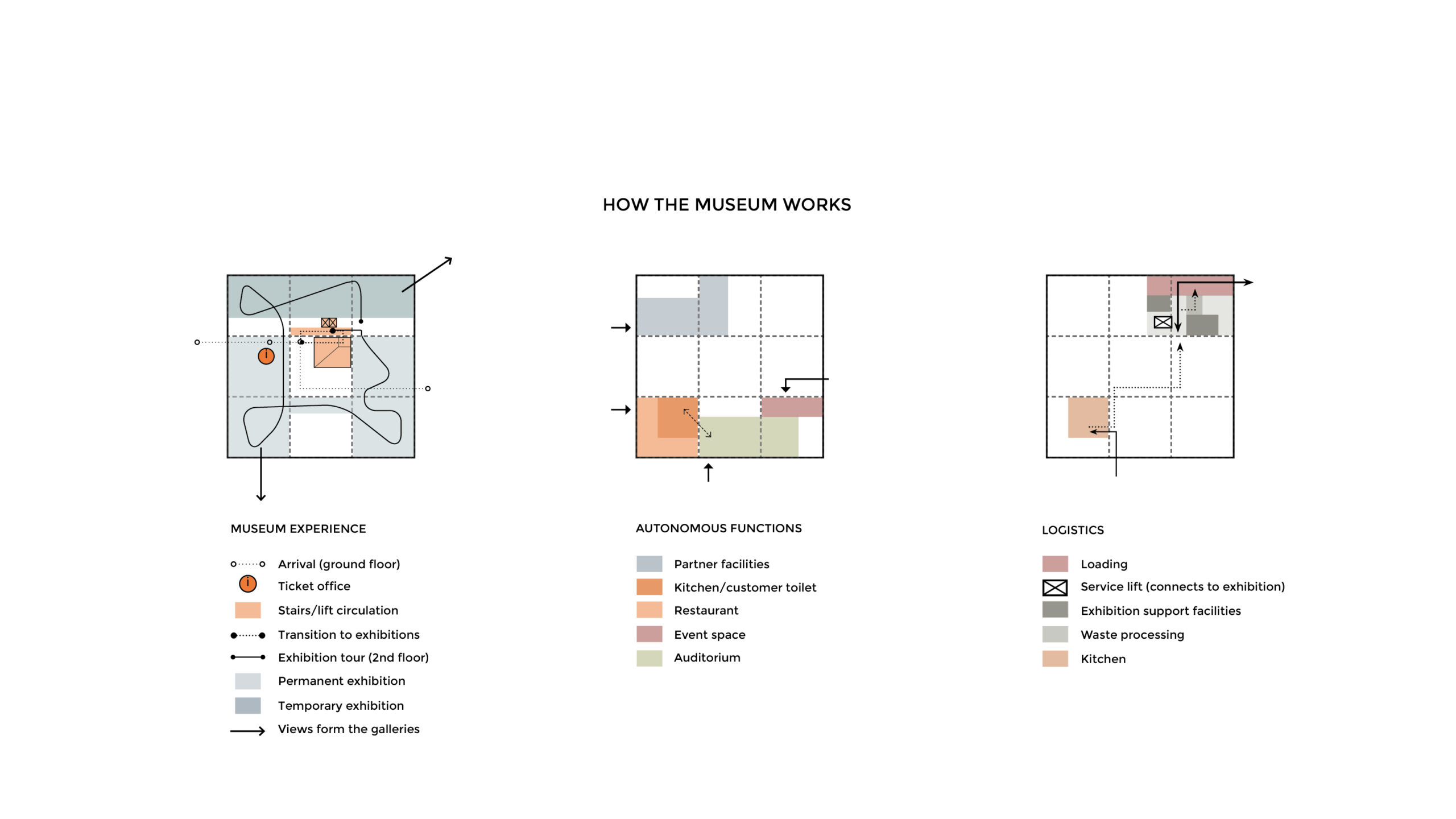
The museum shop, ticketing, restaurant, café, kids’ space, auditorium, maker space, and co-working spaces are all placed on the first floor. Also, the offices for the staff along with meeting rooms and facilities for the personnel are placed on the first floor with their own entrance. They are arranged along the Toinen Linja Street next to the spaces for loading and the handling of artwork and exhibition materials. They are provided with a convenient access to the exhibition spaces with a freight elevator.
Flexible Gallery Spaces
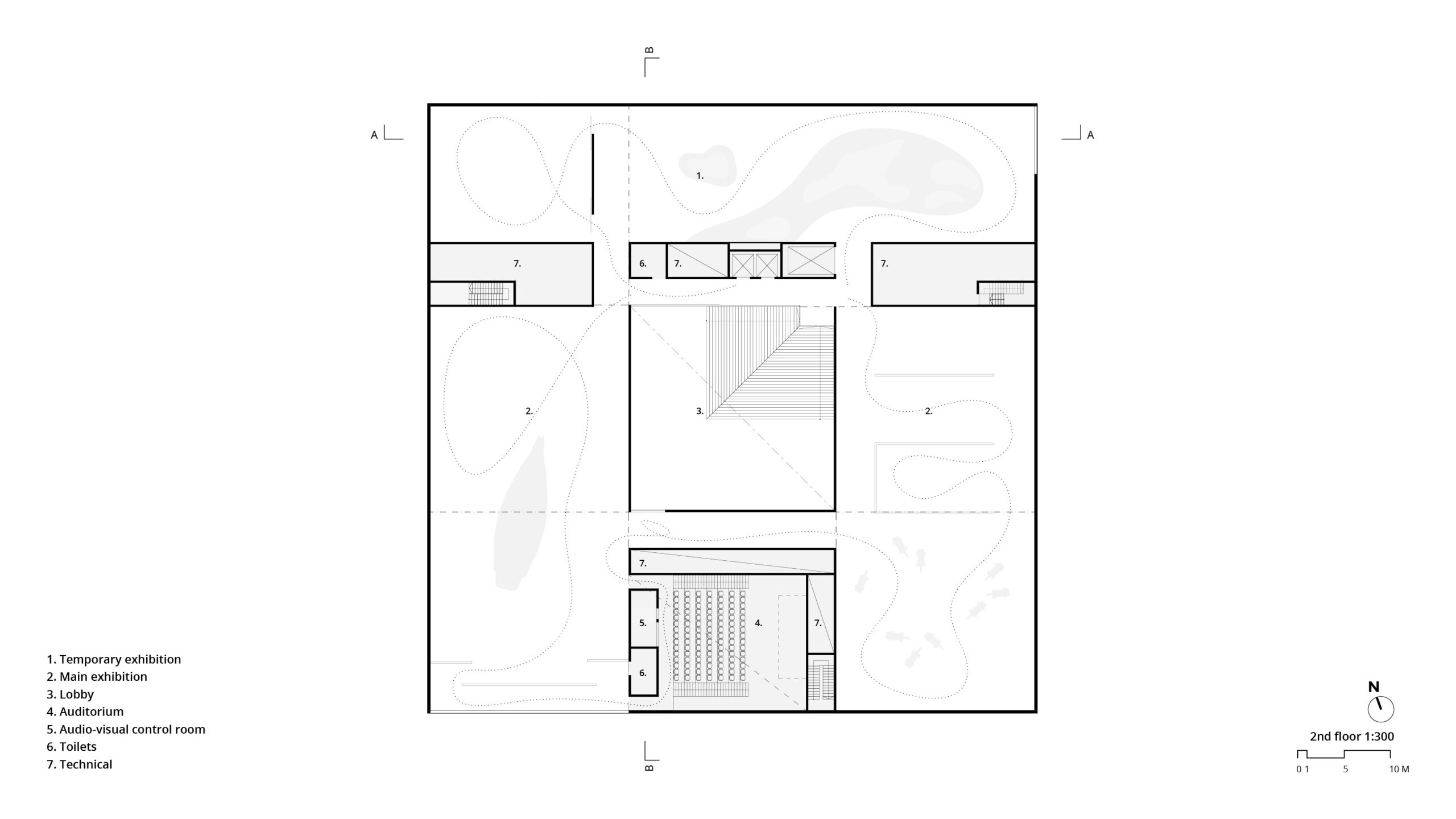
The second floor is dedicated to gallery spaces. This makes it possible to focus on the exhibitions without distraction. The galleries are divided into spaces for permanent exhibitions on one end of the building and to temporary exhibitions on the other. There is also a dedicated space with special conditions for exhibiting works that need a controlled environment. In that room it is possible to regulate the temperature, moisture, and lighting conditions. The gallery spaces can be divided and modified according to need with help of movable dividing walls.
The arched ceilings in the galleries create variability in the interior spaces. They also give a strong sculptural expression to the shape of the building. With an average of 5 meters, the height of the gallery spaces varies between 4-8 meters under the arched ceiling. With one arch spanning the full scope of the space for temporary exhibitions, the permanent exhibitions are arranged under two arches perpendicular to the arch of the gallery for the temporary exhibitions.
On the highest point of the gallery spaces, natural light enters the room through windows placed high on the wall. They have been carefully arranged to make the light diffused and soft. This makes it work well with the exhibited items. When needed, it is also possible to block the daylight with shutters or curtains to create a dark space, or to have only artificial lighting in the galleries. In the gallery for temporary exhibitions, there is a full wall window with a view opening towards the Turku Castle. Also in that room, it is possible to block the daylight when needed.
Ecological, Adaptable and Durable
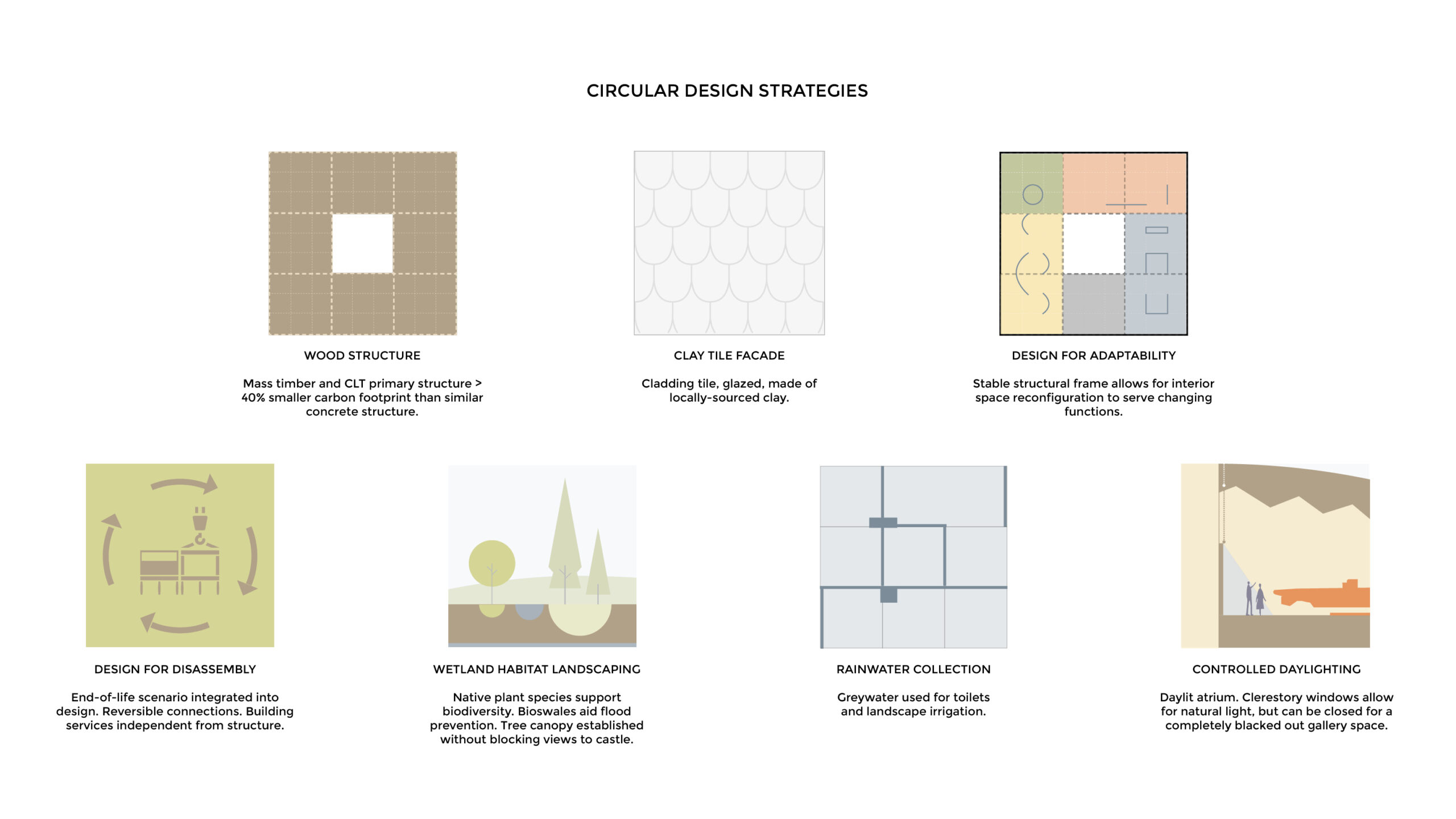
The building has a wooden structure with the primary structure made of CLT. The cladding is made of locally sourced, glazed clay tiles. The flooring and other interior surfaces are made of durable materials that are easy to maintain and can handle a lot of wear. The materials used in the building are carefully selected to be low-carbon and healthy. The carbon footprint of wood construction is 40% lower than that of a regular concrete structure. Thanks to the use of local materials, the carbon handprint will be positive.
The structure is designed to be adaptable during the use of the building and possible to disassemble at the end of its lifecycle. The stable structural frame allows for reconfiguration of the interior spaces according to need. The connections are reversible and the building services are independent from structure. In that way the end-of-life scenario is integrated into the design of the building.
Making use of heat pump technology, energy from the water in the sea will be used for heating and cooling the building. The building technology will be integrated in the building in a way that makes it easy to maintain and update.
The stormwater from the roof and from the surrounding area will be directed to a wetland area on the square. The surface materials will be to a large extent permeable. Greywater will be used for landscape irrigation. The vegetation planted on the wetland area will be carefully selected to purify the water as it evaporates and gets absorbed. Without blocking views to the castle, a robust tree canopy is established on the square for shading. Native plant species support biodiversity and bioswales aid flood prevention.